

By Olumide Johnson
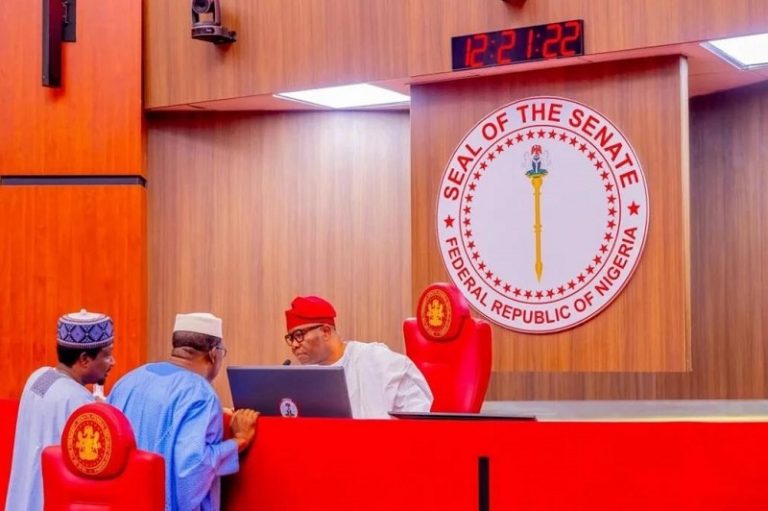
The Senate has approved the proposed $1 billion acquisition of Lafarge Africa Plc by Hainan Huaxin Pan-African Investment Company Plc, adopting the report of its ad hoc committee after a seven-month investigation into Holcim AG’s planned divestment of its controlling stake. Presenting the report in Abuja, Chairman of the Committee and Senate Minority Leader, Senator Abba Moro, said that extensive engagements with regulators and stakeholders found no legal impediment to the transaction. The Senate concluded that the sale represents a transfer between two foreign investors and does not affect the 16.19 percent equity held by Nigerian shareholders, while directing regulators to ensure full compliance with Nigerian laws throughout the transaction.
DECISION HIGHLIGHT
The Senate has separated ownership concerns from regulatory risk, endorsing the transaction while reinforcing oversight mechanisms designed to protect Nigerian shareholders, market integrity and competition.
DECISION MEMO
The Senate’s decision reframes the debate from one centred on foreign acquisition to one focused on regulatory governance. Rather than treating the transaction as the sale of a strategic Nigerian asset, lawmakers accepted the committee’s finding that Holcim’s divestment constitutes a transfer of shares from one foreign majority investor to another.
That distinction substantially alters the policy implications. The legislative priority has shifted from preventing foreign ownership to ensuring that the change in control complies with Nigeria’s corporate, competition and capital market regulations without eroding domestic investor interests.
Moro stated: “The senate allowed the transaction process concerning the sale of Lafarge Cement Company Plc to Huaxin to scale through. However, all due processes and strict compliance with all Nigerian extant laws on the subject must be followed and adhered to strictly for a hitch-free transaction and transition process.”
The committee further concluded that Nigerian shareholders would retain their 16.19 percent equity, while regulatory agencies found no evidence that the acquisition breached Nigerian law or posed immediate national security concerns. It also noted Huaxin’s commitment to inject fresh capital into Lafarge’s Nigerian and African operations, supporting industrial expansion and foreign direct investment.
However, debate exposed unresolved questions regarding ownership transparency. Senator Abdul Ningi, representing Bauchi Central, challenged the report’s disclosure of the company’s shareholding structure, asking: “Nigerians have about 16 percent, Lafarge has 18 percent. Who owns the remaining 66 percent? We need to understand where we are coming from.”
Ningi nevertheless acknowledged that the transaction fundamentally involves “the transfer from one foreign ownership to another” rather than the disposal of a wholly Nigerian-owned enterprise.
DATA BOX
- Transaction value: $1 billion
- Acquiring company: Hainan Huaxin Pan-African Investment Company Plc
- Vendor: Holcim AG
- Nigerian shareholders’ equity: 16.19 percent (unchanged)
- Holcim stake under divestment: 83.81 percent
- Lafarge Africa’s estimated Nigerian cement market share: 18 percent
- Senate investigation period: Seven months
- Regulators tasked with oversight: Securities and Exchange Commission (SEC), Corporate Affairs Commission (CAC), Federal Competition and Consumer Protection Commission (FCCPC), Nigerian Investment Promotion Commission (NIPC), Bureau of Public Enterprises (BPE)
- FCCPC assurance: No planned staff retrenchment during transition
- Additional recommendation: Expanded corporate social responsibility in host communities
WHO WINS / WHO LOSES
Winners
- Nigerian shareholders through preservation of existing equity rights.
- Lafarge Africa through anticipated capital injection and ownership certainty.
- Regulatory institutions through strengthened oversight responsibilities.
- Nigeria’s manufacturing sector if new investment improves productive capacity.
Losers
- Market uncertainty surrounding the transaction.
- Misconceptions that the acquisition transfers ownership of a wholly Nigerian-controlled company.
POLICY SIGNALS
The Senate has demonstrated a policy preference for regulated foreign investment over protectionist intervention, provided domestic shareholder rights, competition standards and statutory approvals remain fully protected.
INVESTOR SIGNAL
The endorsement reinforces Nigeria’s willingness to accommodate cross-border mergers and acquisitions within an established regulatory framework. The emphasis on compliance, competition oversight and shareholder protection may strengthen investor confidence in Nigeria’s corporate transactions while signalling continuity in foreign direct investment policy.
RISK RADAR
Implementation remains dependent on sustained regulatory scrutiny, transparent disclosure of ownership structures, compliance with competition rules, fulfilment of investment commitments and effective post-acquisition corporate governance.
Discover more from StakeBridge Media
Subscribe to get the latest posts sent to your email.