

By Jennete Ugo Anya
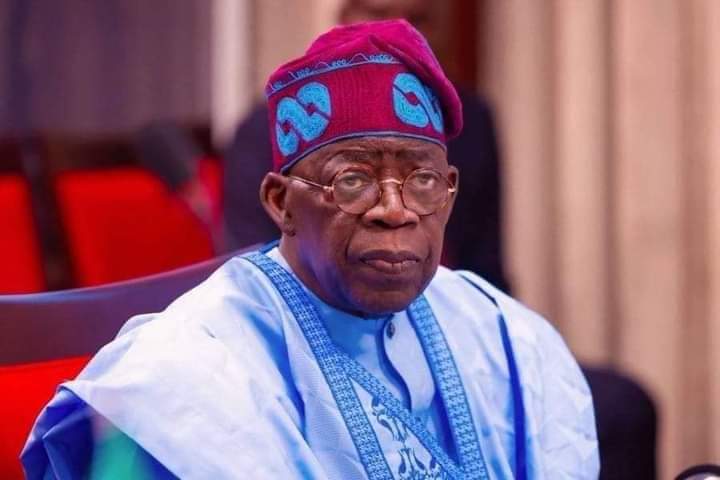
President Bola Ahmed Tinubu recently urged member states of the African Minerals Strategy Group (AMSG) to adopt a unified continental strategy that prioritises local value addition, beneficiation and industrialisation over raw mineral exports. Speaking while receiving an AMSG delegation at the State House, Abuja, the President said that Africa must strengthen its bargaining power in the global critical minerals market by investing in research, refining and technology rather than remaining a supplier of unprocessed resources. The delegation, led by Dr. Dele Alake, the Honourable Minister of Solid Minerals Development and Chairman of AMSG, informed the President that several African countries have already begun banning raw mineral exports in pursuit of greater domestic value creation. The visit coincided with the Fifth African Natural Resources and Energy Investment Summit (AFNIS 2026) in Abuja, held under the theme, ‘One Africa. One Resource Vision.’
DECISION HIGHLIGHT
In a statement by Mr. Bayo Onanuga, Special Adviser to the President on Information and Strategy, President Tinubu advances a continental resource strategy that seeks to reposition Africa from a supplier of raw minerals to a producer of refined minerals, industrial inputs and higher-value products through coordinated regional action.
DECISION MEMO
Tinubu’s intervention extends beyond Nigeria’s mining reforms. It is a call for Africa to negotiate with global markets from a position of collective industrial strength rather than fragmented commodity dependence.
At the centre of his message is the argument that Africa’s mineral wealth should become the foundation of industrial development instead of remaining an export commodity that generates greater value elsewhere.
The President criticised the long-standing pattern of exporting raw minerals with limited domestic processing.
“What we should do is avoid bureaucracy and deceit; we must put an end to exploitation. The rest of the world won’t mind if your country is a cesspit of dams and rubbish and excavates your raw materials without giving value.”
He continued: “It is our responsibility to collaborate and cooperate to ensure that these metals and minerals bring value to us, bring technology to us, and we can do it.”
Emphasising research and industrial capability, Tinubu added: “It is how much each country will put into the research, development and refinery. I don’t see reasons we cannot demand centralisation of that conversation somewhere on the continent. So why not utilise that in our research and development and knowledge-based economy to enhance the quality of life and bring prosperity to our people.”
The President’s position reflects an emerging continental policy shift in which mineral resources are increasingly viewed as catalysts for manufacturing, technology transfer and economic diversification rather than simply sources of export revenue.
Supporting that position, Dr Alake said that the President’s earlier directive has already begun influencing policy across Africa.
“You encouraged us to look at the focal point of the establishment of this group, which is to ensure that the African natural resources, especially with regards to minerals, critical matters, are localised, the beneficiation coming directly to Africans generally.”
Alake added: “You charged us that we should set our sails very high and ensure that local value addition is a pivot around which all the objectives of this organisation should revolve.”
According to him, “We have gone implemented your charge and we are quitted that today local value addition is reverberating all over Africa.”
He disclosed that some member countries have already prohibited the export of raw minerals, signalling growing continental acceptance of beneficiation as a strategic industrial policy.
The discussions at AFNIS 2026 therefore suggest that Africa is attempting to redefine its place in global supply chains by retaining greater value from its critical minerals through coordinated regional action, industrial investment and policy alignment.
DATA BOX
- Institution: African Minerals Strategy Group.
- Grand Patron: President Bola Ahmed Tinubu.
- Chairman: Mr Dele Alake, Minister of Solid Minerals Development.
- Event: Fifth African Natural Resources and Energy Investment Summit (AFNIS 2026).
- Venue: Abuja.
- Theme: ‘One Africa. One Resource Vision.’
- Strategic priorities:
- Local value addition.
- Beneficiation.
- Mineral processing.
- Research and development.
- Refining capacity.
- Industrialisation.
- Technology transfer.
- Emerging development:
- Some African countries have banned raw mineral exports.
WHO WINS / WHO LOSES
Winners
- African mineral-producing countries investing in beneficiation.
- Local processing and refining industries.
- Manufacturing and technology sectors.
- Skilled workers benefiting from industrial expansion.
- Governments seeking higher resource revenues.
Potential Losers
- Business models dependent on exporting raw minerals.
- External processors benefiting from Africa’s unprocessed mineral exports.
- Economies slow to invest in domestic mineral value chains.
POLICY SIGNALS
The African Minerals Strategy Group is promoting a coordinated continental resource policy centred on industrialisation rather than extraction. The emphasis is shifting from increasing mineral exports to increasing domestic processing, technological capability and regional cooperation in critical minerals.
INVESTOR SIGNAL
The policy direction strengthens Africa’s long-term investment proposition in mineral processing, refining, industrial manufacturing and downstream value chains. As more countries prioritise beneficiation over raw exports, investment opportunities are likely to expand beyond mining into processing plants, industrial infrastructure, research, logistics and advanced manufacturing linked to critical minerals.
RISK RADAR
The transition from raw mineral exports to value-added production will require substantial investment in refining capacity, energy infrastructure, technology, skilled labour and regulatory coordination. Without sustained policy consistency and regional cooperation, Africa could struggle to convert its mineral wealth into the industrial transformation envisioned by the African Minerals Strategy Group.
Discover more from StakeBridge Media
Subscribe to get the latest posts sent to your email.