


ABIS Group has moved from rhetoric to structure with the validation of the ABIS Livestock Academy curriculum, positioning skills, standards, and compliance as the missing infrastructure in Nigeria’s livestock economy. The Technical Expert Validation Session, held at the NIRSAL Auditorium in Abuja, subjected the Academy’s curriculum to cross-sector scrutiny, drawing regulators, industry operators, financiers, and development partners into the design of a national training platform for the livestock value chain.
The stated objective is not cosmetic capacity building, but workforce re-engineering, aimed at food safety, productivity, import substitution, and export competitiveness.
DECISION HIGHLIGHT
Decision type: Human capital and institutional capacity intervention
Promoter: ABIS Group
Instrument: Tiered, competency-based livestock training and certification academy
Target sectors: Livestock production, processing, food safety, halal markets, agribusiness services
Policy alignment: Food security, import reduction, public health, export readiness
Execution status: Curriculum validated, regulatory engagement pending
DECISION MEMO
Nigeria’s livestock problem is rarely framed correctly. It is often reduced to herder-farmer conflict, grazing routes, or infrastructure deficits. The ABIS Livestock Academy reframes the issue as a skills, compliance, and standards crisis, one that quietly undermines productivity, food safety, and trade access.
Speaking at the validation session, ABIS Group Co-Founder, Dr. Iliyasu Gashinbaki, was explicit about the ambition. The Academy, he said, is anchored on a national development objective to produce a “competent, compliant and commercially viable livestock workforce” capable of strengthening food security, improving public health outcomes, and positioning Nigeria for regional and global livestock and halal markets. This framing matters. It shifts livestock from a subsistence narrative to an industrial and trade-facing one.
The curriculum design avoids the common Nigerian trap of one-size-fits-all training. Instead, it adopts a tiered model, entry-level short courses for smallholders and new entrants, applied certificates for supervisors and enterprise operators, and professional certifications for senior managers, policymakers, and consultants. Across levels, the emphasis is practical competence aligned with national and international standards in animal health, food safety, quality assurance, and agribusiness development.
That design choice signals a clear understanding of the value chain’s fragmentation. Nigeria does not only lack veterinarians or processors; it lacks middle-layer technical managers, compliant operators, and export-literate professionals. Without this layer, investments leak value, enforcement fails, and markets remain closed.
The curriculum’s development process itself is telling. It went through expert assembly, sectoral reviews, peer reviews, and now validation. The next phase is regulatory engagement, where certification legitimacy will be tested. This is the inflection point. Without regulator buy-in, the Academy risks becoming another parallel training ecosystem with limited signalling power in the labour and export markets.
ABIS Group’s credibility here is not abstract. The company already operates industrial-scale livestock processing facilities, processing 220 cattle and 3,000 poultry daily in Lagos, with larger facilities coming on stream in Abuja and Plateau State. The Academy therefore sits inside an operating industrial ecosystem, not outside it. That linkage strengthens its relevance, but also raises the bar on governance, transparency, and outcomes.
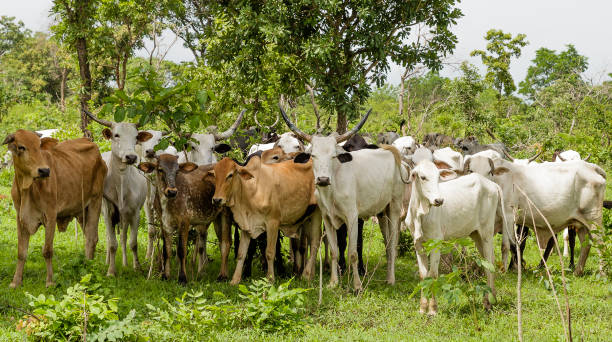
Zebu Cattle at Old Oyo National park in Nigeria.
DATA BOX
Lagos processing capacity: 220 cattle, 3,000 poultry daily
Abuja facility (planned): 1,000 cattle, 400–600 tons of poultry daily
Plateau State facility: 500 cattle, 300–400 tons of poultry daily
Training structure: Entry-level courses, applied certificates, professional certifications
Curriculum focus: Animal health, food safety, quality assurance, agribusiness, sustainability
WHO WINS / WHO LOSES
Winners:
• Young Nigerians seeking structured entry into the livestock economy
• Regulators needing industry-aligned compliance capacity
• Export-oriented processors and halal market participants
• Investors favouring skills-backed, standards-driven value chains
Losers:
• Informal operators resistant to compliance and traceability
• Rent-seeking intermediaries thriving on low standards
• Import-dependent supply chains exposed by local capacity growth
POLICY SIGNALS
The Academy aligns with a quiet but growing policy shift, treating agriculture not as social welfare but as regulated industry. Its engagement with agencies across standards, food safety, quarantine, finance, and trade suggests readiness for inter-agency coordination, something Nigeria’s livestock reforms routinely lack.
INVESTOR SIGNAL
Human capital is being positioned as productive infrastructure. For investors, this reduces execution risk across livestock projects, from processing plants to export platforms. A trained, certified workforce improves uptime, compliance, and market access, all of which translate into more predictable cash flows.
RISK RADAR
• Regulatory delays could stall certification legitimacy
• Fragmented enforcement may weaken standards uptake
• Political transitions could disrupt livestock reform momentum
• Failure to integrate smallholders meaningfully could limit scale impact
Bottom line: the ABIS Livestock Academy is not just an education initiative. It is a market signal. If regulators follow through and standards hold, it could become a quiet but consequential pillar in Nigeria’s livestock industrialisation story.
Discover more from StakeBridge Media
Subscribe to get the latest posts sent to your email.