

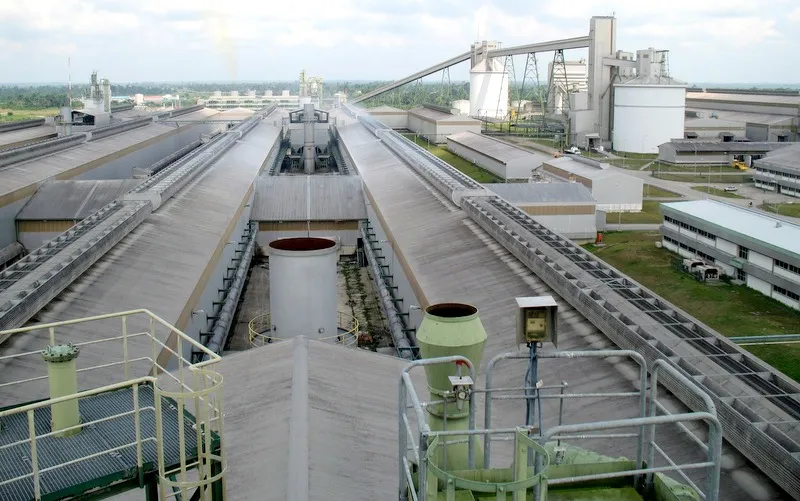
The federal government has inaugurated an 11-member project delivery committee to revive the Aluminium Smelter Company of Nigeria (ALSCON) and return it to full operations. The committee’s remit is narrowly defined around electricity supply, fast-tracking 132 kV and 330 kV transmission connections to the plant, completing stalled lines, producing technical status reports, and jointly commissioning grid infrastructure. The move is framed as a catalyst for industrial revival, power stability, and regional economic growth.
DECISION HIGHLIGHT
Initiator: Federal Government of Nigeria
Project: ALSCON power reconnection and operational restart
Committee Size: 11 members
Institutions Represented: ALSCON, Niger Delta Power Holding Company, Transmission Company of Nigeria, Nigerian Electricity Regulatory Commission, Federal Ministry of Power
Voltage Scope: 132 kV and 330 kV transmission lines
Policy Objective: Industrial restart, power stability, job creation
DECISION MEMO
ALSCON’s revival has been announced before, with limited effect. The smelter, once positioned as a cornerstone of Nigeria’s industrial ambitions, has remained largely dormant due to a familiar triad, unreliable power, contractual disputes, and policy inconsistency. The new committee acknowledges, implicitly, that electricity remains the decisive bottleneck.
Minister of Power Adebayo Adelabu described power as the “critical enabler” for continuous operation and urged inter-agency coordination to avoid delays. His remarks underline the core reality. Without stable, grid-backed electricity, ALSCON cannot operate competitively, regardless of ownership structure or sunk assets.
The technical scope assigned to the committee is unusually granular. It includes completing the Itu–Aba and Itu–Calabar 132 kV lines, producing single line diagrams, determining funding requirements, and jointly commissioning both 132 kV and 330 kV connections. This suggests that previous attempts failed not at policy level, but at execution and sequencing across institutions.
Ownership dynamics add another layer. ALSCON’s majority shareholder, UC Rusal, through its representative Viacheslav Krylov, signalled readiness to collaborate. Krylov disclosed that ALSCON already has 540 MW of installed gas-fired generation capacity, designed primarily for smelting operations, with surplus power theoretically exportable to the grid. The caveat is gas supply reliability. When gas disruptions occur, the plant requires grid access as a fallback to avoid shutdowns that damage equipment and economics.
This highlights a deeper contradiction. Nigeria is attempting to revive an energy-intensive industrial asset in a power system still struggling with transmission constraints, liquidity shortfalls, and fuel supply risks. The committee may coordinate infrastructure delivery, but it cannot, on its own, fix systemic weaknesses in the power value chain.
DATA BOX
Committee Size: 11 members
Transmission Scope: 132 kV and 330 kV lines
Installed On-site Power Capacity: ~540 MW (gas-fired)
Key Lines: Itu–Aba 132 kV, Itu–Calabar 132 kV
Primary Risk Factor: Gas supply disruption and grid reliability
WHO WINS / WHO LOSES
Winners:
ALSCON’s owners and host communities, if stable power restores production.
The power sector, if surplus generation is reliably evacuated to the grid.
Losers:
Policy credibility, if timelines slip and infrastructure remains incomplete.
Public finances, if revival efforts repeat past cycles without sustained output.
POLICY SIGNALS
The committee signals a renewed willingness to coordinate across power institutions, a chronic weakness in Nigeria’s industrial policy. However, it also confirms that large industrial restarts remain hostage to transmission and fuel supply realities, not investment appetite.
INVESTOR SIGNAL
For industrial and infrastructure investors, the move is cautiously constructive but not decisive. Bankability will depend on funded transmission delivery, enforceable timelines, and credible contingency planning for gas disruptions. Announcements without executed grid connections will not unlock capital.
RISK RADAR
Execution risk is high. Transmission projects have historically faced right-of-way issues, funding gaps, and coordination delays. There is also systemic risk, ALSCON’s viability depends on a power system still under stress. Without parallel reform in gas supply assurance and grid liquidity, revival could stall again.
The ALSCON committee reflects intent, not resolution. Nigeria has identified the problem correctly, power. Whether this iteration finally converts coordination into electrons on the line will determine if ALSCON reopens as an industrial asset, or remains a recurring policy ambition.
Discover more from StakeBridge Media
Subscribe to get the latest posts sent to your email.