

Nigeria’s livestock sector is showing early signs of moving beyond policy statements toward coordinated action. Two recent developments highlight this shift: the Federal Government’s inauguration of a National Economic Council (NEC) Technical Sub-Committee on Livestock Development, and the validation of the ABIS Livestock Academy curriculum as a national skills and standards platform.
Together, they point to a reform effort that is beginning to connect policy direction with execution capacity. Government is focusing on coordination and planning, while the private sector is addressing the skills and compliance gaps that have quietly limited productivity, food safety, and investment in the livestock value chain.
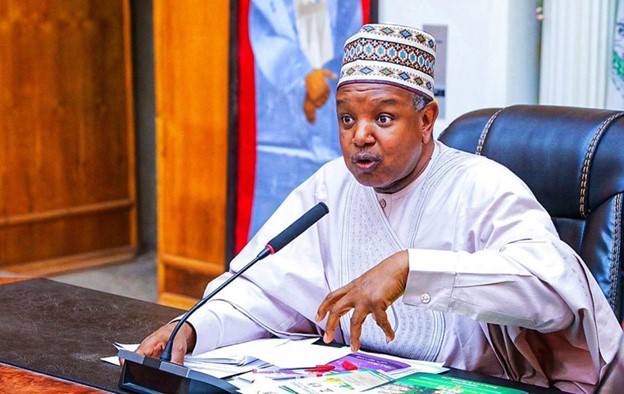
Earlier this week in Abuja, the Minister of Budget and Economic Planning, Senator Abubakar Bagudu, inaugurated the NEC Technical Sub-Committee on Livestock Development. The committee is expected to harmonise existing livestock policies and turn past reports into a clear implementation roadmap for adoption by the NEC.
The sub-committee supports a high-level NEC committee chaired by the Governor of Kebbi State, Dr Nasir Idris, and made up of governors from all six geopolitical zones, relevant ministers, and members of the Presidential Committee on Livestock Development. According to Sen. Bagudu, the technical structure was created to keep work moving, given the limited availability of governors and the urgency of reform.
He said the focus was not on producing new policy documents, but on distilling existing work into practical steps that can be implemented without delay. He described President Bola Tinubu’s personal involvement, including chairing the Presidential Committee on Livestock Development and approving a stand-alone Ministry of Livestock Development, as evidence that livestock is now being treated as a core economic sector rather than a marginal agricultural activity.
At the same time, a separate but related intervention is taking shape outside government.
At the NIRSAL Auditorium in Abuja, ABIS Group recently held a technical validation session for its Livestock Academy curriculum. Regulators, industry operators, financiers, and development partners reviewed the programme, which is designed to build practical skills and enforce standards across livestock production, processing, food safety, and related services.
The stated objective is not basic training, but workforce rebuilding, aimed at improving productivity, food safety, import substitution, and export readiness.
DECISION HIGHLIGHT
Decision type: Policy coordination and skills development intervention
Promoters: Federal Government of Nigeria and ABIS Group
Instruments:
• NEC Technical Sub-Committee on Livestock Development
• Tiered livestock training and certification academy
Target sectors: Livestock production, processing, food safety, halal markets, agribusiness services
Policy alignment: Food security, import reduction, public health, export readiness
Execution status: NEC sub-committee inaugurated, Academy curriculum validated, regulatory engagement pending
DECISION MEMO
Nigeria’s livestock challenges are often discussed in terms of conflict, grazing routes, or infrastructure. The NEC sub-committee and the ABIS Livestock Academy present a different view. They frame the problem as one of weak coordination at the policy level and weak skills and compliance capacity at the operational level.
The NEC intervention focuses on alignment. Agriculture and food security are shared responsibilities across federal, state, and local governments. By working through the National Economic Council and the Ministry of Budget and Economic Planning, the government is trying to align planning, budgets, and programmes, rather than allowing states and agencies to operate separately.
Sen. Bagudu noted that once the NEC adopts a clear livestock roadmap, states and local governments will find it easier to mobilise funding and attract development partners and private investors. Existing platforms such as the World Bank-supported Livestock Productivity and Resilience Support Project, NG-CARES, the Nigeria for Women Programme, and the Renewed Hope Ward-Based Development Plan provide channels for delivery, but only if coordination improves.
The ABIS Livestock Academy addresses a different gap. Speaking at the validation session, ABIS Group co-founder Dr Iliyasu Gashinbaki said the Academy aims to produce a competent and compliant livestock workforce that can support food security, improve public health, and compete in regional and global markets.
The curriculum avoids a single-track approach. Short courses are designed for smallholders and new entrants. Applied certificates target supervisors and enterprise operators. Professional certifications are aimed at senior managers, policymakers, and consultants. Across all levels, the focus is on practical skills linked to recognised standards in animal health, food safety, quality control, and agribusiness management.
This reflects a clear reading of the sector’s weaknesses. Nigeria does not only lack producers or processors. It lacks trained middle-level managers, compliant operators, and professionals who understand regulatory and export requirements. Without this layer, enforcement is weak, investments struggle, and access to higher-value markets remains limited.
The Academy’s development process has involved expert input, sector reviews, peer review, and technical validation. The next phase is regulatory engagement. Without formal recognition, certification will have limited value. With it, the Academy could become a practical support structure for national livestock reform.
ABIS Group’s existing operations add weight to the initiative. The company processes about 220 cattle and 3,000 poultry daily in Lagos and plans larger facilities in Abuja and Plateau State. Embedding training within an active industrial environment strengthens relevance but also raises expectations around governance and results.
DATA BOX
Lagos processing capacity: 220 cattle, 3,000 poultry daily
Abuja facility (planned): 1,000 cattle, 400–600 tons of poultry daily
Plateau State facility: 500 cattle, 300–400 tons of poultry daily
Training structure: Short courses, applied certificates, professional certifications
Policy platforms: NEC roadmap, L-PRES, NG-CARES, Renewed Hope Ward-Based Development Plan
WHO WINS / WHO LOSES
Winners:
• States that align livestock plans with national policy and funding
• Young Nigerians entering the livestock economy through structured training
• Regulators seeking better compliance capacity
• Export-oriented processors and halal market participants
• Investors looking for clearer policy and lower execution risk
Losers:
• Informal operators resistant to standards and traceability
• Rent-seeking intermediaries benefiting from weak enforcement
• Import-dependent supply chains exposed by local capacity growth
POLICY SIGNALS
Both developments point to a shift in how livestock is treated. It is moving away from social welfare and crisis management toward regulation, planning, and market discipline. The combination of NEC-led coordination and skills-based private sector intervention suggests stronger inter-agency and public–private alignment than in previous reform efforts.
INVESTOR SIGNAL
Policy clarity and workforce quality are being treated as economic infrastructure. For investors, this reduces uncertainty, improves compliance, and supports more stable operations across processing, logistics, and export platforms.
RISK RADAR
- Delays in NEC roadmap approval
• Slow regulatory recognition of certification
• Weak enforcement across states
• Political transitions disrupting continuity
• Limited integration of smallholders
Nigeria’s livestock reform is entering a more serious phase. Policy coordination is taking shape at the centre, while skills and standards are being built along the value chain. If delivery holds and institutions follow through, livestock could finally evolve into a disciplined, investable sector rather than a recurring policy challenge.
Discover more from StakeBridge Media
Subscribe to get the latest posts sent to your email.