

Enam Obiosio
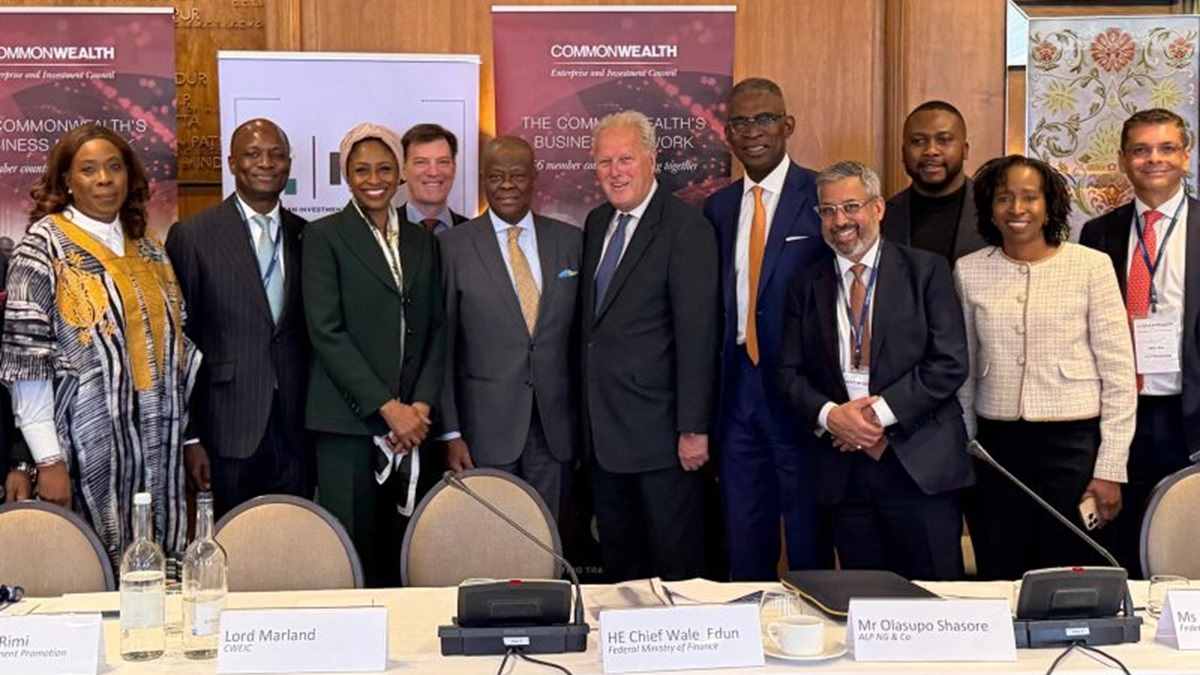
I listened carefully to the optics and language around the Nigeria–United Kingdom investment roundtable in London, and one thing stood out with uncomfortable clarity, Nigeria is still behaving like a country seeking validation, not one asserting value.
Yes, the presence of Mr. Wale Edun alongside senior officials and global investors signals engagement. Yes, the involvement of the Nigerian Investment Promotion Commission and the Commonwealth Enterprise and Investment Council reflects institutional coordination. And yes, a £9 billion trade relationship is not insignificant. But none of these, on their own, represent power. They represent potential. And potential, if not aggressively converted, is simply deferred relevance.
I will be blunt. Nigeria does not have an investment problem. Nigeria has a positioning problem.
For decades, we have approached global capital with the language of attraction, incentives, reforms, ease of doing business, market size, demographic advantage. We present ourselves as an opportunity waiting to be discovered. That posture is outdated. The global investment environment has shifted. Capital is no longer simply looking for markets; it is looking for clarity, predictability, and strategic alignment.
Nigeria already has the fundamentals that most emerging markets struggle to build. Scale. Population. Natural resources. Entrepreneurial depth. Geographic relevance. A gateway into a continent that is increasingly central to global supply chains. Yet, we continue to negotiate from a place of persuasion rather than leverage.
At £9 billion in bilateral trade, the Nigeria–United Kingdom relationship is not underperforming because of lack of dialogue. It is underperforming because Nigeria has not defined the terms of engagement with sufficient precision and confidence.
I am not interested in roundtables that recycle the same talking points about reforms and opportunities. I am interested in outcomes. What exactly is Nigeria offering that is non-negotiable? What sectors are ring-fenced for aggressive capital inflow? What timelines are attached to project execution? What guarantees exist beyond policy statements?
If we cannot answer these questions with clarity, then we are not negotiating, we are presenting.
The reality is this, global investors are not confused about Nigeria. They understand the opportunity. What they are uncertain about is execution. Policy reversals, regulatory inconsistencies, infrastructure bottlenecks, and currency volatility have created a credibility gap. And credibility, not capital, is now the binding constraint.
I do not dismiss the importance of reforms. They are necessary. But reforms are not a strategy. They are a baseline requirement. Every serious economy is reforming. Nigeria must go beyond reform narratives and articulate a clear investment doctrine.
That doctrine must be unapologetically national in its orientation.
Nigeria should not be competing to be the easiest place to invest. It should be competing to be the most indispensable place to invest. There is a difference. Ease attracts opportunistic capital. Indispensability attracts committed capital.
Take the positioning as a “gateway to Africa.” It is a powerful narrative, but it is also dangerously overused. A gateway is only relevant if it provides access that cannot be replicated elsewhere. What exactly makes Nigeria that gateway in operational terms? Is it logistics? Is it manufacturing scale? Is it financial depth? Is it regulatory integration with regional markets?
If the answer is unclear, then the gateway narrative becomes marketing, not strategy.
What Nigeria must do, and urgently, is redefine its engagement with global investors from access to alignment.
I want to see Nigeria identify five to seven strategic sectors where it will dominate, not participate. Energy transition minerals. Agro-industrial processing. Digital infrastructure. Logistics and ports. Financial services. Manufacturing clusters. These are not abstract opportunities. These are areas where Nigeria can build scale that is too large to ignore.
Once defined, the government must align policy, capital, and execution around these sectors with ruthless consistency. No policy reversals. No regulatory contradictions. No fragmented implementation across agencies.
Investors do not require perfection. They require predictability.
The London roundtable, in its current framing, risks reinforcing an old pattern, Nigeria explaining itself to capital. That must change. Nigeria should be dictating terms based on its strategic priorities.
I am not suggesting isolationism. I am advocating assertiveness.
If Nigeria is serious about attracting long-term investment, then it must also be willing to set conditions. Local value addition. Technology transfer. Employment thresholds. Infrastructure commitments. These should not be optional extras. They should be embedded in every major investment agreement.
We cannot continue to celebrate capital inflow without interrogating capital impact.
Another point that requires honesty is this, not all capital is equal. Portfolio flows chasing high yields are not the same as long-term infrastructure investment. Nigeria must be deliberate in the type of capital it prioritises.
The obsession with “attracting investors” must give way to “selecting partners.”
This is where institutions like the Nigerian Investment Promotion Commission must evolve. Promotion is not enough. Structuring is the real work. Investment opportunities must be packaged with clarity, backed by data, and linked to execution frameworks that reduce ambiguity.
I also expect more from our political leadership in these engagements. Presence at global forums is important, but presence without positioning is performative.
I want to hear Nigerian officials speak less about potential and more about priorities. Less about reforms and more about results. Less about openness and more about standards.
Because the truth is simple, Nigeria does not need to convince the world that it matters. The world already knows. What Nigeria needs to demonstrate is that it can convert that importance into structured, bankable, and scalable opportunities.
The United Kingdom, and indeed other global partners, are not engaging Nigeria out of charity. They are engaging because Nigeria sits at the intersection of multiple strategic interests, energy, markets, migration, security, and trade.
That gives Nigeria leverage. But leverage is only useful if it is exercised.
I also take issue with the tendency to frame every high-level engagement as “historic.” History is not made in conference rooms. It is made in execution. If this roundtable does not translate into signed deals, funded projects, and measurable economic outcomes, then it is not historic. It is routine.
And Nigeria cannot afford routine.
We are at a point where incremental progress is insufficient. The scale of our economic challenges demands accelerated transformation. That transformation will not come from better storytelling alone. It will come from disciplined execution.
So I return to my central argument, Nigeria must stop asking for investment and start commanding it.
Commanding it through clarity of purpose. Through consistency of policy. Through strength of institutions. Through scale of opportunity. Through the confidence to say, this is where we are going, and this is how you can participate.
The London roundtable should not be seen as a destination. It should be seen as a test. A test of whether Nigeria is ready to engage the world on its own terms.
If we pass that test, the capital will come. Not because we asked for it, but because we made ourselves impossible to ignore.
Discover more from StakeBridge Media
Subscribe to get the latest posts sent to your email.