

By Jennete Ugo Anya
African Export-Import Bank (Afreximbank) recently reported strong full-year 2025 financial results, with total assets and contingencies rising 21 percent to US$48.5 billion, net income increasing 19 percent to US$1.2 billion, and shareholders’ funds expanding to US$8.4 billion.
DECISION HIGHLIGHT
The results reinforce Afreximbank’s evolution from trade finance institution into a systemically important pan-African development-finance platform with growing balance-sheet capacity to shape continental industrialisation, trade integration, and strategic capital deployment.
DECISION MEMO
Afreximbank’s 2025 performance indicates that the institution is consolidating its position as one of Africa’s most financially consequential multilateral lenders at a time when access to development and trade finance remains constrained across much of the continent.
The headline significance lies not merely in earnings growth, but in the quality and strategic composition of expansion. Loan growth remained robust while asset quality stayed broadly stable, suggesting the bank is scaling disbursement without materially compromising underwriting discipline. This is particularly notable given persistent macroeconomic stress across several African markets.
Equally important is the institution’s demonstrated ability to maintain international market access despite rating-related concerns. Its successful raising of over US$800 million through Samurai and Panda bonds suggests investor appetite for Afreximbank paper remains resilient even amid scrutiny from some external ratings agencies. That outcome materially strengthens the Bank’s claim to funding-market credibility.
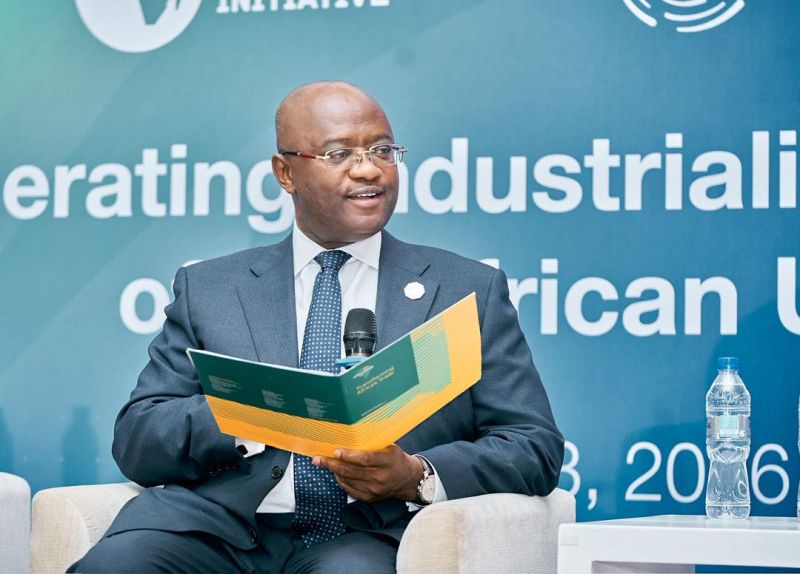
Denys Denya, Senior Executive Vice President of Afreximbank, stated that the Group delivered “excellent financial performance in 2025” despite geopolitical disruption and rating pressures, adding that “the Group’s balance sheet is at its strongest level ever, with liquidity levels and capitalisation well above target and good asset quality.”
Strategically, the bank’s expanding deployment into manufacturing, infrastructure, food security, and climate adaptation reinforces its increasingly interventionist development-finance posture. Afreximbank is no longer acting solely as a transactional trade financier, but as a strategic allocator of long-duration capital into structural economic transformation priorities.
DATA BOX
Total assets and contingencies: US$48.5 billion, up 21 percent
Net loans and advances: US$33.5 billion, up 16 percent
Net income: US$1.2 billion, up 19 percent
Gross income: US$3.5 billion, up 6.06 percent
Shareholders’ funds: US$8.4 billion, up 17 percent
Cash and cash equivalents: US$6.0 billion
Non-performing loan ratio: 2.43 percent
Capital adequacy ratio: 23 percent
International bond issuance raised: Over US$800 million
WHO WINS / WHO LOSES
Winners are African sovereigns, corporates, and trade-linked sectors benefiting from expanded development and structured finance capacity.
Winners also include member states seeking alternatives to more restrictive traditional multilateral funding channels.
Losers are competing institutions unable to match Afreximbank’s expanding continental relevance and balance-sheet flexibility.
POLICY SIGNALS
The results signal growing institutional confidence in African-led development finance mechanisms and reinforce momentum toward greater continental financial self-intermediation.
They also suggest increasing institutional support for industrial policy, trade integration, and infrastructure-led growth strategies.
INVESTOR SIGNAL
Investors should interpret the results as evidence of sustained institutional resilience, strong market access, and expanding strategic relevance within African development finance.
Afreximbank appears increasingly positioned as a core financing intermediary for Africa’s industrial and trade transformation agenda.
RISK RADAR
Primary risks include concentration risk from rapid balance-sheet expansion, geopolitical and sovereign-credit shocks across operating markets, and funding-cost volatility if external market sentiment weakens.
Secondary risks include execution risk as the Bank broadens beyond core trade finance into more complex strategic interventions.
Overall, Afreximbank’s 2025 results indicate that the institution is scaling from a successful lender into a strategically central pillar of Africa’s economic financing architecture.
Discover more from StakeBridge Media
Subscribe to get the latest posts sent to your email.