

By Ayo Susan
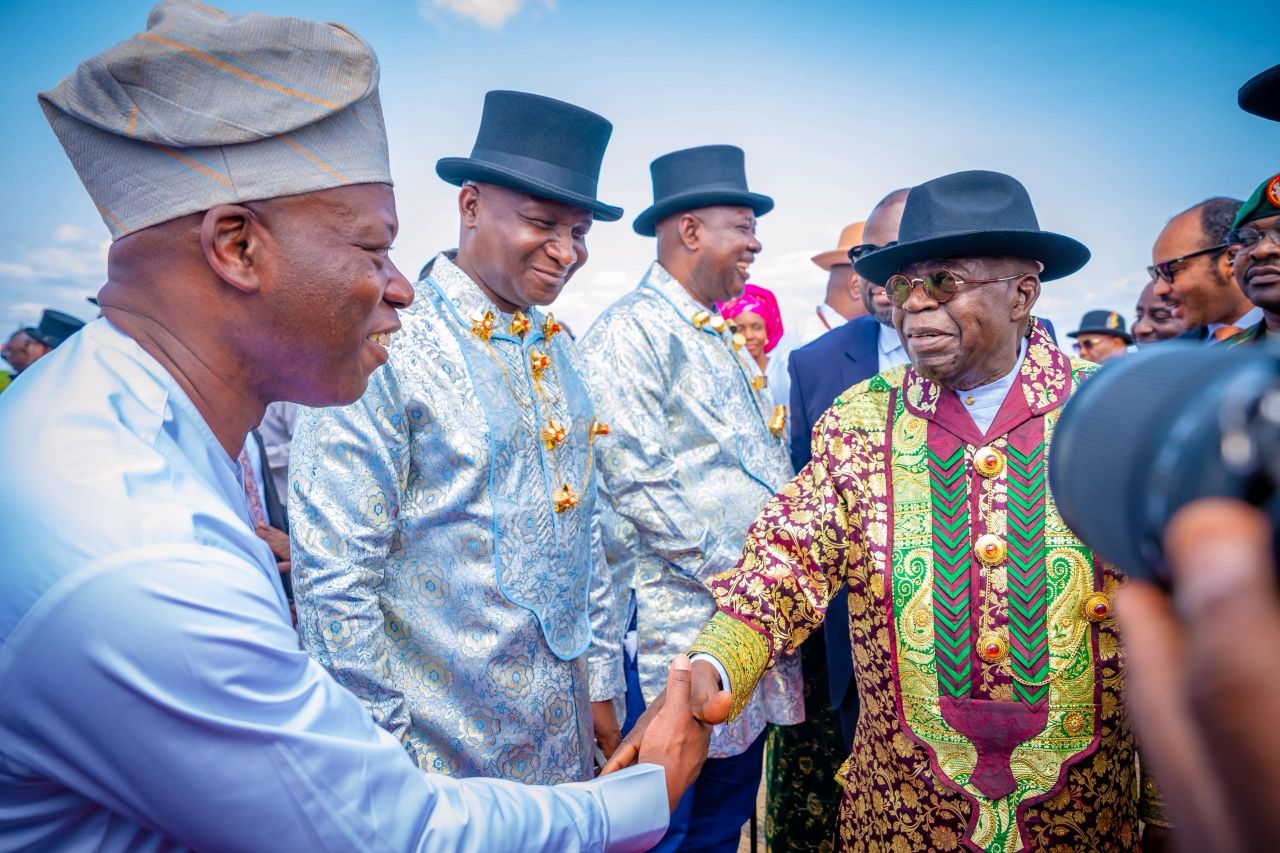
President Bola Ahmed Tinubu recently commissioned major infrastructure assets in Bayelsa State, including a 60-megawatt gas-fired independent power plant, strategic roads, and bridge links, while reaffirming that the federal government will continue deploying measures to cushion Nigerians against prevailing economic hardship.
DECISION HIGHLIGHT
The Bayelsa commissioning positions infrastructure delivery as the administration’s practical answer to reform-era economic pressure, using visible capital projects to demonstrate that present hardship is being matched by long-term productive investment.
DECISION MEMO
President Tinubu’s Bayelsa recent visit was structured not merely as a commissioning exercise, but as a strategic demonstration of the Federal Government’s governing thesis that economic stabilisation must be anchored in productive infrastructure rather than short-lived fiscal palliatives.
By publicly acknowledging that “fuel prices are biting hard” while simultaneously unveiling major developmental assets, President Tinubu advanced a clear political and economic argument, that the administration recognises current pain but intends to address it through structural interventions capable of lowering business costs, improving productivity, and expanding regional economic capacity.
The 60-megawatt gas-fired independent power plant is central to that argument. Beyond adding electricity supply, the project advances the federal government’s broader gas-to-power industrialisation agenda, strengthens decentralised energy resilience, and creates more reliable conditions for enterprise activity across Yenagoa and adjoining commercial corridors.
The newly commissioned road and bridge infrastructure similarly expands Bayelsa’s economic geography by integrating previously hard-to-reach communities into formal road-linked commerce. In practical terms, the projects convert long-isolated areas from logistical outposts into potentially investable corridors.
Crucially, the projects also attracted explicit validation from major private-sector stakeholders. Mr. Wale Tinubu, Group Chief Executive of Oando Plc, described the projects as ‘transformational infrastructure’ that will ‘strengthen accessibility, enhance power reliability, and enable sustainable economic growth across the state,’ adding that Oando remains committed to partnering with government to advance shared development goals. The intervention is notable given Oando’s status as one of Bayelsa’s major private-sector investors and employers, making the endorsement a meaningful signal of private-sector confidence rather than ceremonial commentary.”
That endorsement is also materially significant. As one of Bayelsa’s largest private-sector investors and employers, Oando Plc’s support elevates the projects beyond political symbolism and reinforces the argument that private capital views the infrastructure as commercially consequential.
Mr. Wale Tinubu further stated that Oando “will continue to work with government and stakeholders to advance these shared goals,” signalling confidence that the state’s infrastructure trajectory is becoming increasingly aligned with long-term private investment requirements.
DATA BOX
Power project commissioned: 60MW gas-fired independent power plant
Transport assets commissioned: New Yenagoa City Road 1, Angiama–Oporoma Bridge, Sagbama–Ekeremor Road, Yenagoa–Oporoma–Ukubie Road
Primary economic target: Yenagoa and wider Bayelsa growth corridors
Strategic policy alignment: Gas-to-power expansion, regional connectivity, decentralised industrial infrastructure
Private-sector validator: Oando Plc, major Bayelsa investor and employer
WHO WINS / WHO LOSES
Winners are Bayelsa residents and businesses through improved mobility and electricity reliability, the Federal Government through stronger reform-delivery optics, and private investors with operating or expansion interests in the Niger Delta.
Winners also include Oando Plc and other regional operators whose commercial environments benefit directly from improved infrastructure.
Losers are logistical bottlenecks, informal scarcity-driven transport economics, and regions competing for investment without equivalent infrastructure upgrades.
POLICY SIGNALS
The commissioning reinforces the Federal Government’s preference for infrastructure-led economic mitigation over broad subsidy reinstatement.
It also signals continued support for public-private developmental alignment and subnational-federal infrastructure partnerships.
INVESTOR SIGNAL
Investors should read the Bayelsa projects as evidence that the administration is increasingly linking reform legitimacy to visible productive asset delivery.
The explicit endorsement by Adewale Tinubu strengthens the market perception that sophisticated private-sector operators view the infrastructure as economically enabling rather than merely politically expedient.
RISK RADAR
Principal risks remain maintenance discipline, operational sustainability of commissioned assets, localised security concerns, and delays in translating infrastructure into measurable investment inflows.
Secondary risks include weak policy follow-through if supporting commercial reforms do not accompany physical infrastructure expansion.
Overall, the Bayelsa commissioning strengthens the administration’s argument that current economic sacrifice is being paired with tangible developmental outputs, while private-sector validation from Adewale Tinubu materially enhances the credibility of that narrative.
Discover more from StakeBridge Media
Subscribe to get the latest posts sent to your email.