

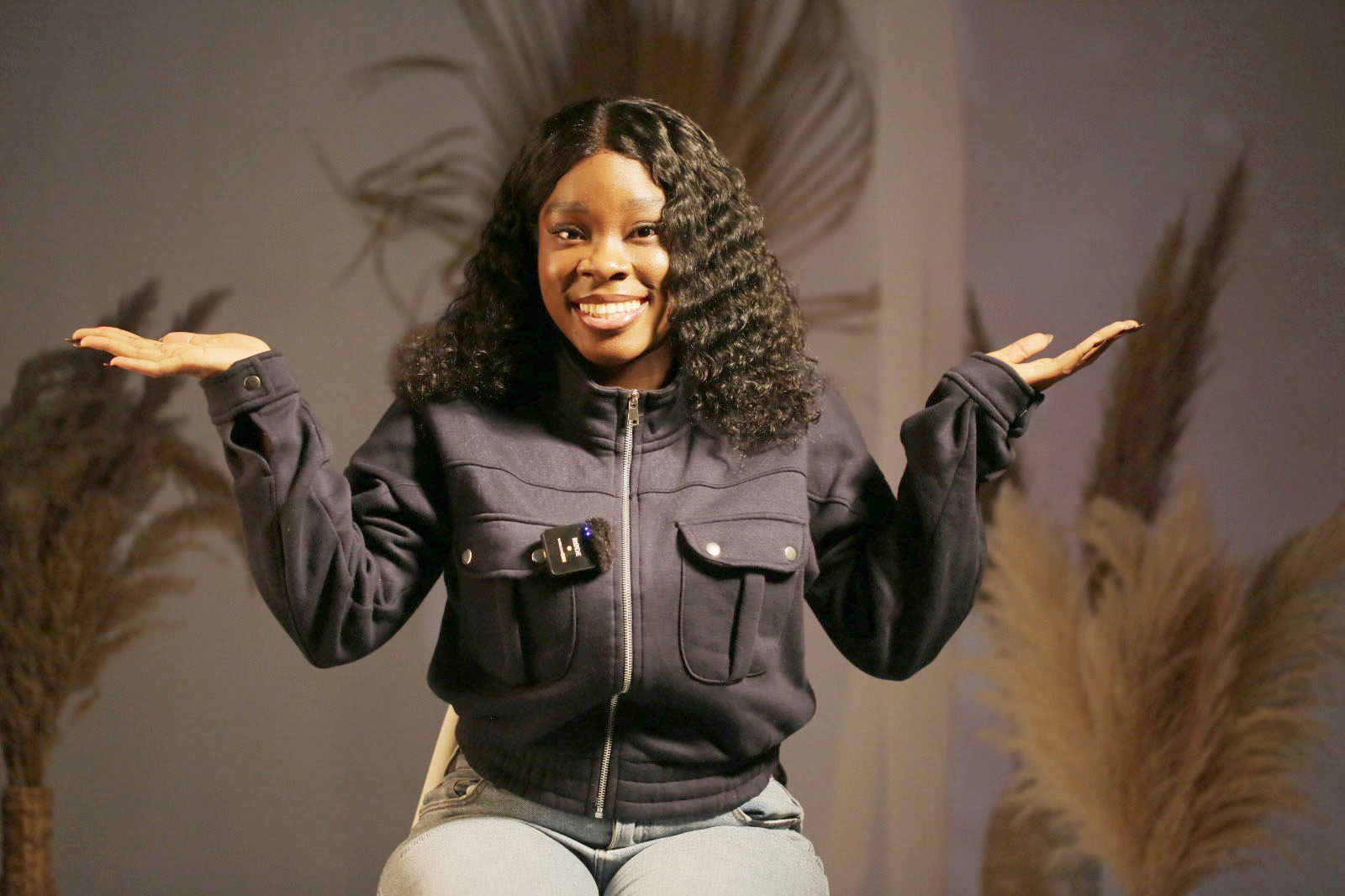
- She Didn’t Just Pass The FIFA Exam, She Opened Doors For Others
By Enam Obiosio
Okike Maria Okon, recognised as the youngest female Fédération Internationale de Football Association-licensed (FIFA-licensed) football agent in Africa, has expanded her industry footprint beyond personal certification by establishing Football Agent Laboratory (FAL), a platform designed to train and prepare aspiring football agents across Africa.
DECISION HIGHLIGHT
Rather than treating professional qualification as a personal milestone, Okike Okon has converted individual access into ecosystem-building infrastructure, using her position to widen African participation in football representation.
DECISION MEMO
There is a difference between people who break barriers and people who alter systems. The former achieve personal distinction. The latter create institutional consequences.
What makes Okike’s rise strategically notable is not merely that she passed one of the football industry’s most demanding professional certification thresholds. It is that she appears to understand something many celebrated first-movers never do, symbolic breakthroughs matter little if they end with the individual.
For decades, Africa has remained one of global football’s richest talent reservoirs while continuing to occupy a disproportionately marginal role in the business structures surrounding that talent. African players routinely enter elite football systems; African intermediaries far less so. The continent has long supplied athletic value while external markets retained disproportionate influence over representation, negotiation, and career architecture. Okike’s response to that imbalance has been pointedly practical.
Through the FAL, she is building what many in African sport have spoken about for years but few have executed, a structured talent pipeline not for players, but for football business operators. Her platform focuses on preparing aspiring agents to understand the mechanics of representation, the legal and contractual frameworks of football commerce, and the strategic role intermediaries play in determining career outcomes.
That intervention is more consequential than the headline achievement that made her visible.
Passing the FIFA Agent Exam may establish credibility. Building systems that help others do the same establishes relevance.
In doing so, Okike is quietly contesting one of the football industry’s oldest implicit assumptions, that Africa’s place in the sport is principally on the field rather than in the commercial and negotiating rooms where long-term value is shaped.
Her strategic significance, therefore, lies not simply in representation optics or gender symbolism, though both are notable. It lies in her apparent recognition that if Africa wishes to exert greater control over the value generated by its football talent, it must participate more substantively in the governance and economics of the game itself.
Becoming the youngest female FIFA-licensed agent in Africa is, on its own, an extraordinary achievement. But what makes Okike’s story compelling is not the title, it is what she chose to do with it. She did not stop at entry. She began building access.
From Akwa Ibom State, a place where football lives in the rhythm of everyday life, Okike has understood early that talent was never the problem. The real gap was knowledge, structure, and representation. Too many young Africans dreamed of global football without understanding the systems that governed it. So, she has created one.
Through the FAL, Okike is quietly redefining what it means to succeed in football without ever stepping onto the pitch. Her work focuses on preparing aspiring agents, young men and women who may never have imagined themselves in the negotiation rooms where careers are decided. Her approach is deliberate. It is inclusive. It is structured.
She teaches not just how to pass the FIFA Agent Exam, but how to understand the business behind the game. How contracts work. How representation shapes outcomes. How influence is built, not assumed. Those who encounter her would often speak first of her composure. Then her clarity. Then, inevitably, her conviction.
Because beneath the calm is a clear mission, Africa should not only produce football talent. It should produce those who represent that talent.
DATA BOX
• Youngest female FIFA-licensed football agent in Africa
• Founder, Football Agent Laboratory (FAL)
• Focus areas: Agent examination preparation, football business education, representation strategy, contract literacy
• Strategic issue addressed: African underrepresentation in football agency and player representation markets
WHO WINS / WHO LOSES
Winners: Aspiring African football agents, emerging women in sports business, African footballers seeking localised representation expertise, broader African sports commercial ecosystem.
Losers: Traditional gatekeepers benefiting from low African intermediary participation, entrenched external actors dominating representation value chains.
POLICY SIGNALS
Okon’s model highlights a persistent gap in African sports development strategy: institutions continue to overinvest in athlete development while underinvesting in surrounding commercial, governance, and representation infrastructure.
INVESTOR SIGNAL
Africa’s sports economy remains structurally underdeveloped beyond athlete production. Platforms professionalising ancillary sectors such as representation, athlete management, and sports advisory indicate emerging white-space opportunities within the continent’s sports business ecosystem.
RISK RADAR
Scalability remains the key execution test. Without broad institutional uptake or demonstrable trainee placement outcomes, Football Agent Laboratory may remain a compelling concept without systemic market impact. Sustained relevance will depend on converting educational credibility into measurable industry penetration.
Discover more from StakeBridge Media
Subscribe to get the latest posts sent to your email.