

By Jennete Ugo Anya
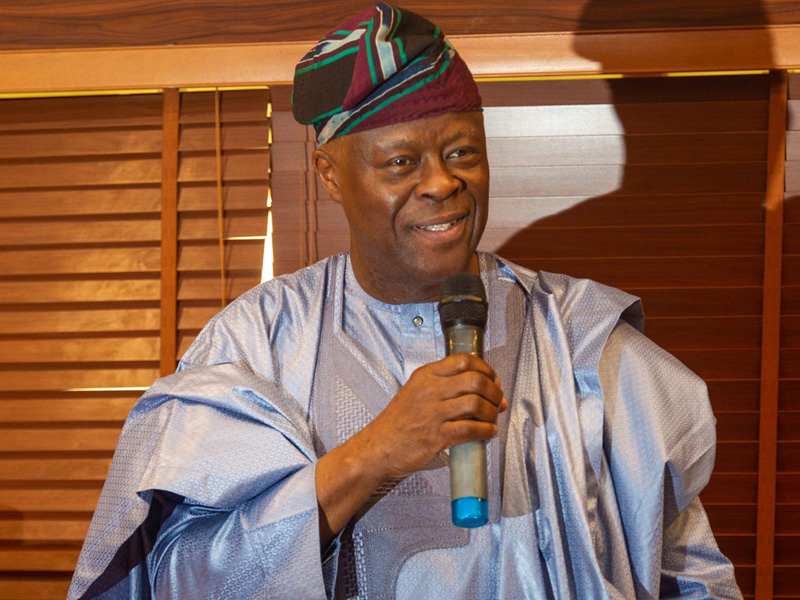
The Honourable Minister of Finance and Coordinating Minister of the Economy, Mr. Wale Edun, has recently outlined Nigeria’s agenda ahead of the 2026 International Monetary Fund and World Bank Spring Meetings, positioning the country to seek lower-cost capital, fairer global financial conditions, and stronger multilateral support as geopolitical shocks intensify inflationary pressures despite improved oil revenue prospects.
DECISION HIGHLIGHT
Nigeria is using the Spring Meetings to reposition its reform narrative before global lenders and investors, arguing that while domestic reforms have improved resilience, external geopolitical shocks are materially raising adjustment costs and warrant broader international support.
DECISION MEMO
Mr. Edun, is advancing a more nuanced macroeconomic message than in previous international engagements: that Nigeria’s reform programme remains intact, but the global environment is now imposing fresh inflationary and financing pressures that require external accommodation.
He explicitly framed Nigeria’s appeal around the need for “lower cost of capital, fairer global financial conditions, and additional support for developing economies,” arguing that such support is necessary for “reducing fiscal strain, attracting investments, and ensuring that ongoing reforms translate into tangible welfare improvements for Nigerians.”
That framing reflects a federal government increasingly aware that reform credibility alone may not sustain political and economic momentum if inflation continues eroding household incomes faster than reforms generate visible welfare gains.
The administration’s challenge is that rising crude prices now produce mixed outcomes. They improve fiscal revenues and foreign exchange earnings, yet simultaneously worsen domestic inflation because deregulated downstream pricing passes global oil shocks more directly into the local economy. In effect, the very reforms designed to improve fiscal transparency have increased the immediacy of imported inflation transmission.
Edun acknowledged this tension directly, warning that “the inflationary impact of the current geopolitical crisis remains a major concern,” particularly as it “affects household incomes and complicates efforts to lift millions out of poverty.”
The government’s argument is therefore shifting from simple reform advocacy to reform-plus-external-support advocacy, namely that reforming economies should not bear the full burden of global shocks without concessional financial support from the international system.
This positioning gains further relevance against deteriorating global macro conditions. Ms. Kristalina Georgieva, Managing Director of the International Monetary Fund, has cautioned that the Fund expects weaker global growth and warned that prices are unlikely to return quickly to pre-conflict levels, noting that the world economy is facing “asymmetric shocks” from the conflict.
That external warning materially reinforces Nigeria’s case that inflationary pressures may remain structurally elevated for longer than previously anticipated.
The broader strategic implication is that Nigeria is attempting to persuade international stakeholders that macroeconomic reform should now be met with financing flexibility, not simply policy endorsement.
DATA BOX
Petrol price increase since conflict escalation: Over 50 percent
Petrol price range: N1,260 toN1,330 per litre
Previous petrol price range: N890 toN900 per litre
Diesel price increase: Over 70 percent
Peak diesel price: ApproximatelyN1,550 per litre
Strategic engagement: 2026 International Monetary Fund/World Bank Spring Meetings
Nigeria reform implementation period: Since 2023
Primary policy asks: Lower-cost capital, fairer financing terms, expanded multilateral support
WHO WINS / WHO LOSES
Winners, if Nigeria secures improved support, include the federal government through lower financing pressure, private investors through improved macro stability prospects, and vulnerable households if fiscal space improves for targeted interventions.
Losers include households and businesses if inflation persists without offsetting support, particularly energy-dependent sectors and low-income consumers.
POLICY SIGNALS
The federal government is signalling that macroeconomic reform remains official policy, but that external financial architecture is increasingly being framed as a determinant of reform success.
It also signals a transition in government messaging from stabilisation alone toward investment-led growth, conditional on more supportive financing conditions.
INVESTOR SIGNAL
Investors should interpret Nigeria’s Spring Meetings posture as an effort to preserve reform credibility while seeking to de-risk the next phase of economic transition through cheaper and more flexible capital.
The administration is signalling that its growth strategy now depends materially on improved financing conditions and stronger private-sector capital mobilisation.
RISK RADAR
Primary risks include prolonged geopolitical conflict, persistently elevated inflation, weaker emerging-market capital flows, and delayed monetary easing.
Secondary risks include domestic reform fatigue if external support does not materialise and living costs remain elevated.
Overall, Mr. Edun’s international positioning reflects a federal government attempting to defend reform continuity while candidly acknowledging that global shocks are materially complicating Nigeria’s transition from stabilisation to inclusive growth.
Discover more from StakeBridge Media
Subscribe to get the latest posts sent to your email.