

By Olumide Johnson
Dangote Group, through its upstream joint venture West African Exploration and Production, has initiated crude oil well testing in Nigeria’s Niger Delta, with first commercial output expected within weeks. The Vice-President of Dangote Group, Devakumar Edwin, confirmed commencement of standard well tests, while Olajumoke Ajayi, Chief Executive Officer of West African Exploration and Production, disclosed current production of 4,500 barrels per day from Oil Mining Lease 72, projected to rise to 15,000 barrels per day. The upstream push, supported by an 85 percent Dangote stake and partnerships with Nigerian National Petroleum Company Limited and First Exploration and Petroleum Development Company, is designed to supply the Dangote refinery and reduce dependence on third-party crude sourcing.
DECISION HIGHLIGHT
Vertical integration into upstream oil production to stabilise feedstock supply for refining operations.
DECISION MEMO
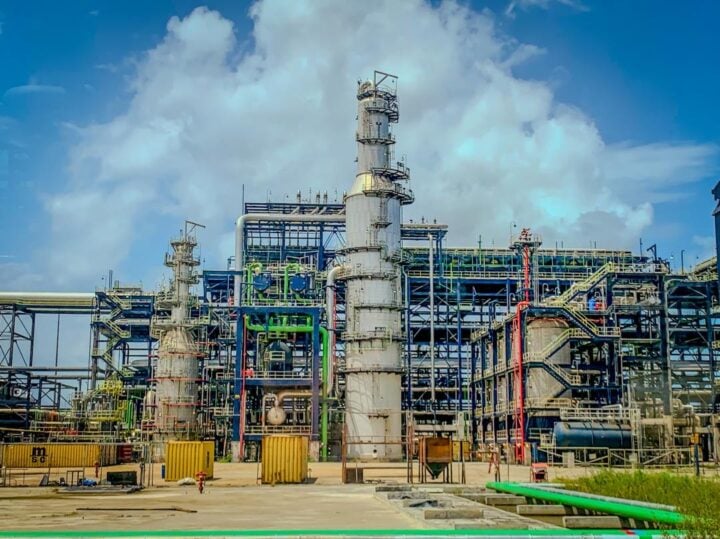
The move signals a structural shift from downstream dependency to upstream control. Dangote Group is internalising crude supply risk, a key vulnerability that constrained refinery throughput despite installed capacity. By acquiring producing assets and initiating output, the group is repositioning its refinery as part of a closed-loop value chain rather than a price-taking processor.
Edwin stated: “We have opened a well and begun standard testing… after that point, oil can start to be pumped in larger volumes.” The sequencing suggests a phased ramp-up rather than immediate scale, indicating operational caution and capital discipline.
Olajumoke Ajayi, Chief Executive Officer of West African Exploration and Production, confirmed early-stage production metrics, reinforcing that the assets are transitioning from dormant licences to active supply nodes.
David Bird, Chief Executive Officer of Dangote refinery, framed the integration more broadly, noting that indigenous production combined with owned logistics “could offer the refinery a fully integrated and attractive source of stable crude supply.” The addition of shipping capacity indicates an attempt to control not only production but also transportation economics.
However, the integration remains partial. Joint venture structures and commercial obligations imply that crude allocation will still be governed by market pricing dynamics. The “arms-length” reference suggests that internal supply may not automatically displace external procurement where pricing differentials exist.
DATA BOX
• Initial production: 4,500 barrels per day (Oil Mining Lease 72)
• Target short-term output: 15,000 barrels per day
• Historical peak (assets): 21,000 barrels per day (1999)
• Dangote stake in upstream venture: 85 percent
• Working interest: 45 percent in Oil Mining Leases 71 and 72
• Location: ~22 km offshore, near Bonny terminal
• Nigerian National Petroleum Company Limited allocation: 7 cargoes (May), up from 5
WHO WINS / WHO LOSES
Winners: Dangote refinery, integrated supply chain operators, logistics-linked service providers.
Losers: Third-party crude suppliers, intermediaries benefiting from supply gaps, import-dependent refiners.
POLICY SIGNALS
Reinforces Nigeria’s push for indigenous participation across the oil value chain, aligning upstream production with domestic refining capacity.
INVESTOR SIGNAL
Vertical integration improves supply security and margin predictability, strengthening long-term asset valuation, though execution remains capital intensive.
RISK RADAR
Key risks include production ramp-up delays, joint venture coordination constraints, crude pricing conflicts, and operational exposure in Niger Delta assets.
Discover more from StakeBridge Media
Subscribe to get the latest posts sent to your email.