

By Kingsley Ani
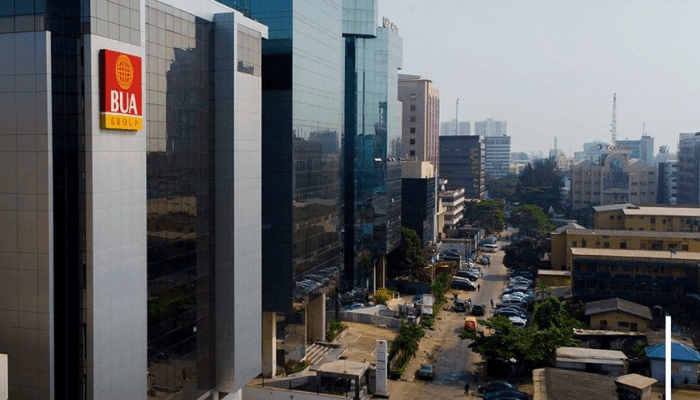
BUA Group, led by Mallam Abdul Samad Rabiu, looks to distribute a record N842.64 billion in dividends through BUA Foods Plc and BUA Cement Plc, nearly tripling the N303.42 billion paid in 2024. Concurrently, he approved a N30 billion staff reward programme for 510 long-serving employees in Nigeria, reinforcing a governance-led capital allocation model anchored on shareholder returns and workforce incentives.
DECISION HIGHLIGHT
Aggressive dividend expansion alongside internal wealth redistribution, signalling prioritisation of shareholder yield and stakeholder alignment over retained earnings accumulation.
DECISION MEMO
The payout reflects a deliberate capital allocation stance rather than a one-off performance spike. BUA is converting earnings strength into immediate shareholder value, suggesting confidence in cash flow sustainability and limited near-term reinvestment constraints.
The dual-track distribution, dividends to shareholders and direct cash transfers to employees, reframes corporate governance as a value distribution mechanism rather than a compliance function. This approach strengthens internal cohesion while reinforcing external investor confidence.
However, the scale of payout raises a structural question. Sustained high dividend ratios can constrain future capital expenditure flexibility, particularly in capital-intensive sectors such as cement and industrial processing. The implicit assumption is that ongoing expansion projects, including refinery investments, are either sufficiently funded or sequenced to avoid liquidity strain.
Faruk Umar, President of the Association for the Advancement of Rights of Nigerian Shareholders (AARNS), stated: “The way he’s been running his companies, treating his employees, dealing with customers, and even we shareholders are quite encouraging.” Umar added that “when corporate leaders see their success more as a blessing to the community… the entire country will be better for it.” The endorsement reflects alignment between governance optics and shareholder expectations.
DATA BOX
• Total dividend payout: N842.64bn (2026) vs N303.42bn (2024)
• BUA Foods Plc dividend: N504bn
• BUA Cement Plc dividend: N338.64bn (N10 per share)
• BUA Foods Plc revenue: N1.77trn (2025) vs N1.53trn (2024)
• BUA Foods Plc profit after tax: N518.39bn vs N266bn
• BUA Cement Plc revenue: N1.18trn vs N876.47bn
• BUA Cement Plc profit after tax: N356.04bn vs N73.91bn
• Employee reward programme: N30bn to 510 staff
• Combined market value of subsidiaries: ~N26trn
WHO WINS / WHO LOSES
Winners: Shareholders, long-tenured employees, income-focused investors, governance-sensitive capital.
Losers: Retained earnings buffers, future capex flexibility, investors prioritising long-term reinvestment over yield.
POLICY SIGNALS
Reinforces a private-sector governance model where capital distribution, transparency, and workforce incentives are positioned as instruments of economic contribution, not solely profit extraction.
INVESTOR SIGNAL
Strong dividend yield profile enhances attractiveness to income investors and institutional funds. Governance signalling improves credibility, though sustainability of payout ratios remains a key evaluation metric.
RISK RADAR
Primary risk lies in over-distribution relative to future capital needs. Secondary risks include earnings volatility in commodity-linked segments and potential pressure on balance sheet resilience if expansion cycles intensify.
Discover more from StakeBridge Media
Subscribe to get the latest posts sent to your email.