

By Johnson Emmanuel
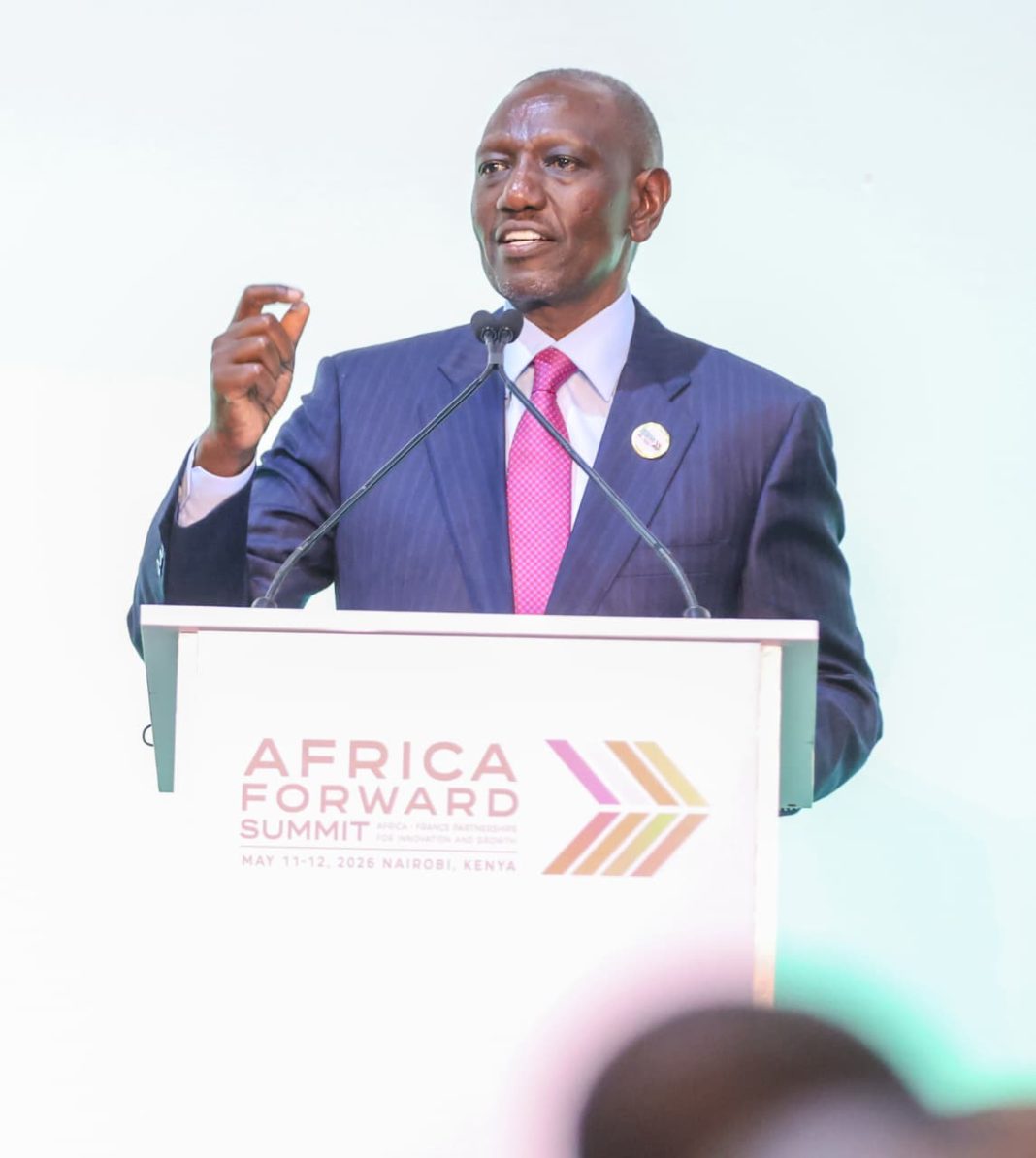
Kenyan President, William Ruto, speaking recently at the Africa Forward Summit 2026 at the Kenyatta International Convention Centre in Nairobi, called for a restructuring of Africa’s economic relationship with the global financial system, arguing that the continent must transition from aid dependency toward industrialisation, domestic capital mobilisation and financial sovereignty. Addressing heads of state, investors and global business leaders, Ruto advocated reforms to international financing structures, proposed stronger African-led investment systems and urged the continent to leverage its demographic scale, natural resources and domestic savings to finance long-term development and industrial transformation.
DECISION HIGHLIGHT
Ruto’s intervention signals intensifying continental momentum toward African-controlled financing systems, industrial value addition and reduced dependence on externally structured development models.
DECISION MEMO
Ruto’s address reflects a broader ideological and economic shift emerging across African leadership circles, where development strategy is increasingly being reframed around ownership, productivity and institutional self-determination rather than aid-centred engagement.
His declaration that “Africa is not part of the global problem” and “Africa is in fact the solution to the global challenges that exist today” captures a growing continental effort to reposition Africa from a peripheral development narrative toward a central role within future global growth systems.
The speech also reveals increasing frustration with global financial structures perceived to penalise African economies through high sovereign risk pricing, restrictive financing terms and distorted credit assessments.
Ruto argued: “The age in which Africa’s development was principally framed through aid, dependency, and unsustainable borrowing must give way to a new paradigm grounded in investment, innovation, domestic resource mobilisation, and strategic partnerships built on sovereign equality and mutual benefit.”
His advocacy for an African credit rating agency reflects growing efforts to create alternative financial assessment mechanisms capable of reducing what many African policymakers view as structural bias within global capital markets.
Central to the address was Ruto’s argument that Africa already possesses sufficient internal capital to finance major development ambitions if institutional weaknesses and fragmented investment systems are addressed.
“Africa must increasingly finance Africa,” Ruto stated, noting that the continent holds “more than $4 trillion in long term domestic savings, including over $1 trillion in pension and insurance assets.”
He cited Kenya’s National Infrastructure Fund, which reportedly mobilised nearly $1 billion within four months, alongside the country’s affordable housing programme that generated almost $4 billion through domestic financing structures over three and a half years.
Ruto’s rejection of raw commodity dependency also aligns with rising African industrial policy ambitions linked to energy transition opportunities and regional manufacturing.
“Africa cannot accept a future in which it simply exports raw green minerals while industrial value addition and technological innovation take place elsewhere,” he stated. “That model belongs to the past.”
The speech further framed Africa’s youth population as a strategic economic asset rather than a demographic liability.
“Our youth population is not a burden to be managed,” Ruto said. “It is an extraordinary strategic advantage to be invested in.”
His remarks on global governance structures also revealed broader geopolitical ambitions. Ruto argued: “No global governance architecture can credibly claim to be democratic, representative, or just while a substantial part of humanity remains absent from the table.”
Despite the criticism, Ruto maintained a collaborative posture, stating: “Africa does not seek confrontation. Africa seeks partnership.”
By the conclusion of the address, the speech had evolved beyond Kenya’s domestic agenda into a wider articulation of African economic self-positioning.
“The Africa we envision,” Ruto said, “is an Africa of confidence, an Africa of ideas, an Africa of innovation, an Africa of enterprise, an Africa that believes in itself.”
DATA BOX
- Event: Africa Forward Summit 2026
- Location: Kenyatta International Convention Centre, Nairobi
- Key speaker: President William Ruto of Kenya
- Estimated African domestic savings referenced: more than $4 trillion
- Pension and insurance assets referenced: more than $1 trillion
- Kenya National Infrastructure Fund mobilisation: nearly $1 billion within four months
- Kenya affordable housing mobilisation: nearly $4 billion over three and a half years
- Africa’s projected global population share by 2050: one in four people globally
- Strategic sectors referenced:
- Renewable energy
- Advanced manufacturing
- Green minerals
- Infrastructure
- Artificial intelligence
- Fintech
- Digital commerce
- Structural priorities identified:
- Domestic resource mobilisation
- Industrialisation
- Regional integration
- Financial sovereignty
- Youth investment
WHO WINS / WHO LOSES
Winners:
- African infrastructure and industrial sectors requiring patient capital
- Domestic institutional investors and pension ecosystems
- Youth-driven innovation and technology industries
- Economies pursuing regional integration and value addition
Losers:
- Commodity export dependency models
- External financing systems benefiting from high African risk premiums
- Economies lacking governance and institutional credibility
POLICY SIGNALS
Ruto’s address signals stronger continental advocacy for alternative financing systems, industrial policy expansion and African-led economic integration. It also reflects increasing resistance to development frameworks perceived as perpetuating dependency and external control.
INVESTOR SIGNAL
The speech reinforces Africa’s attempt to reposition itself as a long-term investment destination anchored on demographics, renewable energy, industrial growth and expanding consumer markets. The emphasis on domestic capital mobilisation may also strengthen confidence around local currency infrastructure financing and institutional investment ecosystems.
RISK RADAR
Africa remains exposed to fragmented markets, governance weaknesses, currency volatility, sovereign debt pressures and inconsistent industrial policy execution. The success of financial sovereignty ambitions will depend heavily on institutional credibility, regulatory coordination and the ability to convert domestic savings into productive long-term investment.
Discover more from StakeBridge Media
Subscribe to get the latest posts sent to your email.