

- Reforms target stronger foreign investor confidence
- Fiscal discipline anchors Nigeria’s global investment push
- Transparency pledges aim to reassure global capital markets
As global capital becomes increasingly selective, nations seeking investment must do more than announce reforms; they must demonstrate consistency, transparency and institutional resolve. President Bola Ahmed Tinubu’s engagement with leading international investors in Paris reflects Nigeria’s intensifying effort to reposition itself as a credible long-term investment destination. Enam Obiosio examines how the administration is leveraging fiscal reforms, policy stability and financial disclosure commitments to reshape external perceptions of Africa’s largest economy, while testing whether sustained execution can convert investor optimism into tangible economic gains.
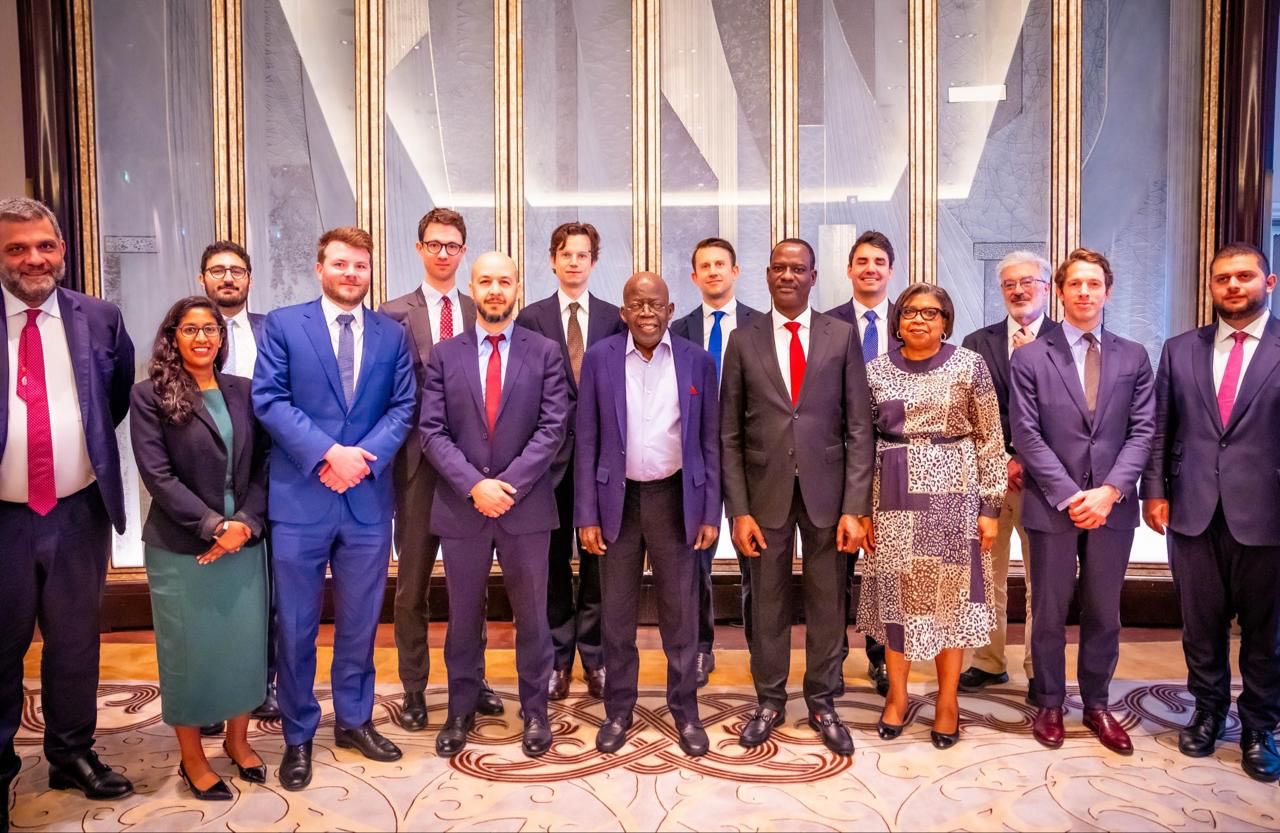
President Bola Ahmed Tinubu met global institutional investors in Paris, France, on May 5, as part of his three-nation trip aimed at reinforcing confidence in Nigeria’s ongoing economic reforms and long-term growth strategy. At the engagement, Honourable Minister of Finance and Coordinating Minister of the Economy, Mr. Taiwo Oyedele, stated that Nigeria recorded 11.2 percent gross domestic product (GDP) growth in dollar terms in 2025, reinforcing the administration’s target of building a $1 trillion economy by 2030. Oyedele also pledged quarterly publication of financial data to deepen transparency. Director-General of the Debt Management Office (DMO), Ms. Patience Oniha, assured investors of responsible debt financing and sustainable debt management practices. Tinubu stated that his administration remained committed to policy stability, fiscal discipline, oil sector transparency, and security reforms, including police decentralisation and disruption of terrorist financing networks. Investors from Citibank, Amundi, BlueCrest, Ninety-One, Kirkoswald Capital, Principal Finisterre, Prudential Global Investment Management, and Mesarete Capital attended the meeting, noted in a release signed by Special Adviser to the President on Information and Strategy, Mr. Bayo Onanuga.
DECISION HIGHLIGHT
The Tinubu administration is increasingly repositioning Nigeria’s reform narrative around international investor confidence, macroeconomic credibility, and long-term policy continuity rather than short-term domestic political accommodation.
DECISION MEMO
The Paris engagement reflects a strategic recalibration in Nigeria’s economic diplomacy, where the Presidency is attempting to convert domestic reform credibility into external capital confidence.
By directly engaging global institutional investors, the administration appears focused on demonstrating that recent policy reforms, particularly subsidy removal, exchange rate liberalisation, fiscal tightening, and debt restructuring discipline, are not temporary adjustments but components of a longer-term economic restructuring framework.
The repeated emphasis on “policy stability” and “diligent execution” reveals awareness within government that investor scepticism towards Nigeria has historically been shaped less by reform announcements and more by policy reversals, institutional inconsistency, and execution gaps. Tinubu’s messaging therefore appears designed to assure international capital markets that current reforms will survive beyond immediate political cycles.
Oyedele’s disclosure of 11.2 percent GDP growth in dollar terms also carries symbolic importance. The administration is increasingly framing economic performance through internationally recognisable metrics intended to reposition Nigeria’s investment narrative away from macroeconomic fragility towards scale potential and growth resilience.
Equally significant is the pledge to publish quarterly financial data. This suggests recognition that transparency itself has become an investment variable, particularly for sovereign markets facing scrutiny over debt sustainability, revenue mobilisation, and fiscal reporting standards.
Oniha’s intervention on sustainable debt management reinforces this broader strategy. Nigeria’s debt profile remains a central concern for international investors, and the government appears determined to present borrowing discipline and fiscal management as stabilising anchors within the reform programme.
The meeting also highlights a subtle political dimension. An investor’s question regarding Tinubu’s post-2027 agenda indicates that international investors are increasingly evaluating Nigeria’s reform programme through the lens of political continuity and succession certainty. Tinubu’s response, centred on fiscal discipline and transparency, suggests that the administration wants reforms to be viewed as institutional rather than personality-driven.
More broadly, the Paris engagement demonstrates how Nigeria’s economic strategy is becoming increasingly externally communicative. The administration is not merely implementing reforms domestically; it is actively marketing reform continuity to global capital allocators whose confidence affects foreign exchange liquidity, sovereign borrowing costs, and investment flows.
DATA BOX
- Location of investor meeting: Paris, France
- Date of statement: May 5, 2026
- President involved: Bola Ahmed Tinubu
- Gross domestic product growth in dollar terms for 2025: 11.2 percent
- Long-term economic target: $1 trillion economy by 2030
- Key institutions represented:
- Ministry of Finance
- Debt Management Office
- Citibank
- Amundi
- BlueCrest
- Ninety-One
- Kirkoswald Capital
- Principal Finisterre
- Prudential Global Investment Management
- Mesarete Capital
- Core reform themes highlighted:
- Fiscal discipline
- Oil sector transparency
- Policy stability
- Debt sustainability
- Security reform
- New transparency commitment: Quarterly financial data publication
- Official statement signatory: Bayo Onanuga, Special Adviser to the President on Information and Strategy
WHO WINS / WHO LOSES
The federal government potentially strengthens its credibility with institutional investors seeking policy consistency, sovereign stability, and reform continuity within Africa’s largest economy.
Financial institutions, portfolio investors, and sectors linked to infrastructure, energy, and capital markets may benefit if stronger investor confidence translates into improved capital inflows and lower sovereign risk perception.
However, domestic groups negatively affected by ongoing reform adjustments, particularly subsidy removal and exchange rate liberalisation, may remain exposed to elevated living costs and economic adjustment pressures while long-term reform benefits gradually materialise.
POLICY SIGNALS
The administration is signalling that fiscal consolidation, market liberalisation, and macroeconomic restructuring remain central pillars of Nigeria’s medium-term economic direction.
The commitment to quarterly financial disclosures also indicates a stronger institutional emphasis on transparency and measurable reporting standards as tools for rebuilding sovereign credibility.
The inclusion of security reform within economic discussions further suggests that the government increasingly views security stability as an economic variable directly tied to investment attractiveness.
INVESTOR SIGNAL
The Paris engagement reinforces Nigeria’s attempt to restore international investor confidence after years of foreign exchange instability, policy unpredictability, and fiscal strain.
Institutional investors may interpret the administration’s emphasis on consistency, transparency, and debt discipline as evidence of stronger macroeconomic coordination.
The reform narrative may also support medium-term optimism around Nigeria’s capital markets, sovereign debt profile, and investment climate if execution remains consistent.
RISK RADAR
The principal risk remains execution credibility. Sustained investor confidence will depend less on international engagements and more on measurable domestic outcomes tied to inflation control, fiscal discipline, and foreign exchange stability.
There is also political continuity risk. Investor concerns regarding post-2027 policy direction suggest lingering uncertainty about whether reforms will remain durable across future political transitions.
A secondary risk lies in social adjustment pressure. Prolonged economic hardship linked to ongoing reforms could increase domestic resistance and complicate reform sustainability despite improving external investor sentiment.
Discover more from StakeBridge Media
Subscribe to get the latest posts sent to your email.