

By Olumide Johnson
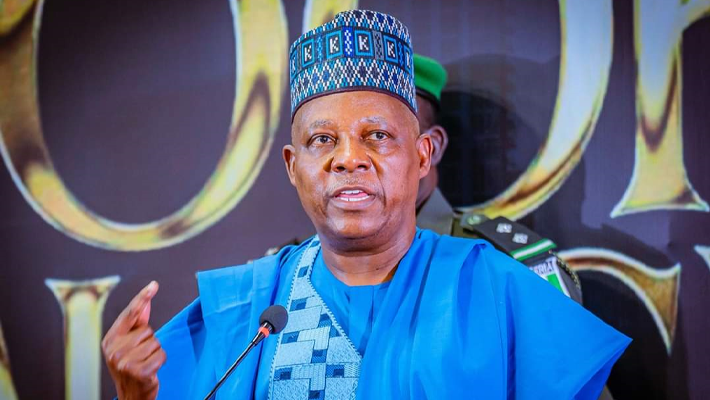
Vice President Kashim Shettima recently said that Nigeria’s debt service-to-revenue ratio declined from 120 percent in December 2022 to 68 percent in 2025 following ongoing tax reforms introduced under President Bola Ahmed Tinubu’s administration. Represented by Special Adviser to the President on Economic Affairs, Dr. Tope Fasua, Shettima spoke at the 2026 Tax Conference organised by the Chartered Institute of Taxation of Nigeria (CITN) in Abuja.
The conference, themed ‘Tax Reforms and Global Relevance: Positioning Nigeria’s Tax System for a Sustainable Future,’ also featured Minister of Finance and Coordinating Minister of the Economy, Mr. Taiwo Oyedele, and President and Chairman of Council of CITN, Mr. Innocent Ohagwa.
Shettima said that the reforms, which took effect from January 1, 2026, represented Nigeria’s first major tax overhaul in more than 35 years and were aimed at strengthening fiscal sustainability, improving revenue mobilisation and supporting the administration’s ambition of building a $1 trillion economy by 2030.
He stated that “the only antidote” to Nigeria’s high debt service burden was stronger government revenue driven by “well-thought-through and properly-established fiscal laws.” Shettima added that reforms would help Nigeria shift “from a nation that borrows to survive to one that invests to thrive.”
Oyedele said that the reforms were not designed to increase taxation, but to build “a stronger fiscal foundation for long-term national development,” while addressing structural weaknesses such as fragmented administration, multiple taxation, weak compliance and unstable revenues. Ohagwa described taxation as central to Nigeria’s transition away from oil dependence and urged professionals to support implementation through transparency and compliance.
DECISION HIGHLIGHT
Nigeria is repositioning tax reform as a fiscal stabilisation and economic competitiveness strategy aimed at reducing debt vulnerability, widening the tax base and supporting long-term economic restructuring.
DECISION MEMO
The administration’s tax reform narrative increasingly reflects a strategic shift from short-term revenue collection towards broader fiscal restructuring and institutional modernisation.
Shettima’s disclosure that the debt service-to-revenue ratio declined from 120 percent to 68 percent is economically significant because it addresses one of the central vulnerabilities confronting Nigeria’s public finance system, the extent to which government revenues had become consumed by debt obligations. The reduction suggests some improvement in fiscal breathing space, although the ratio remains elevated by international standards.
The reforms also reveal a wider attempt to rebuild state credibility around taxation. Oyedele’s emphasis on fairness, clarity and reduced compliance burden suggests the administration recognises that weak trust in the tax system has historically undermined compliance and revenue expansion.
The government’s effort to exempt low-income earners and small businesses from taxation further reflects an attempt to politically reposition fiscal reforms as growth-supportive rather than extraction-driven. Shettima’s repeated defence of the reforms against criticism indicates awareness that public resistance remains a major implementation risk.
At the institutional level, the reforms represent one of the most ambitious attempts in decades to harmonise Nigeria’s fragmented tax architecture. Multiple taxation, overlapping enforcement and weak coordination across government tiers have long increased business costs and discouraged formalisation.
However, the administration’s emphasis on competitiveness also highlights a deeper concern. Nigeria’s fiscal system is increasingly being evaluated not only on revenue generation, but on its ability to attract investment, support productivity and compete within a global economy shaped by mobile capital and integrated supply chains.
The role assigned to the Nigeria Revenue Service (NRS), state tax authorities, Joint Revenue Board and Tax Ombuds structure additionally signals an expanding governance framework around compliance enforcement and fiscal coordination.
Yet implementation remains the defining challenge. While the reforms seek to modernise fiscal administration, success depends on whether government can reduce discretionary enforcement, sustain institutional coordination and convince taxpayers that higher compliance will translate into improved public services and economic stability.
Overall, the reforms reflect an effort to transform taxation from a narrow revenue tool into a central instrument of macroeconomic management and national competitiveness.
DATA BOX
- Debt service-to-revenue ratio in December 2022: 120 percent
• Debt service-to-revenue ratio in 2025: 68 percent
• Tax reforms implementation date: January 1, 2026
• Nigeria’s economic target: $1 trillion economy by 2030
• First comprehensive tax overhaul period: over 35 years
• Tax exemption threshold for individuals: earnings of N1 million and below
• Tax exemption threshold for businesses: annual turnover of N100 million and below
• Conference organiser: Chartered Institute of Taxation of Nigeria
• Conference location: Abuja
WHO WINS / WHO LOSES
Winners:
• Low-income earners exempted from personal income tax
• Small businesses with annual turnover below N100 million
• Formal sector investors seeking more predictable tax administration
• Government institutions pursuing stronger fiscal sustainability
Losers:
• Informal operators outside the tax compliance framework
• Revenue leakages linked to fragmented tax administration
• Businesses benefiting from regulatory ambiguity and weak enforcement
• Fiscal structures dependent on inefficient collection systems
POLICY SIGNALS
- Stronger emphasis on domestic revenue mobilisation
• Shift towards harmonised and centralised tax administration
• Expansion of pro-business and pro-poor tax positioning
• Greater institutional coordination across tax agencies
• Reduced dependence on oil-linked fiscal structures
INVESTOR SIGNAL
The reforms may improve Nigeria’s medium-term fiscal outlook if revenue expansion continues reducing debt servicing pressure. Greater clarity, lower compliance friction and harmonised administration could strengthen investor confidence, particularly among formal sector operators.
However, investors will continue monitoring implementation consistency, enforcement behaviour and whether revenue gains translate into infrastructure improvement, macroeconomic stability and predictable operating conditions.
RISK RADAR
- Resistance to tax reforms across informal and political structures
• Weak implementation coordination among government tiers
• Compliance fatigue amid broader economic pressures
• Public distrust linked to service delivery deficits
• Revenue underperformance despite expanded tax framework
• Institutional overlap and enforcement inconsistency
• Risk of reform dilution during political transition cycles
Discover more from StakeBridge Media
Subscribe to get the latest posts sent to your email.