

By Olumide Johnson
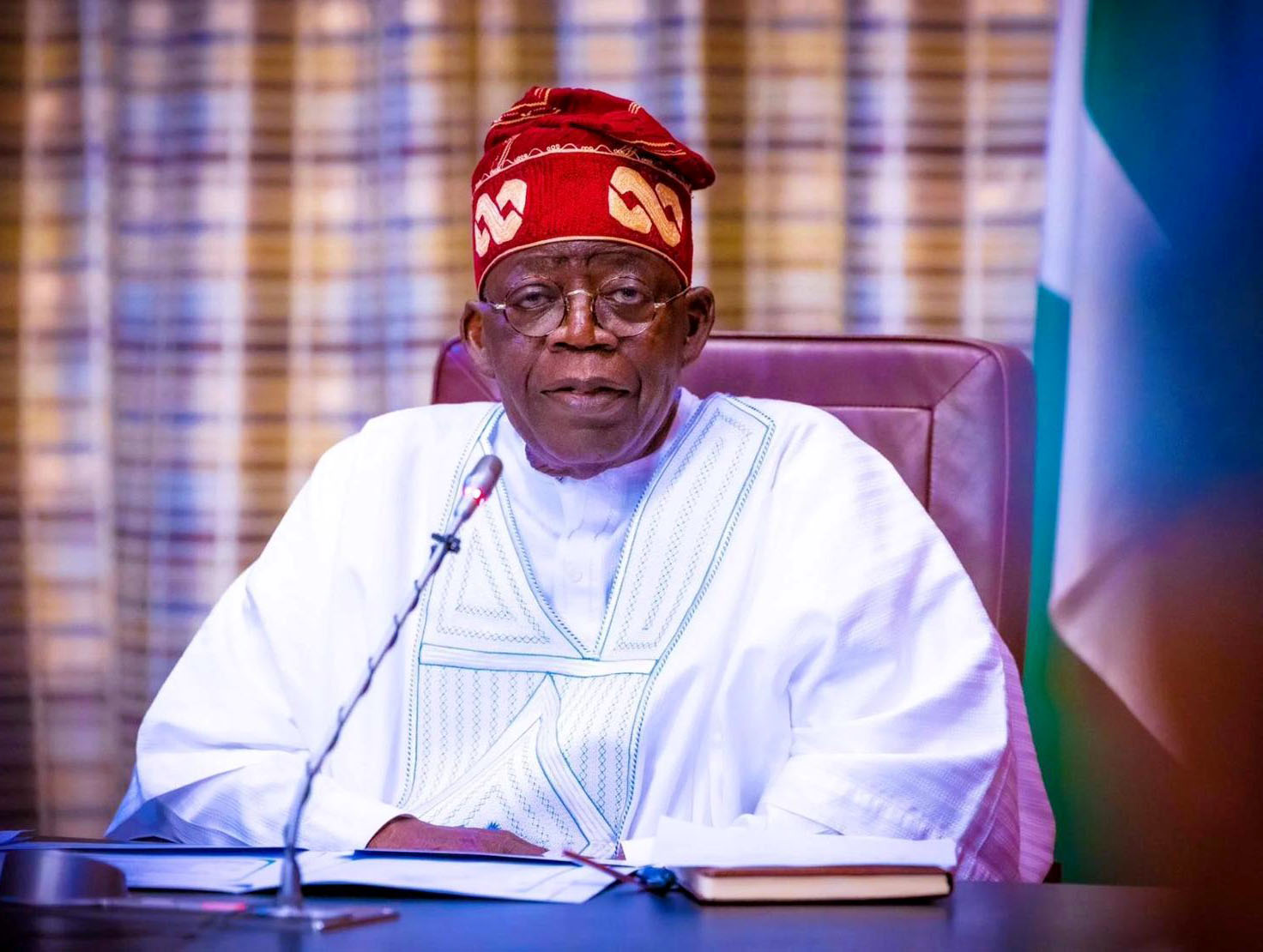
President Bola Ahmed Tinubu recently said that Africa’s manufacturing sector remains underdeveloped because of illicit financial flows, restrictive global financial policies and high borrowing costs that weaken industrial competitiveness across the continent. Speaking at the Africa Forward Summit in Nairobi, Kenya, co-hosted by President Emmanuel Macron of France and President William Ruto of Kenya, Tinubu argued that Africa contributes less than two percent to global manufacturing because it continues exporting raw materials while importing finished products.
Addressing leaders from over 30 countries during a session on financing industrial development, Tinubu asked: “How can an African manufacturer compete with competitors in Europe, Asia, or North America when borrowing costs in Africa are five to ten times higher?”
The president said Nigeria had implemented major reforms including fuel subsidy removal, exchange rate unification and a banking recapitalisation programme exceeding $45.5 billion to restore investor confidence. However, he warned that debt servicing obligations projected at about $11.6 billion in 2026 continue to constrain industrial and infrastructure investments.
Tinubu also advocated local mineral processing, domestic crude refining and pharmaceutical manufacturing, while linking maritime security, blue economy expansion and migration management to broader industrial development objectives.
DECISION HIGHLIGHT
Tinubu is reframing Africa’s industrialisation challenge as a structural financing problem rooted in global capital inequality, debt pressures and commodity-dependent economic architecture.
DECISION MEMO
Tinubu’s intervention reflects a broader attempt to reposition Africa’s industrial underperformance from a domestic governance narrative towards a systemic global finance debate.
The core argument is that African industrialisation cannot scale competitively under financing conditions where capital costs remain structurally higher than those faced by manufacturers in advanced economies. By highlighting borrowing costs that are “five to ten times higher”, Tinubu directly linked monetary conditions to Africa’s weak manufacturing share within global production systems.
The remarks also reveal Nigeria’s effort to defend its ongoing economic reforms within an international policy context. Fuel subsidy removal, exchange rate liberalisation and banking recapitalisation are being presented not merely as domestic stabilisation measures, but as prerequisites for restoring productive investment credibility.
However, Tinubu’s acknowledgement that Nigeria could spend $11.6 billion on debt servicing in 2026 exposes the contradiction confronting many African economies. Governments are attempting to finance industrial transformation while simultaneously managing elevated debt repayment burdens that compress fiscal space for infrastructure and productive sector investments.
The emphasis on illicit financial flows further shifts attention towards extractive sector leakages and capital flight. The United Nations Economic Commission for Africa estimate of $40 billion lost annually suggests that industrial underdevelopment is not solely a financing shortage problem, but also a value-retention failure linked to commodity export dependency.
Tinubu’s integration of blue economy policy into the industrialisation debate also reflects an expanding definition of manufacturing competitiveness. Maritime security, port modernisation, digital logistics and interoperable trade systems are increasingly being treated as industrial infrastructure rather than isolated transport concerns.
The broader signal is that Nigeria is advocating a continental development framework built around value addition, regional integration and financial restructuring rather than continued raw commodity export dependence.
DATA BOX
- Africa’s contribution to global manufacturing: below 2 percent
• Nigerian banking recapitalisation programme: over $45.5 billion
• Nigeria’s projected 2026 debt servicing obligation: about $11.6 billion
• United Nations Economic Commission for Africa estimate of annual illicit financial flows from extractive sector: about $40 billion
• Summit location: Nairobi, Kenya
• Summit participation: leaders from over 30 countries
WHO WINS / WHO LOSES
Winners:
• African manufacturers if financing conditions improve
• Local refining, mineral processing and pharmaceutical sectors
• Maritime infrastructure and logistics operators
• Regional integration and intra-African trade frameworks
• Financial institutions positioned for industrial financing expansion
Losers:
• Economies dependent on raw commodity export structures
• Industries exposed to high borrowing costs and imported production inputs
• Countries vulnerable to illicit financial outflows
• External systems benefiting from Africa’s low-value export dependence
POLICY SIGNALS
- Stronger advocacy for reform of global financial architecture
• Increased emphasis on domestic value addition and industrial processing
• Expansion of blue economy and maritime integration strategy
• Continued support for exchange rate and subsidy reforms despite adjustment pressures
• Growing focus on regional industrial coordination and trade interoperability
INVESTOR SIGNAL
Tinubu’s remarks reinforce Nigeria’s positioning as a reform-oriented economy seeking industrial and infrastructure capital despite macroeconomic adjustment pressures. The policy direction supports long-term opportunities in refining, manufacturing, logistics, maritime infrastructure and industrial finance.
However, elevated debt servicing obligations, high domestic borrowing costs and structural financing constraints continue to weaken near-term industrial competitiveness. Investors are likely to remain focused on policy consistency, financing accessibility and infrastructure execution capacity before scaling manufacturing exposure.
RISK RADAR
- Persistently high borrowing costs across African economies
• Rising sovereign debt servicing pressures
• Continued illicit financial outflows from extractive industries
• Weak industrial competitiveness against lower-cost global producers
• Infrastructure deficits constraining manufacturing efficiency
• Commodity dependence and limited value addition
• Regulatory fragmentation affecting regional industrial integration
Discover more from StakeBridge Media
Subscribe to get the latest posts sent to your email.