

By Johnson Emmanuel
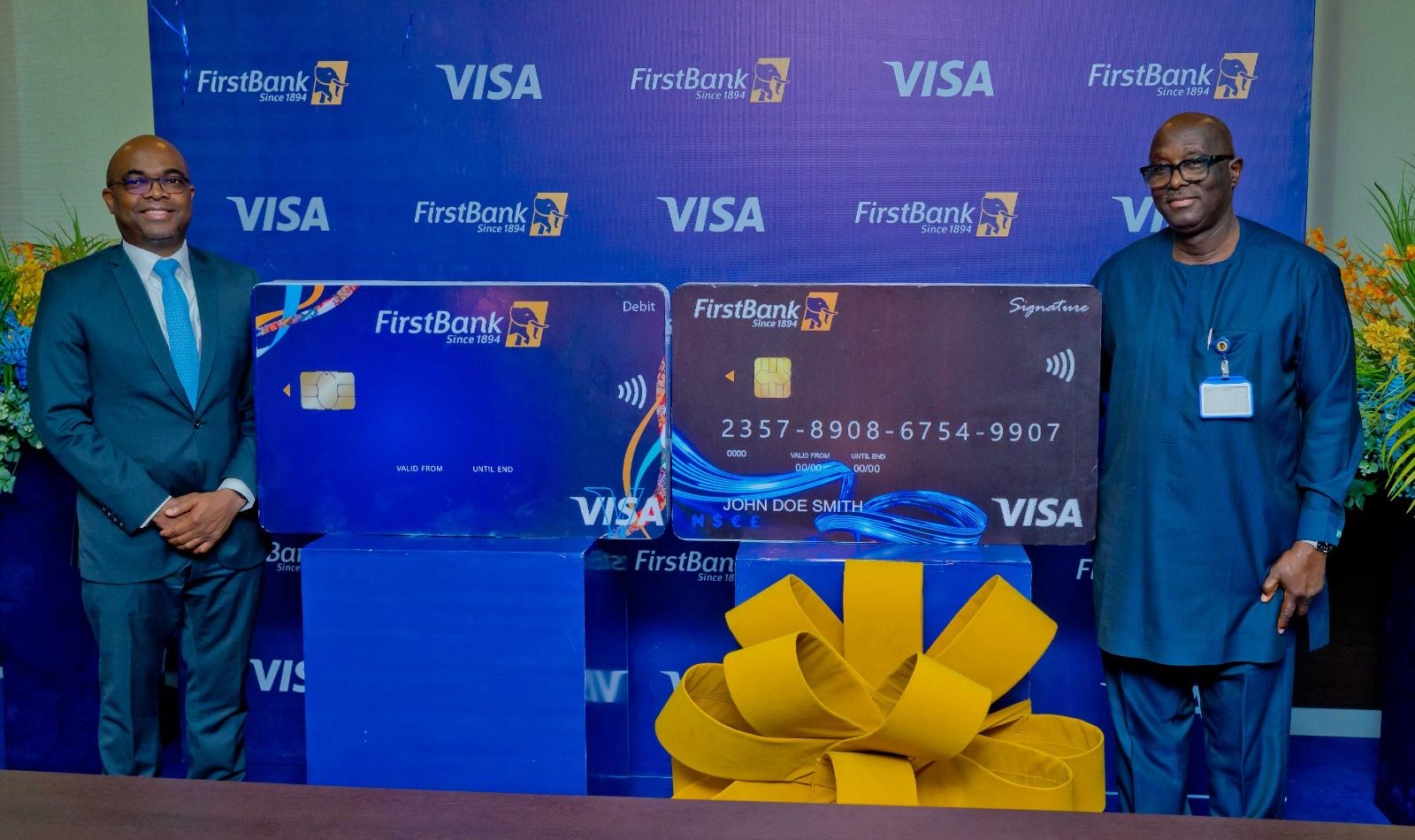
First Bank of Nigeria Limited, in partnership with global payments firm Visa, recently launched the Visa Signature Card and the Naira Visa Debit Card in Lagos, targeting both affluent and mass-market customers through expanded digital payment functionality and cross-border transaction flexibility.
The premium Visa Signature Card integrates multi-currency capability into a single chip, automatically switching between the naira, United States dollar, British pound and euro depending on user location. The card also includes lifestyle-linked services such as airport lounge access, concierge support, travel insurance and emergency medical assistance.
The Head of Cards and Messaging Services at First Bank, Obianuju Ondo-Okereke, said: “Today marks a key milestone as we launch the Visa Signature and the Naira Visa Debit Cards, designed to deliver seamless, secure, and globally connected payment experiences to our customers.”
Ondo-Okereke stated further: “Our dual offering is purposely designed, the Visa Signature Card is for the affluent segment, while the Naira Visa Debit Card is for everyday customers requiring convenience, accessibility, and global usability.”
Vice President and Cluster Head for Visa West Africa, Andrew Uaboi, stated: “The partnership between Visa and First Bank demonstrates our shared commitment to catering for the diverse needs of the customers that the bank has today.”
Uaboi again stated: “Together with these two products, we are underscoring that we understand the financial journey that every customer needs to go through, putting in place products and solutions that meet them at each stage.”
The Group Head of Marketing and Corporate Communications at First Bank, Yinka Ijabiyi, also stated: “The product that we’ve launched here today is also for you. We’re expecting to write about it, but we’re also expecting to get it, experience it and enjoy it.”
In Ijabiyi’s words: “We look forward to continuing our ongoing partnerships, and we’ll definitely be in touch on an ongoing basis.”
First Bank said the cards deploy chip-and-PIN security technology. The Naira Visa Debit Card is available instantly nationwide for a Central Bank of Nigeria-regulated fee of N1,000, while the Visa Signature Card carries a default daily transaction limit of N3 million and delivery within 24 to 48 hours.
DECISION HIGHLIGHT
The rollout reflects a strategic shift by Nigerian banks toward layered payment products combining foreign currency functionality, digital convenience, lifestyle incentives and broader customer segmentation to deepen transaction-based revenue.
DECISION MEMO
The launch demonstrates how Nigerian banks are repositioning payment services from traditional transactional utilities into integrated lifestyle and mobility platforms.
The multi-currency structure of the Visa Signature Card directly responds to growing demand for seamless international payments within a volatile foreign exchange environment. By embedding multiple currencies into one payment instrument, First Bank is targeting customers engaged in international travel, foreign-denominated spending and cross-border commercial activity.
The product also reflects broader competition among banks for affluent customers whose value increasingly lies in transaction velocity and fee generation rather than conventional deposit balances alone. Concierge services, airport access and travel-linked protections indicate that premium banking in Nigeria is becoming more experience-driven and globally aligned.
At the same time, the simultaneous launch of the Naira Visa Debit Card suggests First Bank is balancing premium positioning with mass-market electronic payment expansion. Instant issuance across branches and regulated pricing indicate an institutional push toward higher transaction penetration and cashless adoption at scale.
Visa’s partnership reinforces continued international confidence in Nigeria’s digital payments ecosystem despite inflationary pressures and currency instability. The collaboration also shows that multinational payment firms continue to view Nigeria as a long-term transaction-growth market with significant underbanked potential.
Ijabiyi’s comments introduced an additional reputational layer to the rollout, signalling that First Bank is also positioning the products as public-facing symbols of Nigeria’s evolving financial modernisation narrative rather than purely technical banking instruments.
DATA BOX
- Institutions involved: First Bank of Nigeria Limited, Visa
- Products launched: Visa Signature Card, Naira Visa Debit Card
- Embedded currencies: Naira, United States dollar, British pound, euro
- Premium card daily limit: N3 million
- Debit card issuance fee: N1,000
- Delivery timeline for premium card: 24 to 48 hours
- Security technology: Chip-and-PIN
- Premium benefits: Concierge services, airport lounge access, travel insurance, emergency medical assistance
- Target segments: Affluent customers, retail banking customers
- Distribution scope: Nationwide branch network
WHO WINS / WHO LOSES
Who Wins
- Affluent customers requiring international payment flexibility
- First Bank through premium customer retention and transaction revenue expansion
- Visa through deeper penetration within Nigeria’s digital payments market
- Frequent travellers and globally active professionals
- Electronic payment channels benefiting from higher card adoption
Who Loses
- Smaller banks lacking advanced payment infrastructure
- Cash-dependent transaction ecosystems
- Domestic-only payment channels with limited foreign currency integration
- Consumers excluded from premium financial services due to income constraints
POLICY SIGNALS
- Nigerian banks are accelerating cashless transaction expansion
- Payment competition is shifting toward customer experience and cross-border usability
- Foreign currency-linked retail banking products remain commercially attractive
- Central Bank of Nigeria pricing regulation continues shaping retail card accessibility
INVESTOR SIGNAL
The rollout strengthens signals that transaction banking and digital payments are becoming major non-interest revenue drivers within Nigeria’s financial sector. The partnership also reinforces expectations of continued electronic payment growth despite macroeconomic volatility and pressured consumer purchasing power.
RISK RADAR
- Foreign exchange volatility affecting international transaction costs
- Rising cybersecurity and card fraud exposure
- Narrow premium customer concentration risks
- Regulatory changes affecting foreign currency-linked products
- Inflation weakening retail consumer spending capacity
- Increased competitive imitation reducing long-term product differentiation
Discover more from StakeBridge Media
Subscribe to get the latest posts sent to your email.