

By Ayo Susan
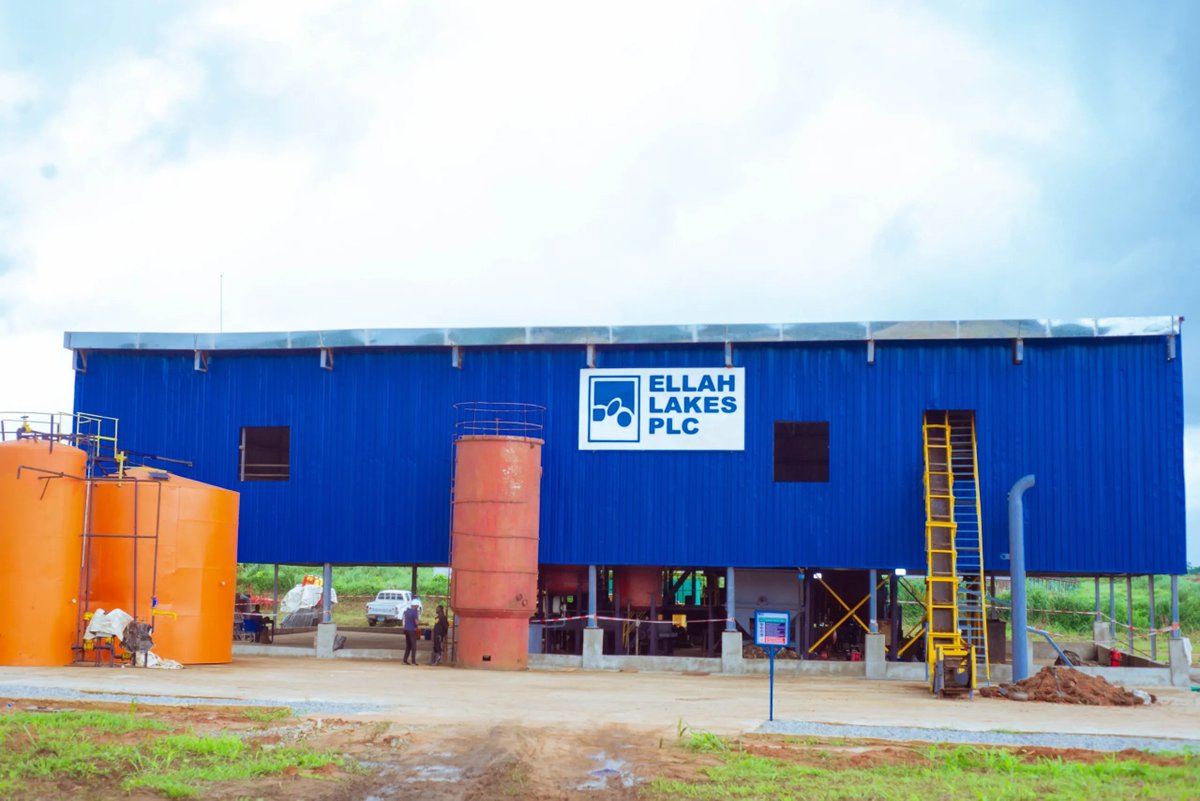
The Chief Executive Officer of Ellah Lakes Plc, Chuka Mordi, has recently announced the acquisition of the first batch of expellers and presses for the company’s planned Palm Kernel Oil (PKO) mill, with installation scheduled for completion by the end of the third quarter of 2026. The investment will enable production of Palm Kernel Oil and Palm Kernel Cake (PKC), expanding value addition from the company’s oil palm operations. Simultaneously, Ellah Lakes disclosed that its pig population in Edo State has exceeded 1,000, while sales of gilts have commenced as part of its expanding livestock business. The company also plans to develop an abattoir and cold-chain facility to strengthen meat processing and market access. Mordi said, “The addition of PKO and PKC production will enable Ellah Lakes to capture further value from its oil palm operations, expand its product base and deepen its participation across the agricultural value chain.”
DECISION HIGHLIGHT
Ellah Lakes is transitioning from a primary agricultural producer towards an integrated agribusiness model by expanding downstream processing and livestock operations to generate multiple revenue streams and improve cash flow resilience.
DECISION MEMO
The latest investments indicate a strategic shift from commodity production towards value-added processing. By entering Palm Kernel Oil and Palm Kernel Cake production, Ellah Lakes seeks to extract additional commercial value from existing plantation assets instead of relying solely on raw agricultural output.
The expansion of the livestock business complements this strategy. With plantation assets requiring longer gestation periods before reaching optimal productivity, piggery operations provide relatively shorter cash conversion cycles capable of supporting operational liquidity. The commencement of gilt sales further broadens the company’s income base while strengthening participation across the livestock value chain.
The proposed abattoir and cold-chain facilities extend the integration strategy beyond production into processing, preservation and distribution. If executed successfully, these assets could reduce post-harvest losses, improve product quality and enable access to higher-value markets.
Mordi said the investments demonstrate continued implementation of the company’s long-term strategy.
“These milestones reflect the continued execution of our strategy to build Ellah Lakes into a more integrated and commercially resilient agribusiness platform.”
He added: “The acquisition of equipment for our PKO Mill advances our move into higher-value processing, while the growth of our piggery operations strengthens an important cash-generating vertical within our business model.”
Operationally, the strategy appears consistent with the company’s recent financial performance. Revenue growth has accelerated significantly, while operating losses have narrowed. However, the business remains loss-making, indicating that scaling production alone may not be sufficient unless accompanied by improved cost efficiency, stronger margins and sustained market demand.
Consequently, the commercial success of the expansion will depend on timely completion of the PKO mill, consistent palm kernel supply, efficient processing, successful marketing of finished products and disciplined capital allocation for future investments.
DATA BOX
- First batch of PKO mill equipment acquired.
- Installation targeted for completion by Q3 2026.
- New products: Palm Kernel Oil and Palm Kernel Cake.
- Pig population exceeds 1,000.
- Sales of gilts have commenced.
- Planned investment includes an abattoir and cold-chain facility.
- Q1 2026 revenue: N359.49 million, up from N19.61 million in Q1 2025, representing approximately 1,734 percent growth.
- Gross profit: N285.35 million, up from N19.61 million.
- Administrative expenses: N280.47 million.
- Personnel expenses: N252.25 million.
- Operating loss: N273.42 million, compared with N514.18 million in Q1 2025, a 46.8 percent reduction.
- Loss per share: Improved to 7 kobo from 19 kobo.
WHO WINS / WHO LOSES
Winners
- Ellah Lakes through broader revenue diversification.
- Customers requiring locally processed palm kernel products.
- Livestock value chain participants.
- Agricultural processors and distributors.
- Investors seeking companies progressing towards integrated agribusiness models.
Losers
- Businesses dependent solely on primary agricultural commodity sales.
- Competitors lacking downstream processing capacity.
- Companies exposed to single-product agricultural revenue models.
POLICY SIGNALS
- Agribusiness investment is increasingly shifting towards value addition rather than raw commodity production.
- Integrated agricultural value chains are becoming central to commercial resilience.
- Livestock and crop integration is emerging as a strategy for improving cash flow stability.
- Processing infrastructure is assuming greater importance in agricultural competitiveness.
INVESTOR SIGNAL
Ellah Lakes’ operational strategy demonstrates progress towards building diversified revenue sources capable of reducing earnings volatility. Strong revenue growth and narrowing operating losses indicate improving commercial momentum. However, sustained investor confidence will depend on successful commissioning of the PKO mill, execution of downstream processing projects, prudent capital expenditure and eventual transition from operating losses to consistent profitability and positive operating cash flow.
RISK RADAR
- Delays in completing the Palm Kernel Oil mill.
- Inadequate palm kernel supply for commercial-scale processing.
- Execution risks associated with the abattoir and cold-chain projects.
- Rising operating and personnel costs.
- Market demand and pricing volatility for palm oil and livestock products.
- Continued profitability risk despite strong revenue growth.
Discover more from StakeBridge Media
Subscribe to get the latest posts sent to your email.