

By Johnson Emmanuel
The African Development Bank Group (AfDB) has become the first multilateral development institution admitted as a full member of the Berne Union, the world’s leading association for export credit and investment insurance, during the 2026 Berne Union Spring Meeting held from 11 to 14 May in Astana, Kazakhstan. The meeting, hosted by Kazakh Export, attracted over 240 delegates from more than 70 countries, including export credit agencies, multilateral development banks, insurers and international financial institutions. The Bank was represented by Nana Spio-Garbrah, Division Manager, Structured Finance and Client Solutions Division, and Caleb N’Doua, Financial Analyst. During the meeting, Prime Minister Olzhas Bektenov of Kazakhstan highlighted “the growing importance of trade connectivity and cross-border investment in an interconnected world,” while Yuichiro Akita, President of the Berne Union, said rising attention to “energy security and critical minerals” meant geopolitical instability was creating “both risk and opportunity for investors.”
DECISION HIGHLIGHT
The AfDB has secured institutional access to the world’s principal export credit and political risk insurance network, strengthening its capacity to mobilise private capital through structured risk-sharing partnerships.
DECISION MEMO
The significance of the membership lies less in institutional recognition than in market access. Export credit agencies and political risk insurers increasingly determine the bankability of large infrastructure projects, particularly in emerging markets where commercial lenders seek stronger risk mitigation.
The bank used its inaugural participation to advocate closer cooperation between multilateral development banks and export credit agencies. During the MDB-ECA Cooperation session, co-led by Spio-Garbrah and Isabel Galdiz of the Export-Import Bank of the United States, participants concluded that “no institution can achieve the Sustainable Development Goals on its own balance sheet.” Recommendations included systematic pipeline sharing, revitalising the Berne Union MDB-ECA cooperation toolkit and joint engagement with the Organisation for Economic Co-operation and Development and rating agencies on recognising multilateral development bank preferred-creditor status and subrogation.
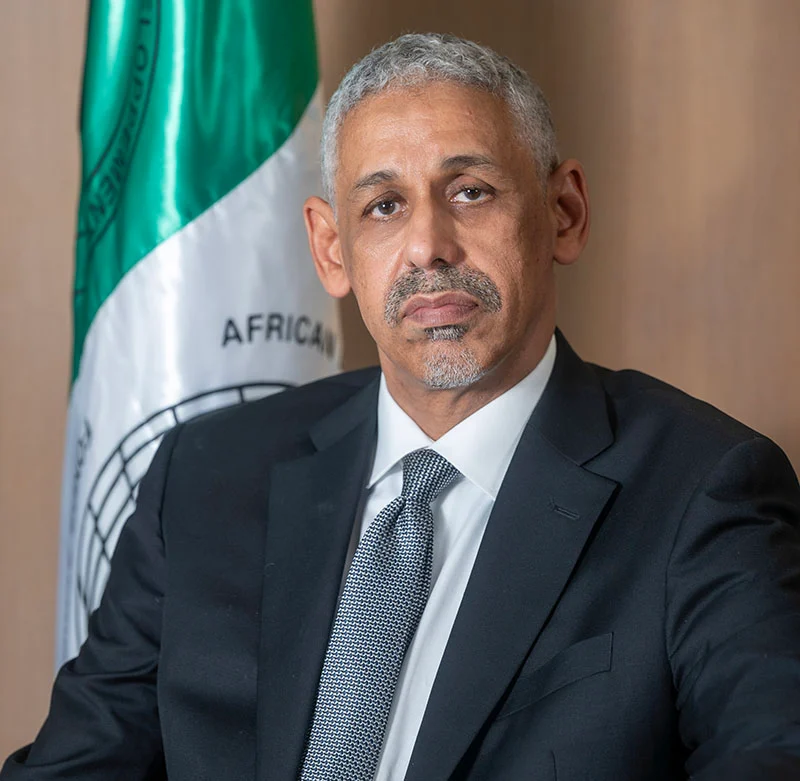
The admission also aligns with the Bank’s implementation of the New African Financial Architecture for Development and President Sidi Ould Tah’s Four Cardinal Points strategy. By joining a risk-sharing community that now comprises 89 member institutions, the bank seeks to address one of Africa’s persistent financing constraints: the disconnect between perceived and actual sovereign risk. The release notes that data from the Global Emerging Markets Risk Database consistently show Africa records the world’s strongest sovereign debt recovery rates, yet remains systematically underinsured and underfinanced.
DATA BOX
- Event: 2026 Berne Union Spring Meeting.
- Date: 11 to 14 May 2026.
- Venue: Astana, Kazakhstan.
- Delegates: Over 240 from more than 70 countries.
- Berne Union founded: 1934.
- AfDB status: First multilateral development institution admitted as a full member with participation rights across Berne Union activities.
- Membership network: 89 member institutions.
- 2026 AfDB project pipeline: More than $20 billion across energy, transport, agriculture, digital infrastructure and financial sector development.
- Theme: “Crossroads.”
- Forum conclusion: “No institution can achieve the Sustainable Development Goals on its own balance sheet.”
WHO WINS / WHO LOSES
Winners
- African infrastructure and trade finance projects.
- Export credit agencies and private insurers seeking structured partnerships.
- Private investors requiring stronger political risk mitigation.
- African governments pursuing blended finance solutions.
Losers
- Projects lacking adequate risk-sharing mechanisms.
- Financing models dependent solely on public sector balance sheets.
- Markets constrained by persistent perceptions of elevated African sovereign risk.
POLICY SIGNALS
- Risk-sharing is becoming central to development finance mobilisation.
- Export credit agencies are assuming greater influence in infrastructure financing.
- Multilateral development banks are strengthening partnerships with commercial risk markets.
- Africa’s financing strategy is shifting towards institutional collaboration rather than concessional lending alone.
INVESTOR SIGNAL
The membership strengthens the AfDB’s ability to structure blended finance, mobilise export credit support and crowd in institutional investors for large-scale infrastructure projects. Combined with a project pipeline exceeding $20 billion in 2026, the move could improve financing efficiency, although investment flows will still depend on project quality, regulatory certainty and effective risk allocation.
RISK RADAR
- Persistent geopolitical uncertainty affecting global trade and investment.
- Continued mismatch between Africa’s risk perception and actual credit performance.
- Dependence on sustained multilateral and private sector coordination.
- Execution risks across large infrastructure programmes.
- Delays in translating institutional partnerships into commercially closed transactions.
Discover more from StakeBridge Media
Subscribe to get the latest posts sent to your email.