

By Jennete Ugo Anya
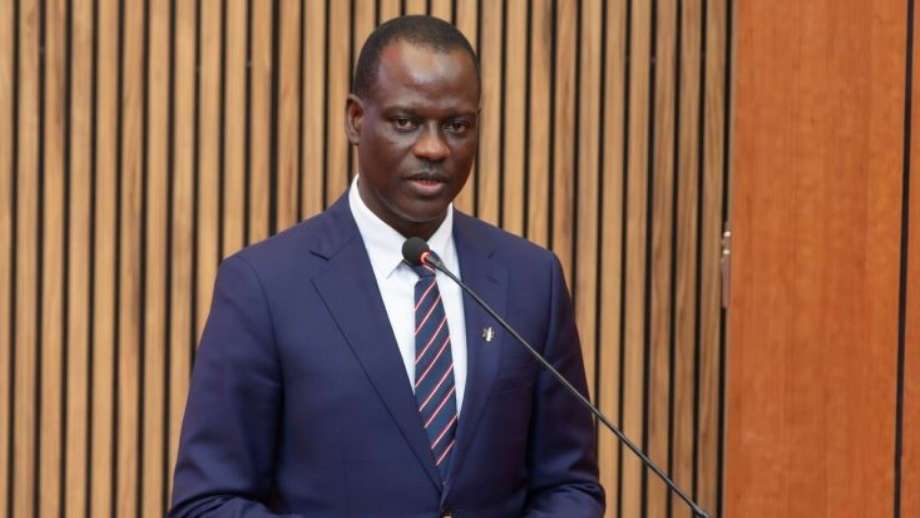
Speaking recently at Invest Lagos 3.0, Honourable Minister of Finance and Coordinating Minister of the Economy, Taiwo Oyedele, argued that Nigeria’s economic future is increasingly being determined at the subnational level, with Lagos emerging as a leading centre for investment attraction, job creation and economic transformation. He said that global investors are now prioritising project-specific opportunities, competitiveness and policy certainty rather than broad national narratives. He linked Nigeria’s improving investment outlook to ongoing reforms, including exchange-rate unification, fiscal restructuring and stronger external reserves.
“The future of Nigeria’s growth story is being written in Lagos,” Oyedele stated.
DECISION HIGHLIGHT
The core policy message is that economic growth is becoming increasingly decentralised.
Oyedele’s remarks suggest that states capable of combining infrastructure, reforms, digital capacity and investor-friendly policies will increasingly determine Nigeria’s growth trajectory and competitiveness.
“Investors do not invest in abstract countries,” he said.
DECISION MEMO
Oyedele’s intervention reflects a broader shift in how global capital evaluates emerging markets.
Investment decisions are increasingly driven by project quality, institutional effectiveness, infrastructure readiness and execution capability. In that environment, subnational governments have become critical economic actors rather than mere administrative units.
Lagos was presented as a case study of this evolution. According to him, the state’s success in attracting investment demonstrates how local reforms can translate into national economic gains.
“Lagos continues to set the pace.”
The minister linked this emerging dynamic to broader macroeconomic reforms undertaken by the federal government. “On the monetary side, we unify the exchange rates, transition to a transparent market-determined foreign exchange market.”
According to him, improvements in reserve accumulation have strengthened economic resilience and investor confidence.
“Moving from a net of under 4 billion dollars just 2-3 years ago in 2023, to over 30 billion dollars net, and nearly 50 billion US dollars gross today.”
Oyedele also pointed to stronger economic performance indicators. “Despite global economic and geopolitical headwinds, Nigeria recorded a GDP growth rate of 3.89% in the first quarter of 2026.”
He argued that international investors are beginning to recognise these improvements. “The global capital markets are taking notice.”
On taxation, he emphasised that current reforms are intended to improve efficiency rather than increase burdens. “Let me emphasise that our goal is not to tax more.”
He added that the reforms seek to strengthen state finances and reduce fiscal distortions. “The new framework assigns a greater share of VAT revenue directly to states.”
The proposed Nigeria Deal Room represents another attempt to connect investors directly with viable opportunities. “To bridge this gap, the Federal Ministry of Finance is establishing a Nigeria Deal Room.”
Taken together, the remarks suggest an economic strategy built around macroeconomic stabilisation, subnational competitiveness and private capital mobilisation.
“Nigeria remains one of the most compelling long-term investment destinations globally.”
“The federal government stands fundamentally committed to crowding in private capital, not crowding it out.”
DATA BOX
- Event: Invest Lagos 3.0
- Reported Gross Domestic Product growth, Q1 2026: 3.89 percent
- Net external reserves referenced: More than $30 billion
- Gross external reserves referenced: Nearly $50 billion
- Previous net reserve level referenced: Less than $4 billion
- Key reform pillars: Exchange-rate unification, fiscal reform, tax simplification and investment facilitation
- Proposed initiative: Nigeria Deal Room
- Strategic focus: State-led investment attraction and public-private partnerships
WHO WINS / WHO LOSES
Winners
- Reform-oriented states attracting private investment.
- Investors seeking bankable projects and policy certainty.
- Infrastructure, technology and industrial sectors.
- States receiving larger value-added tax allocations.
- Businesses benefiting from simplified tax administration.
Losers
- States unable to improve competitiveness and investment readiness.
- Projects lacking commercial viability or execution capacity.
- Economic actors benefiting from fragmented tax structures and regulatory inefficiencies.
POLICY SIGNALS
The remarks reinforce the federal government’s emphasis on macroeconomic stability, fiscal reforms and private-sector-led growth.
They also signal a growing policy preference for empowering states as engines of investment attraction, revenue generation and economic development.
INVESTOR SIGNAL
The strongest signal is the increasing alignment between macroeconomic reforms and investment mobilisation.
Improving reserves, exchange-rate reforms, stronger growth performance and investment facilitation initiatives are being positioned as foundations for attracting both domestic and international capital.
The proposed Nigeria Deal Room indicates a shift from promotional investment narratives towards transaction-focused investment execution.
RISK RADAR
The principal risk remains uneven reform implementation across states.
While leading states may attract significant investment flows, weaker jurisdictions could struggle to compete because of infrastructure deficits and institutional weaknesses.
A second risk is reform continuity. Sustained investor confidence depends on policy consistency and regulatory predictability.
A third risk concerns execution. Investment commitments, fiscal reforms and project pipelines must translate into measurable economic outcomes, employment generation and productivity growth.
The broader implication is that Nigeria’s growth model is increasingly evolving from a centrally driven framework towards one where state-level competitiveness, reform capacity and investment readiness become decisive factors in determining economic performance.
Discover more from StakeBridge Media
Subscribe to get the latest posts sent to your email.