

By Olumide Johnson
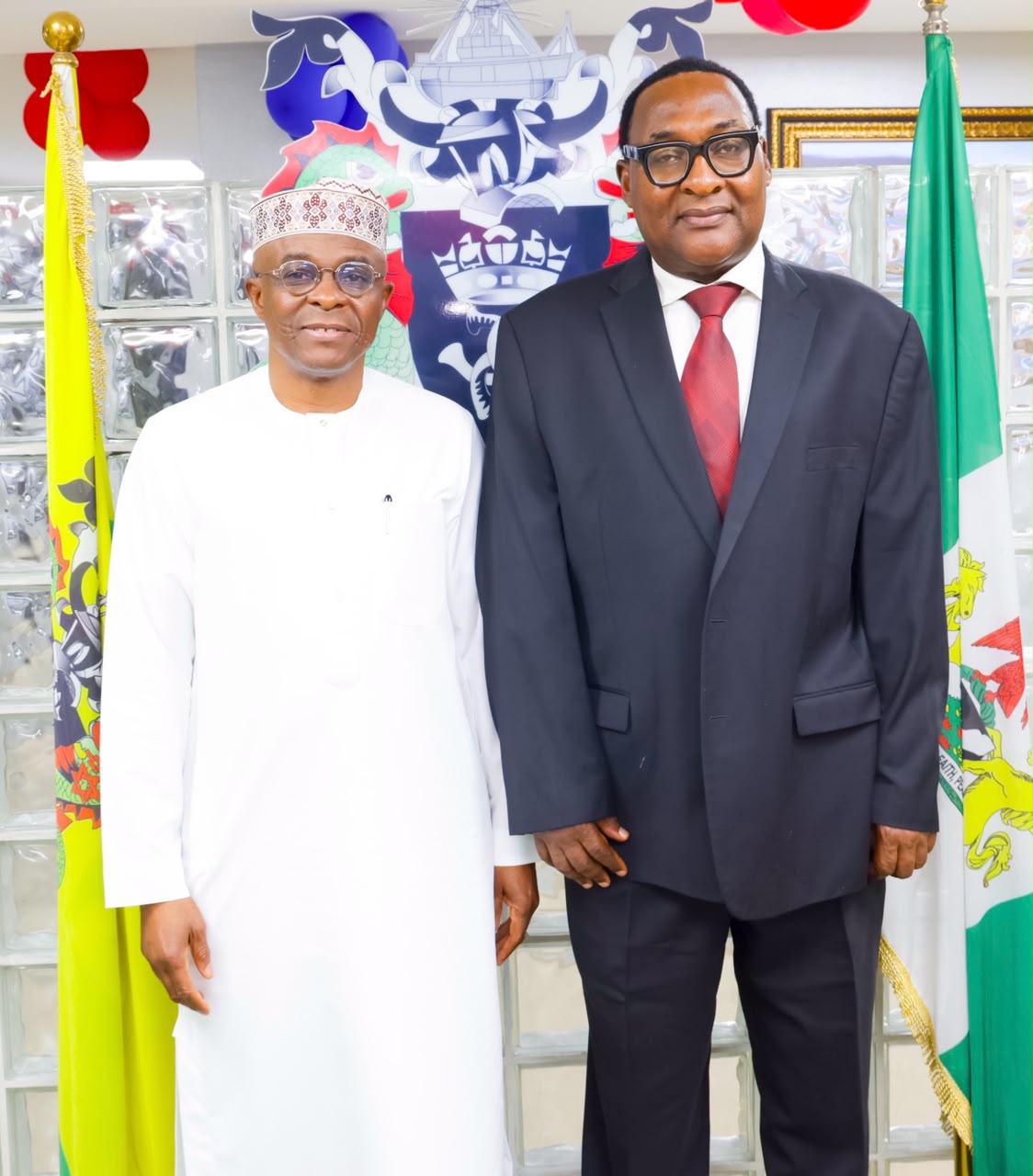
The Nigerian Ports Authority (NPA), led by its Managing Director, Dr. Abubakar Dantsoho, recently hosted Mr. Hassan Bello, Executive Director of Dala Inland Dry Port, and representatives of Funtua Inland Dry Port at its Corporate Headquarters in Marina, Lagos.
The familiarisation visit followed the directive of the Honourable Minister of Marine and Blue Economy, Dr Adegboyega Oyetola, transferring operational oversight of inland dry ports to the NPA. The engagement focused on port integration, infrastructure modernisation, institutional collaboration and improved ease of doing business across Nigeria’s maritime logistics network.
DECISION HIGHLIGHT
The NPA is working to integrate inland dry ports into a coordinated national port system, aligning hinterland cargo operations with seaport modernisation, digital trade facilitation and private-sector investment. Technical consultations, facility inspections and infrastructure assessments will inform subsequent development decisions.
DECISION MEMO
The NPA’s engagement with Dala and Funtua Inland Dry Ports represents a strategically important step towards addressing a longstanding weakness in Nigeria’s maritime logistics system: the disconnect between coastal seaports and inland cargo distribution facilities.
By assuming operational oversight of inland dry ports, the NPA has an opportunity to improve coordination across the national port network. The significance of this transition lies not simply in administrative realignment, but in the prospect of connecting infrastructure investment, cargo handling, digital documentation and hinterland distribution within a more coherent operating framework.
The initiative complements the reported $1 billion loan facility secured for the modernisation of Apapa and Tin Can Island Ports. However, the benefits of modernising coastal terminals will depend partly on the efficiency of the inland logistics network. Without adequate rail connections, modern handling equipment and coordinated cargo documentation, improvements at the seaports could be undermined by delays further along the supply chain.
Speaking during the meeting, Dantsoho emphasised the need to align inland logistics with ongoing seaport upgrades.
“For our Inland Dry Ports to function at the same velocity as the ongoing modernisation across our seaports, we must proactively upgrade dry port infrastructure and technical capacity,” Dantsoho stated.
He further stated: “As we integrate digital systems such as the Port Community System (PCS) and the National Single Window in our seaports, the dry ports must deploy modern equipment and advanced technical capabilities to handle larger cargo volumes and bigger vessels coming to our coast.”
These remarks underline an essential principle of port management: digitalisation and infrastructure modernisation must extend beyond coastal terminals to deliver system-wide efficiency. Inland facilities that cannot match the technical capacity of seaports risk becoming bottlenecks rather than effective extensions of the maritime network.
Dantsoho also commended private-sector initiatives, citing APM Terminals’ establishment of an Export Processing Terminal in Northern Nigeria, while encouraging increased private investment in the dry port ecosystem.
“The journey toward an optimised inland port system is just beginning,” he assured stakeholders, confirming plans for official visits to both Dala and Funtua facilities.
The NPA’s engagement with existing operators is a constructive approach because effective port integration requires consultation, technical assessment and clearly defined operational responsibilities.
Speaking on behalf of the delegation, Bello expressed appreciation for the seamless transition of oversight to the NPA. He referenced the gazetted Port Act, which designates inland dry ports as official ports of origin and destination, and highlighted rail connectivity and systemic logistics constraints affecting hinterland facilities.
The bilateral discussions established a framework for technical consultation, infrastructure integration and physical planning. They also identified the need to assess infrastructure access, site conditions and project requirements before final development decisions are made.
DATA BOX
- Seaport modernisation: Reported $1 billion loan facility.
- Seaports involved: Apapa and Tin Can Island Ports.
- Inland facilities: Dala and Funtua Inland Dry Ports.
- Digital platforms: Port Community System and National Single Window.
- Private-sector example: APM Terminals’ Export Processing Terminal in Northern Nigeria.
- Key constraints: Rail connectivity, infrastructure access, equipment capacity and logistics coordination.
WHO WINS / WHO LOSES
Potential winners: Exporters, importers, manufacturers, freight forwarders, inland businesses and logistics investors could benefit from improved cargo coordination, more efficient distribution and better access to international markets.
Potential losers: Businesses and intermediaries that benefit from fragmented procedures and avoidable logistics delays could face pressure to adapt to more coordinated operations and higher performance expectations.
POLICY SIGNALS
The transition signals a move towards integrated port governance. Priorities include coordinated infrastructure planning, improved rail connectivity, compatible digital systems, clear operational responsibilities and sustained engagement with port operators.
INVESTOR SIGNAL
The integration initiative could strengthen investment opportunities in inland logistics, cargo-handling equipment, rail-linked distribution, export processing and digital trade services.
However, investment decisions should be guided by evidence on cargo demand, infrastructure requirements, project costs and commercial viability. The planned inspections and technical reviews will help establish this foundation.
RISK RADAR
Key risks include inadequate rail connectivity, insufficient equipment, incompatible digital systems, weak coordination and delays in project implementation.
Olumide Johnson is a journalist, reporting on energy, maritime, business, and developments shaping Nigeria’s economy.
Discover more from StakeBridge Media
Subscribe to get the latest posts sent to your email.