

By Jennete Ugo Anya
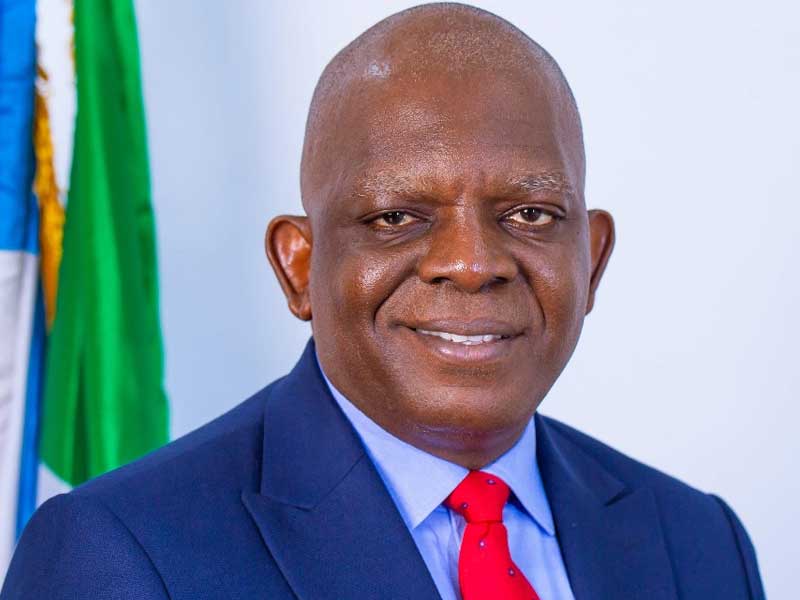
Director-General of the Nigerian Ports Economic Regulatory Agency (NPERA), Dr. Pius Akutah, says the agency now has stronger legal powers to sanction port infractions, with corporate penalties reaching N20 million and repeat violations attracting multiplied penalties. Speaking in Lagos during a courtesy visit by Moses Ebosele, President of the Shipping Correspondents Association of Nigeria, Akutah said that enforcement, standard-setting, automation and digitisation would support more competitive ports and Nigeria’s $1 trillion economic ambition by 2030.
DECISION HIGHLIGHT
NPERA’s regulatory approach combines stronger sanctions with process automation, aiming to make compliance easier while reducing human interference, delays and costs across port operations.
DECISION MEMO
The significance of the new penalty framework lies in its attempt to give economic regulation a clearer enforcement mechanism. Akutah said the previous framework lacked sufficient deterrent power: “In the past, there was no such potency in our law, so we couldn’t enforce anything because the penalties were too insignificant to deter any infraction.”
Under the new framework, first offenders who are individuals face a minimum N500,000 penalty, while corporations can face up to N20 million, with repeated violations attracting higher penalties. Criminal prosecution provisions are also intended to strengthen deterrence.
Akutah stressed that enforcement is not designed to disrupt port activity. “The idea is not to upset the system and make it chaotic or abnormal but rather to create a deterrent regime through the provisions of the law. With the fear of the consequences, they will play by the rules naturally,” he said.
The regulatory model also places automation alongside enforcement. Akutah said, “Ours is to set the standards and promote innovations and digitisation of this sector to the point that those standards become very easy for people to maintain.”
This has a direct cost implication. On reducing human interference and bottlenecks, he said: “Once these processes are seamless, it will reduce costs on its own. The cost component is very crucial to us.”
Akutah also distinguished NPERA’s economic-regulatory role from the Nigerian Ports Authority’s infrastructure mandate, while acknowledging the need for coordination among government agencies conducting port checks.
His wider economic rationale is that port reform should support business activity, not merely government receipts: “It is not just about what revenue the government is making but also how much business is booming in the country. Within a limited time, we will begin to see the results.”
Moses Ebosele said that effective regulation requires “not only sound policies and enforcement, but also clear communication and continuous engagement with stakeholders.”
DATA BOX
- Corporate maximum penalty: N20m.
- Individual first-offender minimum: N500,000.
- Target: $1tn economy by 2030.
- NPERA mandate: economic regulation of Nigeria’s ports.
- NPA mandate: port infrastructure development.
- SCAN 2026 summit: October 29, 2026, Lagos.
- Regulatory priorities: tariffs, cargo clearance, competition and business predictability.
WHO WINS / WHO LOSES
Port users and compliant operators could benefit from clearer standards, faster processes and lower transaction costs. Operators repeatedly violating regulations face increased financial and legal consequences.
POLICY SIGNALS
NPERA is linking enforcement with digitisation, standard-setting, competition and trade facilitation rather than treating penalties as a standalone regulatory tool.
INVESTOR SIGNAL
A more predictable economic-regulatory framework could improve the operating environment for port users and maritime businesses if automation and enforcement reduce clearance delays and transaction costs.
RISK RADAR
Multiple agencies conducting physical checks remain a potential source of delays. NPERA’s effectiveness will depend on coordination, consistent enforcement and successful reduction of human interference without disrupting legitimate port operations.
Jennete Ugo Anya is a journalist and researcher with interests across Nigeria’s economy, public policy, business, development and strategic communications.
Discover more from StakeBridge Media
Subscribe to get the latest posts sent to your email.