

By Kingsley Ani
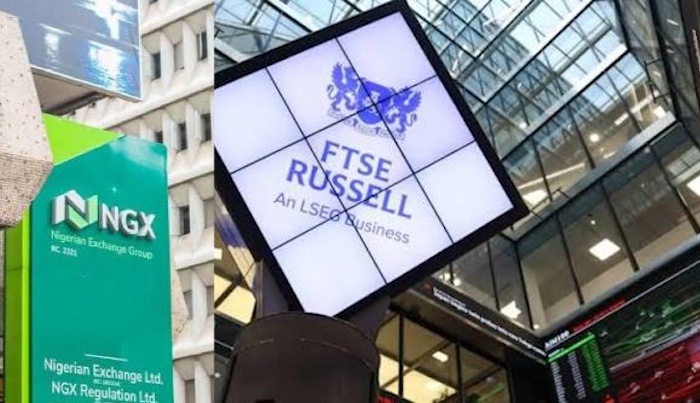
The administration of President Bola Ahmed Tinubu has secured Nigeria’s return to the FTSE Russell Frontier Market classification from the opening of trading on 21 September 2026, ending three years of “Unclassified” status. The reclassification follows improvements in foreign-exchange liquidity and capital repatriation, alongside Securities and Exchange Commission (SEC) clarification of concerns surrounding the transition to T+1 settlement. At the same time, Mr. Taiwo Oyedele, Minister of Finance and Coordinating Minister of the Economy, says macroeconomic stability is strengthening, although the National Economic Council (NEC) is now seeking fiscal and monetary measures to moderate high interest rates.
DECISION HIGHLIGHT
The significance of the FTSE Russell decision is primarily one of market access rather than an automatic capital-flow event. Nigeria has regained eligibility within the global frontier-market investment universe, but whether that translates into sustained foreign investment will depend on the durability of FX liquidity, repatriation, policy consistency and macroeconomic stability.
DECISION MEMO
Nigeria’s return to the FTSE Russell Frontier Market classification represents a reversal of the specific market-access failures that led to its removal in 2023. FTSE Russell identified cleared FX backlogs and the disappearance of material repatriation delays as evidence that the conditions affecting international investors had improved.
The re-entry is therefore more consequential as an institutional validation than as an immediate promise of foreign inflows. Dr Fiona Ahimie, President and Chairman of Council of Chartered Institute of Stockbrokers (CIS), captured the distinction: “Rather, it places Nigerian equities back on the radar of global frontier-market investors and gives index-tracking funds the opportunity to consider Nigerian stocks within their investment universe.”
Her warning is material: “Frontier Market status reopens the door to international capital, but the quality of the investment environment will determine how many investors ultimately walk through it.”
The Chairman of Association of Securities Dealing Houses, Mr. Sehinde Adenagbe, similarly sees the classification as a mechanism for improving visibility, price discovery and liquidity, while potentially encouraging listed companies to strengthen corporate governance, disclosure and investor-relations practices.
The macroeconomic backdrop strengthens the case for renewed market attention. Oyedele said that real gross domestic product (GDP) growth reached 3.89 percent in the first quarter of 2026, headline inflation fell to 15.43 percent in July, reserves rose to $51.96 billion and the naira appreciated 13.5 percent year-on-year by mid-2026. Yet food inflation remained 20.31 percent, while high interest rates continued to constrain businesses.
That tension defines the next stage of reform. The same policy process that has improved external market access must now demonstrate that macroeconomic stability can support productive investment. Oyedele also said that NEC had directed consideration of measures to moderate interest rates, particularly for agriculture, energy, manufacturing, mining and the digital economy.
For Nigeria, therefore, the FTSE decision restores the channel. The harder task is generating the economic conditions capable of sustaining capital through it.
DATA BOX
- FTSE Frontier Market reclassification: 21 September 2026
- Previous status: Unclassified since September 2023
- GDP growth, Q1 2026: 3.89%
- July headline inflation: 15.43%
- July food inflation: 20.31%
- External reserves: $51.96bn
- Naira appreciation, H1 2026: 13.5% year-on-year
- Public debt: N159.28tn, below 37% of GDP
- Debt-service-to-revenue ratio: below 60% in 2025
- Trade surplus, Q1 2026: N34.7tn
- Net FAAC revenues, 2025: N21.9tn
- Capital-market performance: more than 60% dollar return over the past year, according to Oyedele
WHO WINS / WHO LOSES
Potential winners: Nigerian equities, index-eligible companies, foreign portfolio investors, domestic capital-market operators and businesses able to access deeper international capital.
Potential losers: Investors and companies would remain exposed if FX liquidity, policy predictability or high domestic interest rates deteriorate. Reclassification alone provides no protection against renewed market-access constraints.
POLICY SIGNALS
The reform agenda is moving from restoring macroeconomic functionality towards converting stability into investment and broader prosperity. The SEC’s T+1 settlement framework, improved FX access and the planned response to high interest rates indicate an effort to remove both market-access and financing constraints.
INVESTOR SIGNAL
FTSE Russell’s decision expands Nigeria’s investable universe for institutional investors. As Ahimie put it, the classification is “a catalyst, not a cure-all”. The immediate opportunity is renewed visibility; the investment case will depend on whether liquidity, repatriation, valuations and policy stability remain credible.
RISK RADAR
The principal risk is a disconnect between improved market classification and underlying economic conditions. Persistent high interest rates, elevated food inflation, renewed FX pressures or policy inconsistency could limit the capital inflows expected from reclassification. The central test is therefore not whether Nigeria has regained access to the frontier-market universe, but whether it can sustain the conditions that made that access possible.
Discover more from StakeBridge Media
Subscribe to get the latest posts sent to your email.