

By Hannah Yemisi
President Bola Tinubu has transmitted the National School of Government Bill 2026 to the Senate, opening a legislative process to replace the legal framework governing the Administrative Staff College of Nigeria (ASCON) with a new institution focused on leadership development and public sector capacity building.
DEVELOPMENT:
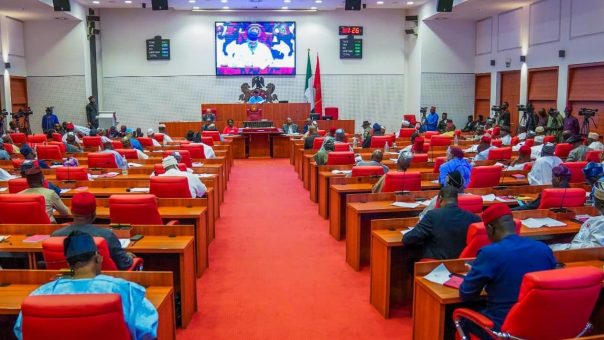
Senate President, Godswill Akpabio, read Tinubu’s letter during plenary on Tuesday. The President said the bill seeks to repeal the Administrative Staff College of Nigeria Act, A-4, Laws of the Federation of Nigeria 2004, and establish the National School of Government, Nigeria.
“Pursuant to Section 58 (2) of the 1999 Constitution of the Federal Republic of Nigeria, as amended, I forward herewith the National School of Government Bill 2026 for the kind consideration of the Senate,” the letter reads.
Tinubu expressed hope that the Senate would give the bill expeditious consideration. Akpabio said that the bill’s clauses and provisions had been attached for consideration before it was referred to the Senate Committee on Rules and Business for further legislative action.
DATA:
Established in 1972, ASCON is located in Topo, Badagry, Lagos State. It provides management training, conducts research and offers consultancy services to strengthen administrative capacity in Nigeria’s public and private sectors.
In 2022, a House of Representatives ad hoc committee investigating duplication of functions among ministries, departments and agencies recommended merging ASCON with the Public Service Institute of Nigeria (PSIN).
Victor Danzaria, who chaired the committee, said both institutions performed similar functions and questioned the continued funding of agencies with overlapping responsibilities.
SIGNIFICANCE:
The proposed legislation raises questions about public sector efficiency, institutional accountability and the deployment of public funds. A new national institution could redefine how government develops leadership, strengthens executive capacity and improves policy delivery.
However, the extent of its benefits will depend on whether the proposed structure addresses existing institutional overlaps and delivers measurable improvements in public administration.
NEXT MOVE:
The immediate focus is the Senate legislative process, including scrutiny of the bill by the Committee on Rules and Business. Its provisions should clarify the proposed institution’s mandate, governance arrangements and relationship with existing public service training agencies.
OUR LENS:
The proposed replacement of ASCON places institutional reform within the broader challenge of improving government performance. The central issue is not simply whether Nigeria establishes a new school of government, but whether the legislation produces clearer institutional responsibilities, stronger leadership capacity and more effective use of public resources.
Hannah Yemisi is a reporter of note, governance, state government, healthcare, sustainability, agriculture, reporting on education, and social developments with a focus on accuracy, context and public relevance.
Discover more from StakeBridge Media
Subscribe to get the latest posts sent to your email.