

By Johnson Emmanuel
The Central Bank of Nigeria (CBN) has pursued financial-sector partnerships in Singapore as Nigerian banks reportedly cut lending by N5.4 trillion across key sectors, highlighting the challenge of translating financial reforms into stronger domestic credit and investment.
DEVELOPMENT
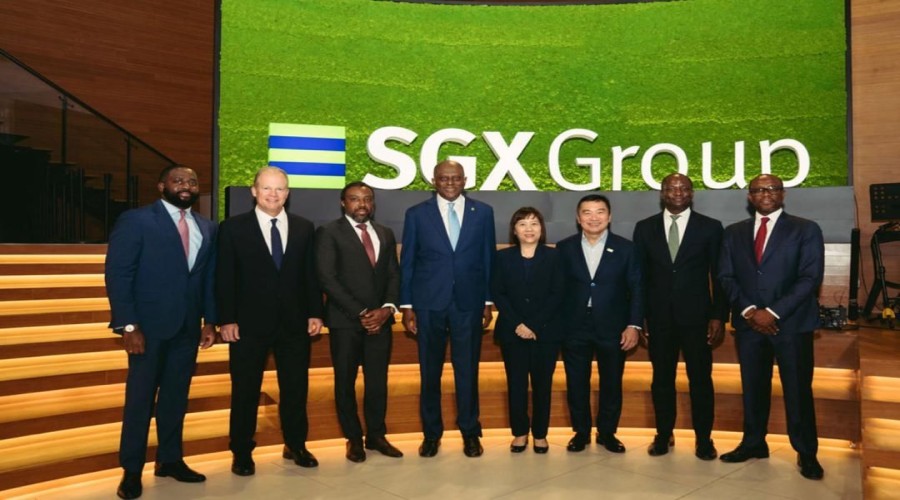
The Governor of CBN, Mr. Olayemi Cardoso, led high-level engagements with the Monetary Authority of Singapore (MAS), signed a memorandum of understanding (MoU) with the Global Finance & Technology Network (GFTN), and participated in the Nigeria–Asia Financial Connectivity Dialogue, convened by the CBN with J.P. Morgan, Nigerian Exchange Group (NGX) and FMDQ Group.
The CBN said the engagements reflected its emphasis on “translating Nigeria’s financial-sector reforms into stronger international partnerships, deeper markets and practical channels for investment, trade and financial innovation.”
During discussions with MAS, the delegation “exchanged perspectives on financial-sector development, regulation, market connectivity and innovation,” identifying areas for continued engagement.
The CBN and GFTN signed an MoU “establishing a framework for collaboration on financial innovation,” intended to support “connecting relevant institutions and innovation ecosystems” and identify practical opportunities for cooperation.
At the dialogue, Cardoso outlined Nigeria’s ambition to build “deeper, more liquid and internationally connected financial markets.”
He said that foreign-exchange reforms were aimed at “removing distortions, restoring transparency and strengthening confidence in the rules governing market participation.”
“The real test of reform is not whether you can attract capital once; it is whether you create the confidence for capital to stay, return and grow,” he said.
Cardoso stated that “credible monetary policy, stronger governance, improved market functioning and predictable rules” were critical for sustained investment.
He noted that stabilisation “was not an end in itself, but a foundation for broader participation by long-term institutional capital, stronger market infrastructure and more effective connections with international financial markets.”
The Governor said that engagement with Asia would go beyond attracting investment flows to building “durable relationships between financial institutions, markets, businesses and people.” He also identified opportunities for stronger banking links, more efficient payment and settlement channels, and greater participation by Nigerians across the region.
DATA
The reported N5.4 trillion reduction in lending across key sectors raises questions about credit availability, although the reporting period, sectoral breakdown and whether the figure represents outstanding loans or new lending were not provided.
SIGNIFICANCE
The Singapore engagements could strengthen cross-border financial infrastructure, facilitate trade and improve access to international capital. However, international partnerships alone cannot resolve domestic credit constraints or guarantee that investment reaches productive businesses.
NEXT MOVE
Investors should watch for concrete outcomes from the MAS discussions, implementation of the GFTN agreement, new payment and settlement arrangements, and measurable changes in domestic bank lending.
OUR LENS
Nigeria’s financial reforms face a dual test: attracting international capital and ensuring domestic businesses can access affordable financing. Cardoso’s emphasis on investor confidence recognises that sustainable financial integration requires credible rules, functional markets and lasting institutional relationships. The ultimate measure will be whether these partnerships deepen investment and support productive economic activity at home.
Johnson Emmanuel is a journalist, covering business, investment, monetary & fiscal policies, CBN, economic affairs and issues of significance to Nigeria’s corporate and public sectors.
Discover more from StakeBridge Media
Subscribe to get the latest posts sent to your email.