

By Olumide Johnson
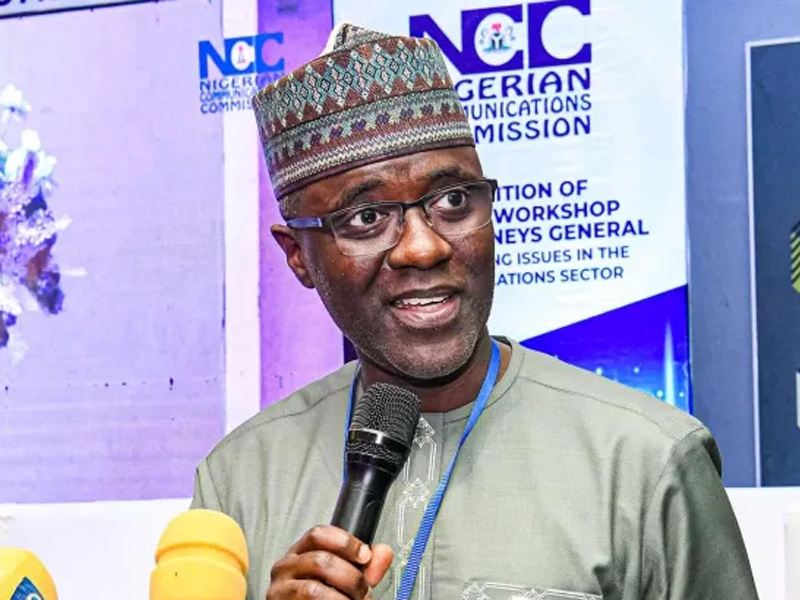
The Nigerian Communications Commission (NCC) is using its 2026 NCC Hackathon Live Show in Abuja to develop indigenous digital solutions for persons with disabilities and underserved communities. Representing Executive Commissioner for Stakeholder Management, Rimini Makama, Director of Zonal Operations, Usman Malah, said that the “Technology Without Barriers” initiative seeks to make digital services more accessible across education, healthcare, financial services, employment and government platforms. Director of Digital Economy, Helen Obi, said that the solutions would target barriers involving disability, language, literacy, income, location and limited connectivity.
DECISION HIGHLIGHT
The hackathon signals a shift from treating digital inclusion primarily as a connectivity problem towards addressing usability, affordability and accessibility. Its emphasis on low-bandwidth and offline-first technologies recognises that expanding network access does not automatically translate into effective participation in the digital economy.
DECISION MEMO
The NCC’s intervention is significant because it defines the digital divide more broadly than network coverage. A user may have access to communications infrastructure yet remain excluded by disability, language, low literacy, income or inadequate bandwidth.
Malah framed the policy logic around outcomes rather than technological sophistication: “The true measure of technological advancement lies not only in the sophistication of our innovations but also in the extent to which they improve lives, expand opportunities and empower every member of society to participate meaningfully in the digital economy.”
Obi’s emphasis on practical deployment reinforces that distinction. Proposed solutions include artificial intelligence-powered speech-to-text systems, real-time sign-language translation, voice complaint platforms, accessible customer care, USSD tools and image-to-voice navigation. The focus on basic mobile phones and remote communities also introduces a commercial and infrastructure constraint that conventional app-based innovation can overlook.
“It should not be until you have bandwidth that you can use some of the solutions that we’re witnessing in this hall today,” Obi said.
The fourth edition brings 20 groups into the competition, with five advancing to the grand finale. Functional prototypes, live demonstrations and business models are required, while assessment covers innovation, user relevance, technical feasibility, scalability, affordability, sustainability, indigenous value and execution capacity.
That framework matters because the NCC is testing whether inclusive technology can progress beyond prototypes into scalable businesses. The commission also links the programme to local intellectual property, start-up creation and collaboration among government, academia, industry and the technology ecosystem.
The underlying policy question is therefore not whether Nigeria can produce more digital innovations, but whether those innovations can remove the practical barriers preventing wider participation in the digital economy.
DATA BOX
- Hackathon: 2026 NCC Hackathon Live Show
- Theme: Technology Without Barriers
- Edition: Fourth
- Location focus: Federal Capital Territory
- Groups pitching: 20
- Grand-finale qualifiers: 5
- Target users: Persons with disabilities and underserved communities
- Key barriers: Disability, language, literacy, income, location and bandwidth
- Proposed technologies: AI speech-to-text, sign-language translation, USSD, voice platforms and image-to-voice tools
WHO WINS / WHO LOSES
Potential winners: Persons with disabilities, low-income and rural users, technology start-ups, local developers and businesses serving underserved markets.
Potential losers: Digital-service models designed around uninterrupted broadband access and users with higher purchasing power could face pressure to redesign for accessibility and affordability.
POLICY SIGNALS
The NCC is signalling that universal digital access increasingly requires inclusive product design alongside telecommunications infrastructure. The focus on indigenous technology also connects inclusion policy with local intellectual-property development and start-up formation.
INVESTOR SIGNAL
The initiative highlights an underserved technology market in accessibility, low-bandwidth services and digital tools designed for users beyond conventional smartphone and broadband segments. Commercial viability will depend on whether prototypes can secure adoption, financing and scalable distribution.
RISK RADAR
The principal risk is the gap between innovation and deployment. Functional prototypes may demonstrate technical feasibility without achieving sustainable business models, reliable funding or large-scale adoption. The NCC’s emphasis on scalability, affordability and sustainability is therefore as important as the innovations themselves.
Discover more from StakeBridge Media
Subscribe to get the latest posts sent to your email.