

By Olumide Johnson
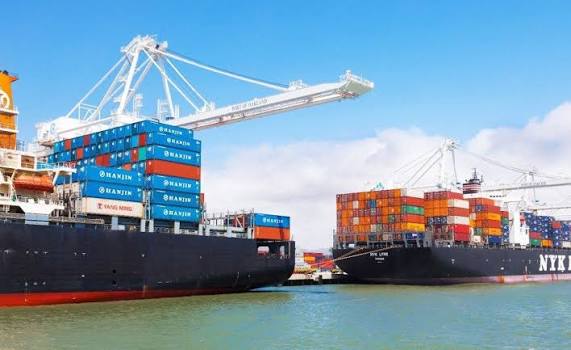
The Nigerian Ports Authority (NPA), under the federal government’s maritime reform agenda, recorded broad operational growth in the second quarter of 2026, according to its Q2 Operational Performance Report. Cargo throughput rose 12.3 percent to 35.74 million metric tonnes, ocean-going vessel traffic increased 14.4 percent to 1,201, container traffic reached 602,392 TEUs, while vehicle traffic climbed 18.3 percent to 44,147 units. The report points to infrastructure renewal, digital reforms and improved operational efficiency as the principal transmission channels behind the stronger performance.
DECISION HIGHLIGHT
The second-quarter results indicate that the federal government’s strategy of combining port modernisation with digital trade infrastructure is beginning to strengthen Nigeria’s competitiveness as West Africa’s principal maritime gateway.
DECISION MEMO
The significance of the NPA’s performance lies less in the individual statistics than in the consistency of growth across nearly every operational indicator. Higher cargo volumes, more ship calls, stronger gross registered tonnage, rising container movements and expanding vehicle traffic collectively suggest that Nigeria’s seaports are becoming more productive rather than merely busier.
Managing Director of the NPA, Dr Abubakar Dantsoho, described the outcome as evidence that the nation’s ports are responding positively to ongoing reforms.
“The increase in cargo volumes and ship calls underscores the continued resilience of the nation’s seaports to facilitate trade and be more competitive.”
The 22 percent increase in outward cargo is particularly consequential. It signals that Nigeria’s port reforms are beginning to support export activity alongside imports, an important objective for an economy pursuing greater non-oil trade competitiveness.
Equally important is the emergence of transshipment as a viable commercial segment. The report recorded 488,364 metric tonnes of transshipment cargo and 29,038 TEUs of transshipment containers, compared with no container transshipment movement during the corresponding period of 2025.
According to the report: “The emergence and continued growth of transshipment traffic continues to position Nigerian ports as an emerging regional transshipment hub. The on-going Port Modernisation if completed with the sustained investment in infrastructure and commercial engagement with shipping lines will further enhance this opportunity.”
The operational gains also provide context for the federal government’s broader infrastructure programme. Rather than treating digitalisation and physical reconstruction as separate projects, the reforms are designed to create an integrated logistics ecosystem capable of reducing bottlenecks and attracting larger vessels.
Dr. Dantsoho outlined the authority’s 2026 priorities: “The centerpiece is the modernisation of Apapa and Tin Can Island ports. The NPA notes both are outdated – Apapa is nearly 100 years old and Tin Can over 50. NPA is also supporting the Lekki and Badagry deep-sea projects to handle larger vessels and revitalising Eastern Ports to reduce Lagos congestion. NPA is prioritising the full implementation of the Port Community System (PCS) to streamline operations and reduce manual bottlenecks. This integrates with the National Single Window (NSW) (operational since Q1 2026) to create a unified digital trade ecosystem.”
He stated: “The authority is enhancing technology-driven security for 24-hour operations and strengthening collaboration with customs agents to tackle congestion and improve cargo evacuation. NPA is positioning Nigeria as West Africa’s trade nerve. The expected impact includes faster operations, lower logistics costs, increased trade volumes, and improved export competitiveness.”
Taken together, the Q2 figures suggest that the reform programme is beginning to move beyond policy intent into measurable operational outcomes.
DATA BOX
| Indicator | Q2 2026 Performance |
| Cargo throughput | 35.74m MT (+12.3%) |
| Ocean-going vessels | 1,201 (+14.4%) |
| Vessel GRT | 49.95m tonnes (+22.2%) |
| Outward cargo | +22.0% |
| Container traffic | 602,392 TEUs (+11.3%) |
| Transshipment containers | 29,038 TEUs |
| Vehicle traffic | 44,147 units (+18.3%) |
| Service boats | 4,347 (+22.3%) |
|
WHO WINS / WHO LOSES
Winners: Exporters, shipping lines, logistics operators, manufacturers and investors in maritime infrastructure benefit from stronger port efficiency and expanding regional trade opportunities.
Pressure points: Competing regional ports and inefficient manual logistics processes face increasing competitive pressure as Nigeria modernises its port ecosystem.
POLICY SIGNALS
The federal government is signalling that maritime reform is no longer centred solely on infrastructure expansion. Port modernisation, the Port Community System and the National Single Window are being deployed as interconnected reforms to accelerate cargo clearance, improve transparency and enhance trade facilitation.
INVESTOR SIGNAL
The strongest commercial signal is the rise of transshipment alongside higher export cargo. Continued investment in deep-sea ports, digital logistics platforms, warehousing and shipping services could strengthen Nigeria’s position within regional maritime trade corridors.
RISK RADAR
Sustaining quarterly gains will depend on timely completion of port modernisation projects, full deployment of digital systems, efficient cargo evacuation and continued engagement with international shipping lines.
Olumide Johnson is a journalist, reporting on energy, business, markets, policy and developments shaping Nigeria’s economy.
Discover more from StakeBridge Media
Subscribe to get the latest posts sent to your email.