

By Olumide Johnson
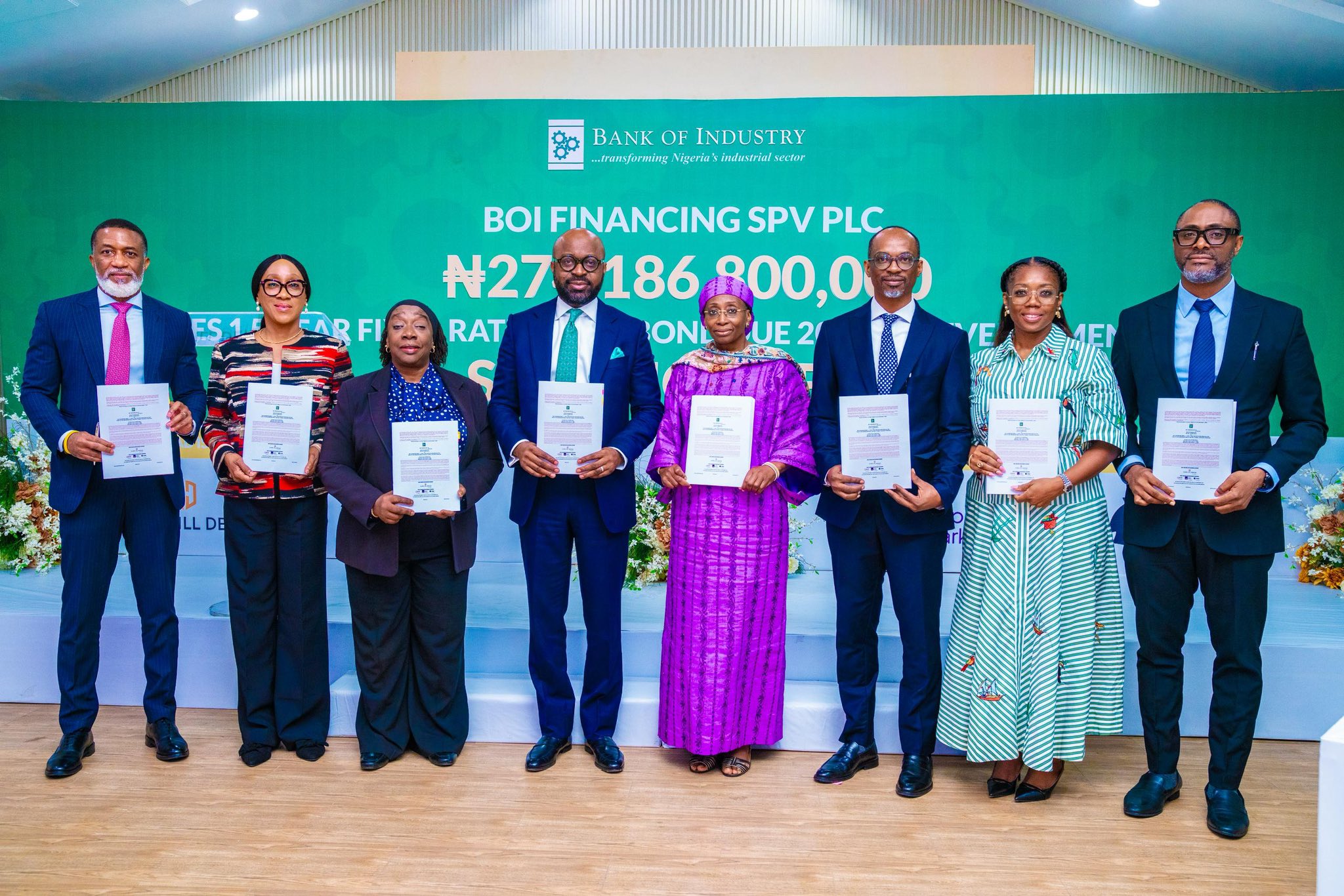
The Bank of Industry (BOI) has raised N274.18 billion through its inaugural domestic five-year fixed-rate bond due 2031, the largest debt capital markets issuance by a Nigerian Development Finance Institution based on publicly available market data. The transaction, initially targeted at N250 billion and arranged by Rand Merchant Bank Nigeria (RMB Nigeria), was increased following oversubscription from pension funds, banks, insurers, asset managers and other institutional investors.
DECISION HIGHLIGHT
The issuance demonstrates that Nigeria’s domestic capital market can absorb sizeable long-dated development-finance debt when the issuer has a clear institutional mandate and investor confidence. More importantly, it gives BOI a larger pool of domestic funding to channel into industrial and enterprise financing.
DECISION MEMO
The significance of the transaction lies less in the record size than in what it says about the relationship between institutional savings and development finance.
BOI has effectively converted demand from domestic institutional investors into longer-term funding capacity. That transmission is important because development finance requires longer tenors than conventional bank lending typically provides, particularly for industrial projects and productive enterprises.
The N24.18 billion increase above the original N250 billion target provides the clearest evidence of investor demand. The participation of pension fund administrators, banks, insurance companies and asset managers also indicates that the transaction was not dependent on a narrow investor segment.
Executive Director and Head of Investment Banking, Broader Africa, RMB Nigeria, Chidi Iwuchukwu, described the transaction as evidence of the market’s ability to mobilise capital at scale.
“This transaction demonstrates the ability of Nigeria’s capital markets to mobilise long-term capital at scale,” Iwuchukwu said.
“BOI plays an important role in advancing industrialisation, enterprise growth, and job creation. We are pleased to have partnered with the Bank on this issuance and remain focused on delivering financing solutions that support sustainable economic growth in Nigeria and across the broader African continent.”
For BOI, the transaction also diversifies its funding base and strengthens its capacity to finance sectors where conventional credit remains constrained.
Laju Atake, Head of Debt Capital Markets, RMB Nigeria, linked the issuance to broader capital-market development.
“BOI’s domestic bond issuance reflects the continued development of Nigeria’s capital markets and the importance of efficient access to long-term capital for leading institutions,” Atake said.
The critical question now moves from fundraising to deployment. The economic value of the bond will ultimately depend on whether the proceeds translate into productive lending, industrial capacity and enterprise growth without compromising BOI’s credit quality.
DATA BOX
- N274.18bn: Final bond issuance.
- N250bn: Initial target.
- N24.18bn: Additional amount raised following oversubscription.
- 5 years: Bond tenor.
- 2031: Maturity year.
- Investor base: Pension funds, banks, insurers, asset managers and other institutions.
- Significance: Largest publicly reported Nigerian DFI debt capital markets issuance.
WHO WINS / WHO LOSES
Potential winners: BOI, industrial borrowers and enterprises requiring longer-term financing. Institutional investors also gain access to a large development-finance credit exposure.
Potential pressure points: BOI assumes additional funding obligations, making effective deployment and asset quality critical to the economics of the transaction.
POLICY SIGNALS
The issuance strengthens the case for using domestic capital markets to fund industrialisation rather than relying predominantly on government budgets or short-term bank credit.
INVESTOR SIGNAL
Strong demand for BOI debt suggests institutional liquidity remains available for credible long-term issuers. The next signal will be pricing, secondary-market performance and the quality of assets financed with the proceeds.
RISK RADAR
The principal risk is transmission failure. Raising N274.18 billion is a capital-market achievement, but its development impact depends on BOI converting the funding into productive assets while maintaining credit discipline and sufficient returns to service the debt.
Olumide Johnson is a journalist, reporting on energy, business, markets, policy and developments shaping Nigeria’s economy.
Discover more from StakeBridge Media
Subscribe to get the latest posts sent to your email.