

By Kingsley Ani
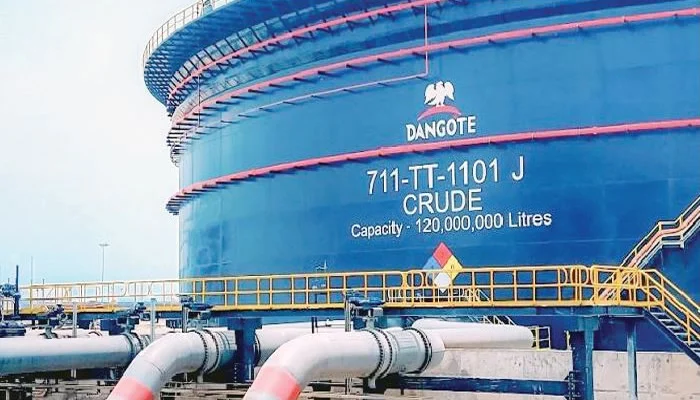
Dangote Petroleum Refinery and Petrochemicals (DPRP) completed a US$2.5 billion private equity placement, announced recently, after attracting demand 3.7 times the initial offer size. The transaction, described by the company as Africa’s largest publicly disclosed primary equity private placement by value, marks its first external equity raise beyond legacy shareholders. The Lagos-based 650,000 barrels per day refinery will deploy proceeds to expand refining and petrochemical operations, strengthen its balance sheet and enhance financial flexibility. Investors included the Africa Finance Corporation (AFC), African Export-Import Bank (Afreximbank) facilitated investment vehicle India Infra Buildco, development finance institutions, sovereign-related investors and international institutional investors. Chairman of Dangote Petroleum Refinery and Petrochemicals, Aliko Dangote, said that the placement would “deepen and further institutionalise the Enterprise’s shareholder base” while supporting expansion. Managing Director and Chief Executive Officer of Dangote Petroleum Refinery and Petrochemicals, David Bird, said, “The exceptional demand we saw is a testament to our operational excellence, execution capacity, and investor confidence in DPRP’s leadership.”
DECISION HIGHLIGHT
The oversubscribed placement shifts Dangote Refinery from predominantly founder-backed financing towards broader institutional ownership, providing long-term growth capital without increasing leverage while reinforcing confidence in African industrial assets.
DECISION MEMO
The transaction is significant less for its size than for what it signals about African capital formation. By attracting diversified institutional, sovereign-related and development finance investors, Dangote Refinery demonstrates that large-scale industrial projects can increasingly access equity capital rather than relying primarily on debt or sponsor funding.
The capital raise also strengthens the refinery’s financial resilience as expansion continues. A larger equity base improves balance sheet quality, increases financial flexibility and potentially lowers future financing costs. For African capital markets, the placement provides evidence that globally competitive industrial infrastructure can attract sizeable institutional participation when operational execution reduces project risk.
Aliko Dangote’s assertion that the transaction will “deepen and further institutionalise the Enterprise’s shareholder base” reflects a transition towards governance structures typically associated with mature industrial corporations. His statement that the investment supports “developing domestic refining and petrochemical capacity, reducing Africa’s reliance on imported refined products and strengthening the continent’s energy security” positions the financing within a broader continental industrial strategy rather than solely corporate expansion.
Bird’s observation that investor demand reflects “operational excellence, execution capacity, and investor confidence” indicates that proven operational performance has become the principal driver of capital mobilisation.
DATA BOX
- Equity raised: US$2.5 billion
- Subscription level: 3.7 times the initial offer size
- Transaction type: Private equity placement
- Status: First external equity raise beyond legacy shareholders
- Refinery capacity: 650,000 barrels per day
- Principal use of proceeds:
- Refinery and petrochemical expansion
- Stronger capital structure
- Increased financial flexibility
- Key participating investors:
- Africa Finance Corporation
- India Infra Buildco
- Development finance institutions
- Sovereign-related investment vehicles
- International institutional investors
WHO WINS / WHO LOSES
Wins
- Dangote Petroleum Refinery and Petrochemicals through stronger long-term capital.
- Institutional investors gaining exposure to a strategic African industrial asset.
- African refining and petrochemical value chains through expanded domestic capacity.
- African capital markets through a landmark equity financing benchmark.
Loses
- Imported refined fuel dependency as domestic capacity expands.
- Competing regional refiners facing a better-capitalised market leader.
POLICY SIGNALS
The placement reinforces the strategic importance of mobilising private institutional capital for industrial infrastructure. It also supports policy objectives centred on energy security, import substitution, regional value addition and deeper African capital markets.
INVESTOR SIGNAL
Strong oversubscription indicates sustained institutional appetite for operationally proven infrastructure assets with clear cash flow visibility. The transaction may improve investor confidence in future large-scale African industrial equity offerings.
RISK RADAR
- Execution risk associated with expansion projects.
- Commodity price and refining margin volatility.
- Regulatory and energy market policy changes.
- Foreign exchange exposure affecting imported inputs and capital expenditure.
- Sustaining operational performance necessary to justify elevated investor expectations.
Discover more from StakeBridge Media
Subscribe to get the latest posts sent to your email.