

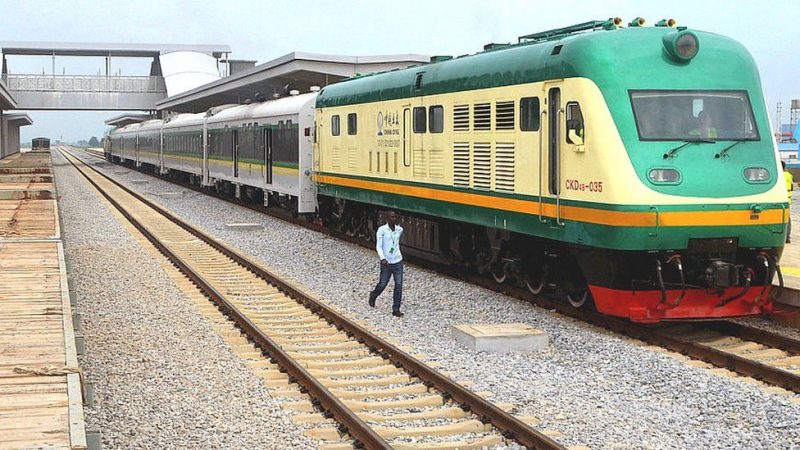
The Nigerian Railway Corporation (NRC) has allocated N10.1 billion for train purchase and rehabilitation in its 2026 budget, indicating a strategic shift toward restoring existing rail assets rather than pursuing rapid network expansion.
Figures from the Budget Office of the Federation show that the NRC received N34.24 billion in total funding, with N11.65 billion set aside for capital projects. The bulk of this capital vote is directed at asset recovery, reflecting mounting concerns over safety, reliability, and declining service quality across the rail system.
DECISION HIGHLIGHT
Decision Context:
Aging rail assets, recurring service disruptions, and safety risks have weakened passenger confidence and constrained revenue growth.
Strategic Action:
Reallocation of scarce capital toward train acquisition and rehabilitation of existing infrastructure instead of new rail lines.
Budget Commitment:
N10.1 billion dedicated to trains and repairs within a total capital envelope of N11.65 billion.
Strategic Objective:
Stabilise operations, improve safety and reliability, and preserve existing rail investments as a foundation for future expansion.
DECISION MEMO
The NRC’s 2026 budget reflects a pragmatic reset of Nigeria’s rail ambitions. Rather than dispersing limited funds across new construction, the Corporation is prioritising the restoration of assets already in service. This approach acknowledges a core infrastructure reality: expansion without reliability undermines public trust and long-term viability.
Of the capital allocation, N5.97 billion is earmarked for train acquisition, while N4.19 billion is assigned to rehabilitation and repairs. This emphasis directly addresses years of deferred maintenance that have affected punctuality, safety, and operational efficiency.
The repair budget reveals the depth of infrastructure strain. Funds cover rail track repairs, internal road networks, and office buildings, highlighting that rail performance depends on a wider operational ecosystem, not rolling stock alone.
While expansion has not been abandoned, it is clearly secondary. Only N420 million is allocated to railway construction, alongside smaller provisions for inspection vehicles, track materials, and station works. These items reinforce that asset recovery, not network growth, is the immediate priority.
Personnel costs remain a structural constraint. At N22.38 billion, wages absorb most of the NRC’s total allocation, limiting fiscal flexibility and reinforcing the need to maximise value from existing infrastructure before committing to new projects.
Overall, the 2026 proposal positions rail rehabilitation as a stabilisation phase, aimed at halting asset decline, protecting sunk investments, and creating conditions for sustainable growth when fiscal space improves.
DATA BOX
- Total NRC allocation (2026):24bn
- Capital expenditure:65bn
- Train purchase: N5.97bn
- Rehabilitation & repairs:19bn
– Rail track repairs: N1.95bn
– Office building repairs: N1.89bn
– Internal roads repairs: N350m - Rail construction: N420m
- Inspection vehicles: N770m
- Track materials: N700m
- Station construction (Itakpa–Aladja): N420m
- Personnel costs:38bn
- Overhead costs:1m
WHO WINS / WHO LOSES
Who Wins:
- Rail users benefiting from safer and more reliable services
- Maintenance firms and rolling stock suppliers
- Government efforts to preserve existing infrastructure assets
Who Loses:
- Regions anticipating rapid rail network expansion
- Large greenfield rail projects
- Budget flexibility constrained by high personnel costs
POLICY SIGNAL
Federal rail policy is tilting toward asset preservation, operational stability, and incremental upgrades rather than accelerated network rollout.
INVESTOR SIGNAL
Near-term expansion opportunities are limited, but improved asset condition may strengthen the long-term case for concessions and private sector participation.
RISK RADAR
- Maintenance funding may be insufficient to clear the full backlog
- High wage costs continue to crowd out capital investment
- Delays in rehabilitation could prolong service disruptions
- Inflation may increase repair and procurement costs
The N10.1 billion repair-focused allocation marks a corrective phase in Nigeria’s rail strategy, prioritising system reliability over network ambition.
Discover more from StakeBridge Media
Subscribe to get the latest posts sent to your email.