

By Olumide Johnson
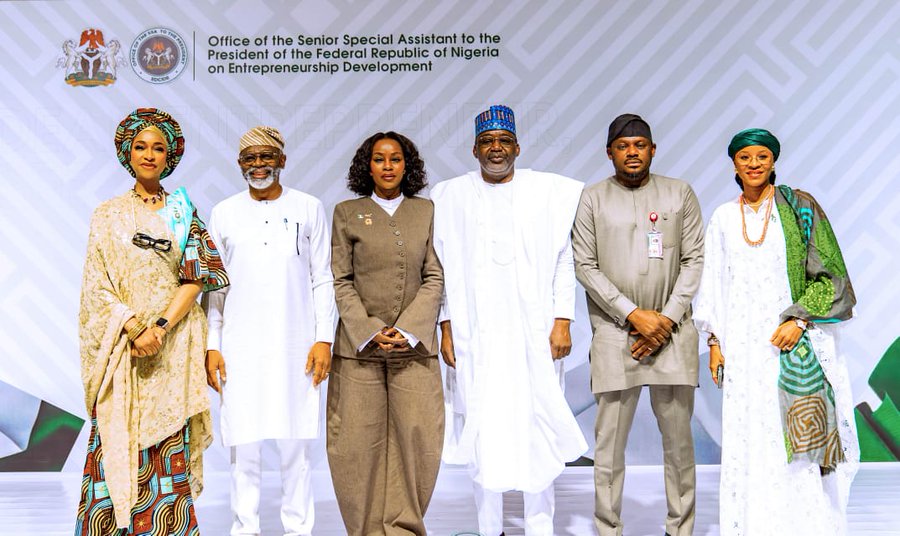
The federal government has recently launched the Renewed Hope Enterprise Bridge Initiative (RHEBI), a Presidency-led platform designed to create a structured, continuous interface between policymakers and entrepreneurs. President Bola Ahmed Tinubu unveiled the initiative through his representative, Chief of Staff Femi Gbajabiamila, at the State House in Abuja.
DECISION HIGHLIGHT
The initiative reflects formal recognition by the Presidency that Nigeria’s enterprise policy framework has suffered from inadequate feedback loops between government and operators, and that future policy credibility will increasingly depend on closer institutional engagement with the private sector.
DECISION MEMO
The RHEBI represents more than a stakeholder-engagement platform. It is an implicit admission that Nigeria’s policymaking architecture has historically operated with insufficient operational visibility into the realities of enterprise formation, scaling, and survival.
President Tinubu acknowledged that disconnect directly, stating: “One side works with frameworks and projections, the other works with immediacy and risk. Bringing both into the same room is not symbolic; it is necessary.” He added that “if policy is to be useful, it must be informed by lived experience,” underscoring a Presidency now publicly accepting that effective enterprise policy requires iterative market feedback rather than purely bureaucratic design.
That framing is strategically important. It suggests the administration increasingly views entrepreneurship not merely as a social employment lever, but as a central economic-growth constituency requiring direct policy integration.
Chalya Shagaya, Senior Special Assistant to the President on Entrepreneurship Development, reinforced that positioning by arguing: “If we are to achieve our ambition of building a trillion-dollar economy, then entrepreneurs must be at the centre of the conversation consistently, deliberately and meaningfully.” Her remarks indicate that the administration is linking entrepreneurship policy more explicitly to its broader macroeconomic growth narrative.
Hannatu Musa Musawa, Honourable Minister of Arts, Culture and Creative Economy, used the platform to signal sectoral priorities, stating that “creative and digital economy are the two sectors with the greatest ability to provide the kind of returns entrepreneurs are seeking,” thereby positioning those industries as preferred high-growth verticals within the administration’s enterprise strategy.
Aisha Adamu Augie, Director-General of the Centre for Black and African Arts and Civilization (CBAAC), framed the initiative as “a much needed Presidency-led national platform designed to strengthen the relationship between entrepreneurs and government.” She further argued that “government and financiers” must take “more risks in supporting entrepreneurs,” warning that “when we play it too safe, we tend to fund what already exists.” Her intervention highlights a critical structural issue: Nigeria’s enterprise-financing ecosystem remains skewed toward low-risk, proven models at the expense of innovation-led ventures.
Collectively, the launch signals that the administration is attempting to institutionalise enterprise consultation while also broadening the policy conversation beyond access-to-finance rhetoric toward structural ecosystem design.
DATA BOX
Initiative launched: Renewed Hope Enterprise Bridge Initiative
Launch venue: State House Conference Centre, Abuja
Strategic target referenced: US$1 trillion economy ambition
Primary sectors highlighted: Creative economy, digital economy
Core policy objective: Continuous entrepreneur-government engagement
Key implementation channel cited: Regulatory reform and improved finance access via Bank of Industry
WHO WINS / WHO LOSES
Winners are entrepreneurs and emerging businesses if the platform produces measurable regulatory and financing reforms, alongside policymakers gaining real-time operational market intelligence.
Losers are legacy bureaucratic processes and fragmented support mechanisms if centralised engagement leads to streamlined policymaking.
POLICY SIGNALS
The launch signals stronger Presidential centralisation of entrepreneurship policy and growing recognition of private enterprise as a strategic economic-growth lever.
It also indicates increased policy prioritisation for the creative and digital sectors.
INVESTOR SIGNAL
Investors should interpret the initiative as evidence that the Federal Government is seeking to build a more coordinated enterprise-support architecture and improve policy responsiveness to market realities.
Its credibility, however, will depend on implementation outcomes rather than consultative optics.
RISK RADAR
Primary risks include bureaucratic inertia, stakeholder fatigue, weak institutional follow-through, and the possibility that consultation outpaces actual reform delivery.
Secondary risks include policy fragmentation if recommendations generated through the platform are not integrated into formal decision-making channels.
Overall, the Renewed Hope Enterprise Bridge Initiative reflects a Presidency attempting to convert enterprise engagement from episodic consultation into structured economic governance architecture.
Discover more from StakeBridge Media
Subscribe to get the latest posts sent to your email.