

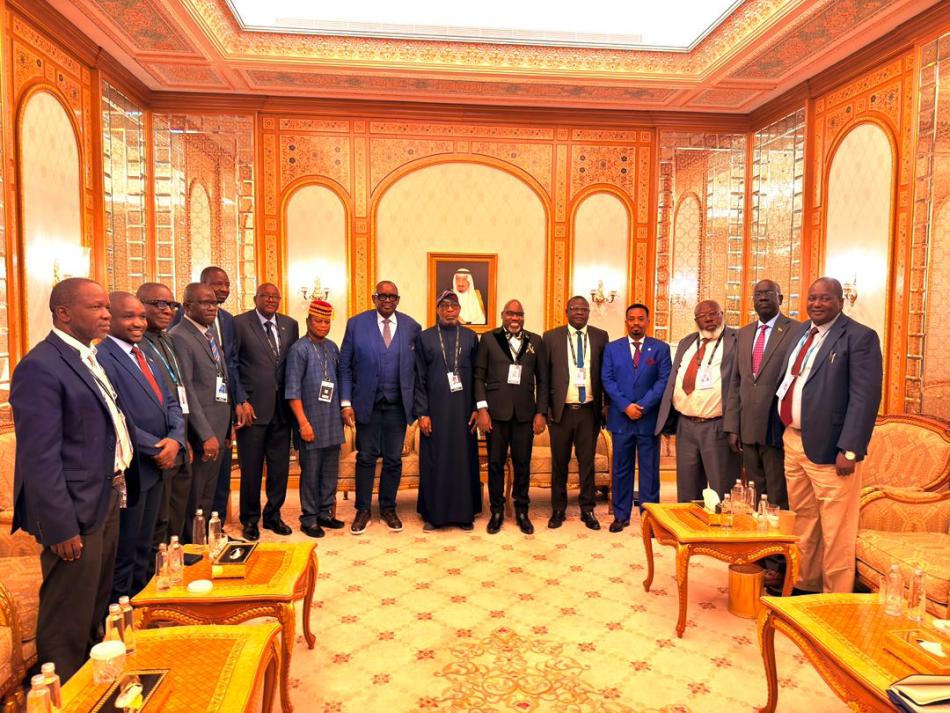
Honourable Minister of Solid Minerals Development, Dr. Dele Alake, has been re-elected Chairman of the Africa Minerals Strategy Group (AMSG), extending Nigeria’s leadership of Africa’s ministerial platform for coordinating solid minerals policy.
The decision secures Nigeria’s continued role at the centre of Africa’s collective approach to critical minerals, beneficiation standards, infrastructure development, and investor engagement. As competition for minerals intensifies globally, the chairmanship places Nigeria in a position to influence how Africa structures its response.
DECISION HIGHLIGHT
Institution: Africa Minerals Strategy Group (AMSG)
Chairman: Dr. Dele Alake
Decision: Re-election and retention of chairmanship
Scope: Continental minerals policy coordination
Focus Areas: Beneficiation, value addition, infrastructure corridors, investor frameworks
Nigeria’s Standing: Agenda-setting role at continental level
DECISION MEMO
The re-election formalises Nigeria’s shift from participation to influence in Africa’s minerals governance. AMSG functions as a working platform where ministers align positions on processing thresholds, cross-border infrastructure, sustainability standards, and engagement with global mining capital.
In retaining the chairmanship, Nigeria gains leverage over both policy direction and sequencing. This strengthens its ability to shape shared continental priorities rather than react to externally defined frameworks.
Domestically, the outcome aligns with Nigeria’s ongoing mining reforms, which prioritise value addition, local processing, and industrial integration over raw mineral exports. Continental alignment reduces the risk that these policies are viewed as isolated or restrictive by investors.
According to Alake, the objective is to move beyond extraction toward minerals-led industrial development that delivers jobs and long-term value. As chair, this position now carries broader African endorsement.
From an investment perspective, leadership continuity reduces uncertainty. Nigeria’s role signals that its mining reforms are embedded within an emerging continental framework, improving predictability for long-term capital, including infrastructure investors and development finance institutions.
The chairmanship also supports corridor-based mineral development strategies. By advancing logistics routes such as the Lagos–Abidjan corridor alongside other continental corridors, Nigeria strengthens its position as a regional logistics and processing hub.
At the diplomatic level, the re-election reinforces Nigeria’s influence at a time when minerals are becoming central to global geopolitics and the energy transition. The AMSG structure, with balanced regional representation, enhances Nigeria’s soft power within West Africa and beyond.
Institutionally, Nigeria benefits from early access to policy benchmarking, regulatory trends, and shared learning across leading mineral economies. This reduces the risk of long-term policy missteps in a capital-intensive sector.
DATA BOX
Platform: Africa Minerals Strategy Group
Leadership Level: Ministerial
Key Policy Areas:
– Beneficiation and value addition
– Investor engagement frameworks
– Infrastructure corridors
– Sustainability and governance
Nigeria’s Role: Chairmanship retained
Strategic Context: Rising global demand for critical minerals
WHO WINS / WHO LOSES
Who Wins
– Nigeria’s mining reform agenda, strengthened by continental alignment
– Investors seeking policy consistency across African markets
– Regional infrastructure linked to mineral value chains
– African states pursuing coordinated bargaining power
Who Loses
– Raw-export dependent mineral models
– Fragmented national mining policies
– Short-term extractive strategies with limited industrial impact
POLICY SIGNALS
– Beneficiation is consolidating as a continental standard
– Mining policy is shifting toward industrial ecosystems
– Infrastructure planning is increasingly minerals-driven
– Africa is coordinating engagement with global mining capital
INVESTOR SIGNAL
Nigeria’s continued chairmanship provides policy continuity and reduces reform risk. For investors, it indicates a structured, long-term approach to mining and infrastructure development rather than ad-hoc regulation.
RISK RADAR
– Gaps between continental policy alignment and national execution
– Capacity constraints in project delivery
– External geopolitical competition for mineral access
– Domestic coordination challenges across mining, power, and transport
Bottom Line
Dr. Alake’s re-election is a strategic outcome, not a ceremonial one. It gives Nigeria agenda-setting influence in a sector critical to Africa’s next growth cycle. As global demand for minerals accelerates, Nigeria is positioned to help shape the rules that govern Africa’s response.
Discover more from StakeBridge Media
Subscribe to get the latest posts sent to your email.