

Embedded within the federal government’s N501 billion inaugural power sector bond issuance is a policy choice that goes beyond routine sector intervention. The Presidential Power Sector Debt Reduction Programme (PPSDRP) is deliberately focused on settling historic electricity receivables, covering power already generated, billed, and consumed between February 2015 and March 2025.
Rather than targeting future obligations, the programme validates and formalises a decade of unpaid electricity claims. These receivables are being converted into government-backed financial instruments, signalling a shift in how legacy liabilities within the Nigerian Electricity Supply Industry (NESI) are recognised and resolved.
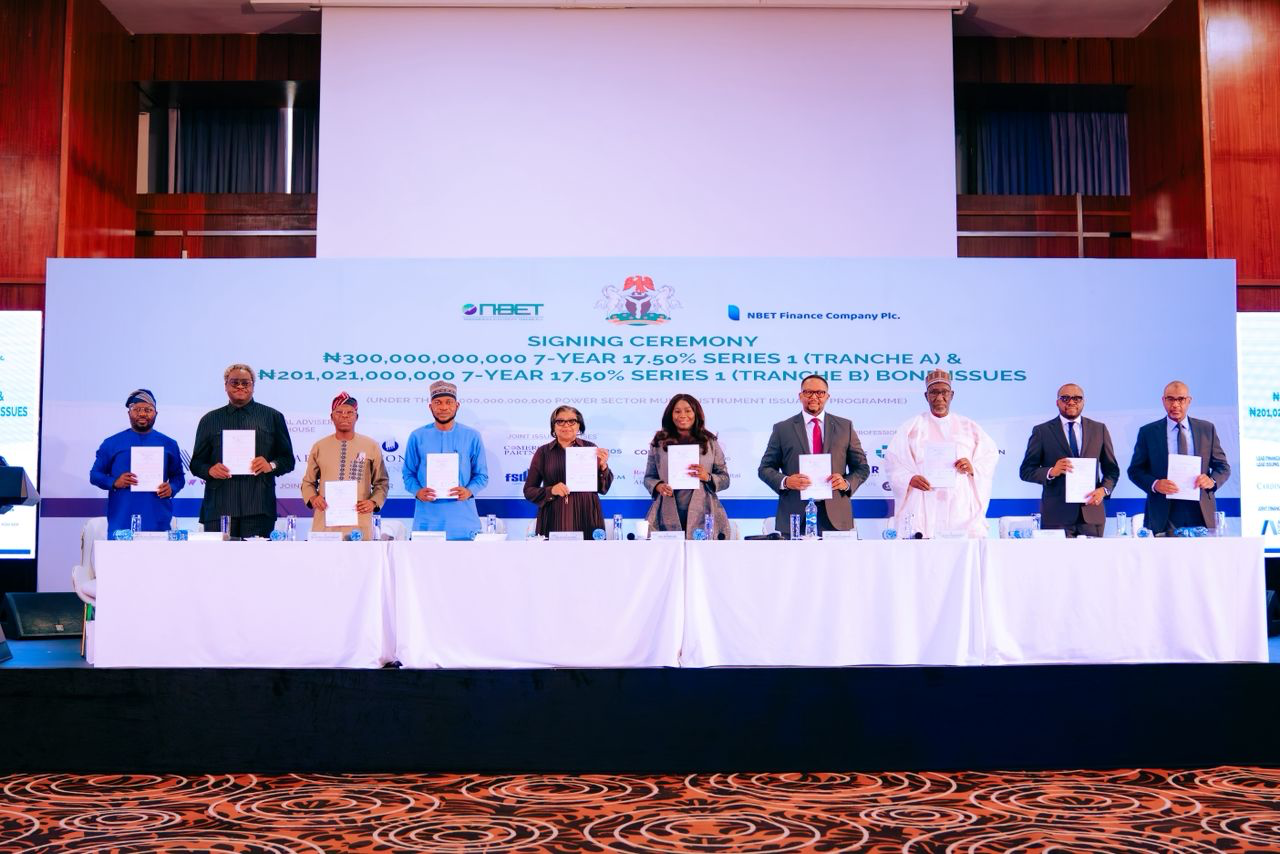
According to the Office of the Special Adviser to the President on Energy, the initiative is designed to clear long-standing debts owed to power generation companies, restore liquidity across the electricity value chain, and rebuild investor confidence in the market. Speaking at the bond signing ceremony in Lagos on 27 January 2026, the Special Adviser, Olu Arowolo Verheijen, described the programme as a decisive reset of the electricity market, combining debt resolution with broader financial discipline.
Decision highlight
Decision authority: Federal Government of Nigeria
Lead institutions: Presidency, Nigerian Bulk Electricity Trading Plc (NBET), Ministry of Finance
Policy focus: Power sector legacy receivables
Coverage period: February 2015 to March 2025
Instrument: Power Sector Debt Reduction Bonds
Core objective: Settlement and formalisation of historic electricity billing
Decision memo
In public finance terms, the programme represents a departure from past practice. Instead of writing off unpaid electricity bills or allowing them to linger indefinitely on company balance sheets, the Federal Government has opted to validate receivables accumulated over ten years and establish a defined settlement framework.
Electricity supplied during this period is now being treated explicitly as an economic transaction with enforceable value. Verified claims are resolved through negotiated settlement agreements with generation companies and settled through a combination of cash payments and bond instruments. This process moves long-standing arrears off GenCo balance sheets and into a structured public finance arrangement.
Under the first phase, five power generation companies, representing 14 power plants nationwide, have executed settlement agreements with NBET. The companies are First Independent Power Limited, Geregu Power Plc, Ibom Power Company Limited, Mabon Limited, and Niger Delta Power Holding Company Limited. The total negotiated settlement for these GenCos stands at N827.16 billion, to be paid in four phased instalments.
The inaugural Series 1 bond issuance closed at N501 billion and recorded 100 percent subscription from pension funds, banks, asset managers, and other institutional investors. Of this amount, N300 billion was raised from the capital markets, while N201 billion in bonds was allotted directly to participating generation companies. Proceeds from the issuance will fund the first and second instalments, estimated at N421.42 billion, representing roughly half of the total negotiated settlement amount.
Data box
Period covered: 10 years
Receivables validated: February 2015 – March 2025
Negotiated settlement (initial GenCos): N827.16bn
First phase funded: N421.42bn
Bond size (Series 1): N501bn
Bond structure: N300bn market issuance, N201bn GenCo allotment
Settlement structure: Cash and bond instruments
Generation capacity impacted: 4,483.60 MWh/h
Who wins / who loses
Power generation companies gain legal and financial resolution of long-standing receivables, improving balance sheet clarity and restoring confidence to plan new investments. The Federal Government secures clearer accounting of accumulated sector obligations, though it also formally assumes responsibility for historic liabilities that had previously remained unresolved.
Electricity consumers are not immediately affected through higher tariffs. However, the fiscal costs of past inefficiencies are now embedded within long-term public finance arrangements, shifting the burden from the power market to government-backed instruments.
Policy signals
What follows is interpretive. The programme signals a move away from the indefinite accumulation of utility arrears toward validation and structured settlement. It reinforces the principle that electricity supplied and billed constitutes a financial obligation that must be formally resolved, not merely regulated around.
It also establishes a reference point for how legacy liabilities in other infrastructure sectors could be addressed, should government choose similar approaches in transport, water, or upstream gas markets.
Investor signal
From an investor perspective, the programme demonstrates that historic public utility receivables can be converted into structured, government-backed instruments. The 100 percent subscription of the inaugural bond reinforces this signal and reduces uncertainty around legacy claims in the power sector.
At the same time, it may shape expectations around how unresolved arrears in other regulated sectors are eventually treated, influencing future risk pricing and investment behaviour.
Risk radar
Key risks lie in execution across subsequent settlement phases and the need to prevent new arrears from accumulating once historic claims are cleared. There is also reputational exposure if improved financial settlement does not translate into stronger operational performance and more reliable electricity supply.
Overall, the power bond programme reflects an evolving approach to utility sector finance in Nigeria. By formalising ten years of historic electricity receivables through a transparent, capital market-backed framework, the government has introduced greater clarity into the power market’s financial structure. Its durability will depend on whether this settlement is matched with reforms that stop the cycle of arrears from recurring.
Discover more from StakeBridge Media
Subscribe to get the latest posts sent to your email.