

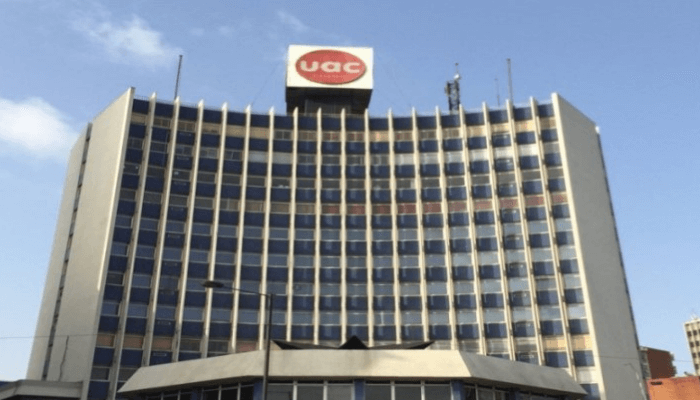
UAC of Nigeria Plc listed N54.03 billion, 7-year, 17.35% fixed rate bond on the FMDQ Securities Exchange under its N150 billion issuance programme.
The proceeds will refinance obligations, fund capital expenditure, support working capital, and facilitate the integration of CHI Limited into its consumer goods operations.
DECISION HIGHLIGHT
Strategic actions embedded in the transaction:
- Liability tenor extension into long term funding
- Capital structure optimisation ahead of FMCG consolidation
- Governance simplification via SPV merger into CHI
- Integration driven growth rather than acquisition driven expansion
Group Finance Director, Funke Ijaiya-Oladipo: “The bond broadens UAC’s funding base, reduces refinancing risk, and better aligns liabilities with long-term growth plans.”
DECISION MEMO
This is not primarily a borrowing event, it is a timing event.
UAC is repositioning its balance sheet before attempting operational scaling. Nigerian corporates historically fund expansion with short tenor bank debt, creating a structural mismatch where long lived factories are financed by short lived liabilities. The consequence is cyclical refinancing pressure rather than operational growth pressure.
The 7-year tenor shifts the company from survival liquidity management to planning liquidity management.
The acquisition of CHI previously represented a strategic intent. The bond now represents the financial architecture required to make that intent executable. Integration requires working capital stability because distribution networks consume cash before they generate margins. Without long dated funding, post acquisition synergies frequently fail not due to strategy but due to liquidity compression.
The coupon level is equally informative. At 17.35%, the company has accepted high nominal cost to remove rollover risk. That trade indicates management is prioritising certainty over cheapness. In Nigeria’s interest rate cycle, certainty itself is the scarce resource.
The Chief Executive of Stanbic IBTC Capital Limited, Oladele Sotubo, noted the transaction enables capital structure optimisation. Interpreted financially, optimisation here means transferring risk from refinancing markets to operating performance. The company is choosing to face consumer demand volatility rather than banking sector liquidity volatility.
The corporate restructuring reinforces the same logic. Collapsing the acquisition vehicle into CHI removes reporting opacity and signals transition from deal making to cashflow extraction. Investors are being told the acquisition phase is over, the earnings phase must begin.
Therefore, the bond should be read less as expansion funding and more as execution insurance. The conglomerate is locking in time so operational synergies have a chance to materialise.
DATA BOX
Bond size: N54.03 billion
Tenor: 7 years
Coupon: 17.35% fixed
Programme size: N150 billion
Use of proceeds: refinancing, capex, working capital
Corporate action: SPV consolidated into C.H.I. Limited
WHO WINS / WHO LOSES
Wins
- Institutional investors, predictable long duration yield
- UAC equity holders, reduced refinancing risk
- CHI operations, stable integration funding
- Capital market intermediaries, increased corporate bond depth
Loses
- Banks, reduced dependence on short term lending
- Future borrowers, higher benchmark corporate yields
- Consumers if financing costs pass through to product pricing
POLICY SIGNALS
Corporate Nigeria is migrating from bank dependence toward market funding.
High interest rates are not stopping issuance but reshaping it into longer tenor defensive borrowing.
Debt markets are becoming restructuring tools rather than expansion accelerators.
INVESTOR SIGNAL
Positive governance signal, liability duration now matches asset duration.
Credit outlook improves due to reduced rollover exposure.
Equity upside depends on successful FMCG integration rather than acquisition narrative.
RISK RADAR
- High coupon compressing future margins
- Integration execution risk within CHI distribution network
- Consumer demand sensitivity to inflation
- Interest rate decline leaving company locked into expensive funding
- Working capital expansion outpacing revenue realisation
The transaction buys time. The remaining question is whether operational efficiency will now buy profitability.
Discover more from StakeBridge Media
Subscribe to get the latest posts sent to your email.