

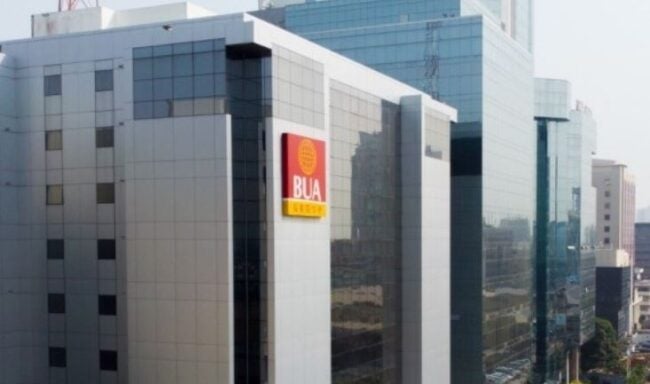
By Jennete Ugo Anya
BUA Foods Plc appointed Isyaku Abdulsamad “Khalifa” Rabiu as Chief Officer, Global Procurement and Strategic Operations effective January 29, 2026.
The company stated he will oversee end-to-end procurement, strengthen supply-chain resilience, optimise costs and support long-term growth as the firm expands across sugar, flour, rice and edible oils.
The appointment comes during heightened commodity volatility, currency pressure and rising manufacturing input costs across Africa’s food sector.
Rabiu previously worked across BUA Cement and BUA Group strategic operations, led a 40-metric-tonne-per-hour animal feed mill project and oversaw the commercial re-entry of BUA Rice Mills into the Nigerian market.
DECISION HIGHLIGHT
BUA is institutionalising procurement as a strategic control function rather than a back-office purchasing activity.
DECISION MEMO
The appointment signals defensive corporate strategy under inflationary conditions.
Food manufacturing margins in Nigeria are increasingly determined by sourcing intelligence rather than production efficiency. Exchange rate volatility and global commodity swings compress profitability faster than operational improvements can offset. By elevating procurement to executive level, BUA is acknowledging that supply chain control has become the primary competitive advantage.
Rabiu’s background is not purely procurement technical. It is cross-industrial and capital allocation oriented. That suggests the role is intended to coordinate financing, sourcing and distribution decisions simultaneously. Procurement becomes a risk management desk.
The earlier development of digital consumer-tracking platforms within BUA Foods is relevant. Forecast accuracy reduces inventory exposure, which in high inflation environments is equivalent to financial hedging. The company is moving toward information-led purchasing instead of reactive buying.
The rice re-entry experience also matters. Commodity processors now operate between global price benchmarks and domestic affordability constraints. The company must balance cost recovery with political sensitivity around staple foods. Centralised procurement enables uniform pricing logic across product categories.
This is therefore organisational restructuring driven by macroeconomics. Nigerian food manufacturers are evolving from production companies into commodity risk managers.
DATA BOX
Executive Role
• Chief Officer, Global Procurement & Strategic Operations
• Effective: January 29, 2026
Operational Coverage
• Sugar
• Flour
• Rice
• Edible oils
Notable Projects
• 40-metric-tonne/hour animal feed mill
• Relaunch of BUA Rice Mills
• Digital consumer behaviour platforms
Education
• Regent’s University London – International Relations
• Georgetown University McDonough School – Management (MiM)
WHO WINS / WHO LOSES
Wins
Large integrated food manufacturers with scale purchasing power
Suppliers capable of long-term contracts
Consumers if cost stability improves
Loses
Smaller processors without hedging capability
Spot commodity traders benefiting from price arbitrage
Distributors dependent on fragmented procurement pricing
POLICY SIGNALS
Food inflation management increasingly depends on corporate supply efficiency.
Private sector logistics strategy becoming part of national food security architecture.
Industrial policy indirectly shifting toward scale consolidation.
INVESTOR SIGNAL
Margin stability will matter more than revenue expansion in consumer staples.
Companies with procurement sophistication likely outperform peers.
Operational leadership appointments now material valuation indicators.
RISK RADAR
Commodity risk
Global price spikes may overwhelm procurement optimisation
Currency risk
Import-dependent inputs remain exposed to FX volatility
Execution risk
Centralised procurement requires accurate demand forecasting
Political risk
Staple food pricing remains sensitive to regulatory intervention
Discover more from StakeBridge Media
Subscribe to get the latest posts sent to your email.