

By Enam Obiosio
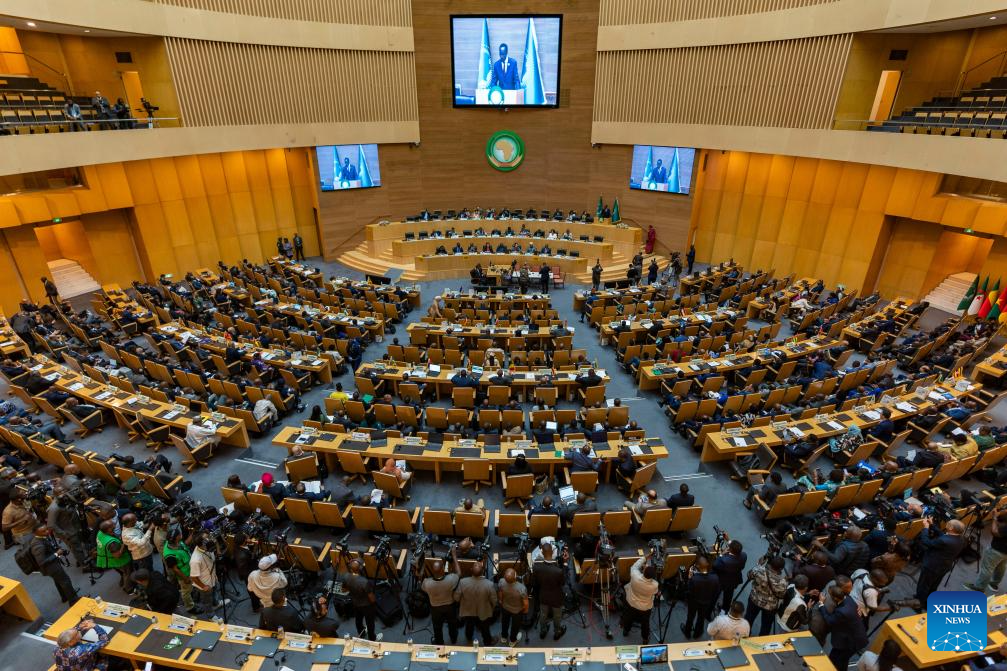
Nigeria has secured a permanent seat on the Board of the proposed African Central Bank following the just concluded 39th Session of the African Union (AU) Executive Council. The decision also grants Nigeria representation on the Technical Convergence Committee of the African Monetary Institute, the precursor body to the continental central bank.
The outcome expands Nigeria’s role from regional influence to institutional influence within Africa’s future monetary architecture.
Ambassador Yusuf Tuggar, Honourable Minister of Foreign Affairs, stated that the outcome “reaffirms the country’s commitment to the African Union’s ideals, particularly in promoting economic integration, institutional development, and sustainable development across the continent.”
DECISION HIGHLIGHT
Nigeria has moved from participant in African integration to rule shaper of African monetary governance.
DECISION MEMO
The significance of the decision is not diplomatic prestige. It is regulatory positioning.
The African Central Bank project represents the long term ambition of a harmonised African monetary framework. Permanent board membership places Nigeria inside the rule making layer rather than the compliance layer.
Historically, Nigeria has dominated regional politics through ECOWAS. This development shifts its influence to continental financial infrastructure. Monetary institutions determine payment systems, settlement rules, reserve frameworks and macroeconomic convergence criteria. Participation therefore shapes future capital flows across Africa.
The additional placement on the Technical Convergence Committee is more consequential than the headline seat. Transitional committees draft eligibility conditions for currency coordination. That stage determines inflation thresholds, deficit limits and reserve standards. Countries outside the drafting stage later adapt. Countries inside it define the thresholds.
The government framed the outcome as continental cooperation. But structurally it is strategic risk management. A future African monetary system could otherwise embed fiscal standards unsuitable for Nigeria’s economic structure. Early participation prevents regulatory marginalisation.
The peace and security outcome reinforces the same logic. ECOWAS backed candidates secured election into the AU Peace and Security Council, signalling Nigeria retains bloc leadership leverage while entering continental financial governance.
Nigeria also convened a high level panel on regional democratic partnerships. This appears political, but financially relevant. Monetary unions require governance credibility signals. Institutional democracy discussions serve as convergence soft criteria, reducing perceived sovereign instability within integration frameworks.
The official communication emphasises unity. The institutional reality is positioning before integration rules harden.
DATA BOX
Institutional Outcomes
Permanent seat, African Central Bank Board
Membership, Technical Convergence Committee
Participation in AU Peace and Security Council elections
Ministerial panel on democratic governance
Strategic Domains
Monetary integration
Security coordination
Institutional governance standards
Source attribution: Federal Ministry of Foreign Affairs statement
WHO WINS / WHO LOSES
Winners
Nigeria’s financial regulators, influence over convergence rules
Domestic banking sector, early alignment advantage
Regional capital markets seeking policy predictability
Losers
States excluded from rule drafting stage
Countries reliant on later policy adaptation
Domestic sectors dependent on policy isolationism
POLICY SIGNALS
Nigeria is preparing for continental monetary coordination rather than resisting it.
Government prefers shaping integration standards over reacting to them.
Economic diplomacy is now aligned with financial architecture strategy.
INVESTOR SIGNAL
Future African monetary integration will include Nigerian regulatory input.
Cross border investment risk may gradually compress if convergence standards stabilise.
Nigeria is positioning to remain systemic within African capital markets.
RISK RADAR
Integration commitment risk, domestic policy autonomy may narrow over time.
Convergence criteria risk, fiscal discipline requirements could tighten.
Political transition risk, continuity of representation matters for influence retention.
The development does not immediately change markets, but it changes who writes the rules markets will later follow.
Discover more from StakeBridge Media
Subscribe to get the latest posts sent to your email.