

By Johnson Emmanuel
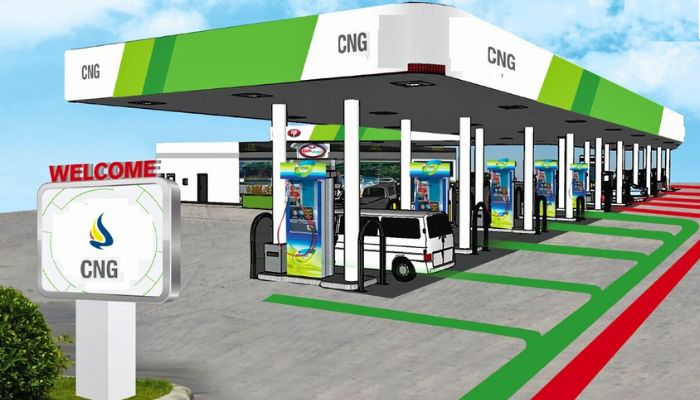
Despite over $2 billion in private investment commitments and multiple public allocations, Nigeria’s compressed natural gas rollout has fallen short of its 2025 infrastructure targets. The Presidential CNG Initiative had projected at least 500 conversion centres and over 150 retail outlets nationwide by the end of 2025.
Programme Director, Engr. Michael Oluwagbemi, earlier announced the targets. Available records now show just over 300 conversion centres and more than 40 refuelling stations built since 2023, with limited confirmation of 2025 delivery milestones.
Transport operators highlight practical constraints. Audu Maiturare of the National Union of Road Transport Workers said: “Our members like the idea of cheaper fuel, but drivers cannot risk being stranded. If stations are only available in a few corridors, nationwide adoption will be slow. Infrastructure must come first before enforcement or pressure to convert.”
Abuja transporter, Ben Ngilari added, “Until refuelling points are reliably available across states, large fleet migration will remain limited.”
When asked about performance data, Finance Ministry adviser Dr. Ogho Okiti said, “I think those who received the money should be able to tell you what they received.”
DECISION HIGHLIGHT
Government prioritised investment mobilisation before nationwide infrastructure execution capacity.
DECISION MEMO
The programme illustrates a recurring policy sequencing problem, Nigeria often funds transition programmes faster than it can physically deploy them. The CNG strategy was designed as both subsidy relief and energy transition mechanism after petrol deregulation, but adoption economics depend on geographic reliability rather than price advantage.
A transport fuel network behaves differently from power generation or telecom expansion. Users cannot partially depend on it. A driver either trusts availability nationwide or remains with petrol. This makes coverage density more important than aggregate investment value.
The institutional responses suggest fragmented accountability. Agencies redirect data requests while infrastructure metrics remain unclear. Okiti’s comment effectively transfers performance verification back to implementing entities, signalling absence of a single accountable execution authority.
Operational bottlenecks reported by industry operators, import delays, equipment shortages, regulatory approvals and financing gaps for small conversion centres, reveal that the constraint is logistical rather than financial. The initiative therefore faces a credibility gap. Funding commitments signal intent but infrastructure density determines behavioural change.
The policy risk now is adoption inertia. Early adopters face route planning uncertainty, discouraging fleet migration. Without transport sector conversion, the macroeconomic objective, reducing petrol imports and easing foreign exchange pressure, cannot materialise regardless of capital deployed.
DATA BOX
Private investment commitments: over $2bn
Projected investment by 2027: $5bn
Government funding: N100bn (2023), N130bn (2024), N225bn (2025)
Target: 500 conversion centres, 150 retail outlets by 2025
Actual since 2023: over 300 conversion centres, 40+ stations
Initial baseline (2025 announcement period): about 50 stations, 193 centres
WHO WINS / WHO LOSES
Winners:
Early corridor operators benefiting from limited competition
Gas suppliers positioned for future adoption
Equipment importers and contractors during pilot phase
Losers:
Transport operators facing operational uncertainty
Consumers expecting immediate transport cost reduction
Government credibility on transition execution timelines
POLICY SIGNALS
Authorities are transitioning from subsidy removal policy to infrastructure delivery phase. Performance evaluation is shifting from funding volume to operational coverage.
INVESTOR SIGNAL
Capital availability is not the binding constraint in Nigeria’s energy transition. Execution capacity and coordination risk now dominate project viability assessment.
RISK RADAR
Adoption risk if infrastructure density remains uneven
Institutional risk from fragmented implementation accountability
Macroeconomic risk if petrol demand persists despite investment.
Energy transition success will depend on station visibility rather than funding announcements.
Discover more from StakeBridge Media
Subscribe to get the latest posts sent to your email.