

By Kingsley Ani
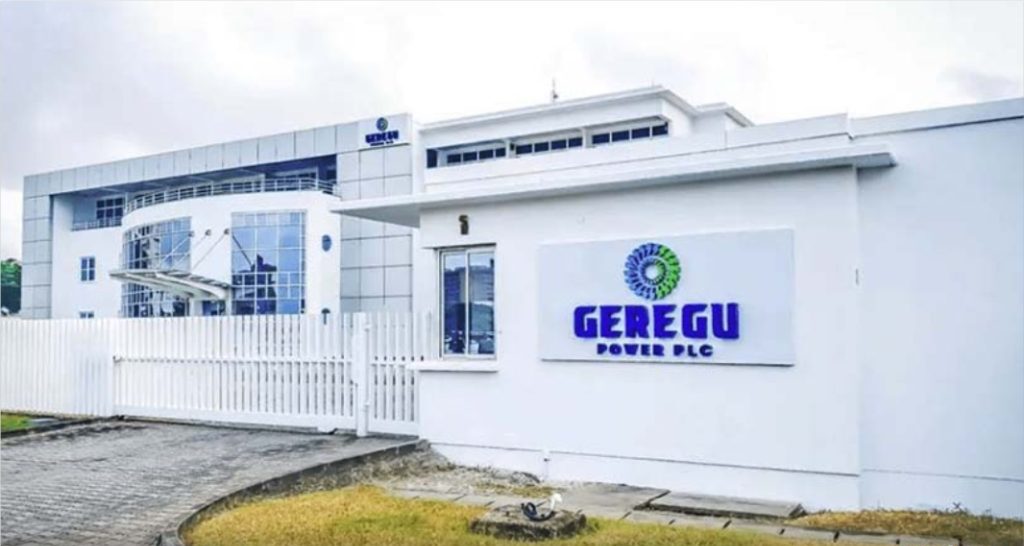
Geregu Power Plc has projected a N8.1 billion post-tax profit for the second quarter of 2026, equivalent to earnings per share of N3.27, according to its latest financial forecast.
The projection reflects a slightly more conservative outlook compared with the company’s previous guidance in 2025, when it initially projected N8.6 billion in second-quarter profit but ultimately reported N9.74 billion after outperforming expectations.
For the upcoming quarter, the company expects revenue of approximately N44.3 billion, lower than the N53.1 billion revenue projection made for the second quarter of 2025.
Despite the moderated forecast, Geregu Power Plc remains one of the most profitable electricity generation companies listed on the Nigerian Exchange (NGX).
DECISION HIGHLIGHT
Geregu Power Plc is forecasting N8.1 billion in post-tax profit for Q2 2026, supported by projected revenue of N44.3 billion and expected operating profit of about N13.8 billion.
The outlook follows the company’s N27.2 billion full-year profit in 2025, underscoring the firm’s continued profitability despite rising financing costs and shifting ownership structures.
DECISION MEMO
The second-quarter earnings forecast by Geregu Power Plc offers an early signal of how Nigeria’s electricity generation sector is adjusting to changing financial and ownership dynamics.
The company’s forecast indicates moderate earnings growth but also reflects a more cautious revenue outlook.
Projected revenue of N44.3 billion is significantly lower than the N55.8 billion actually recorded in Q2 2025, suggesting that the company may be anticipating softer electricity dispatch volumes or pricing pressures within the power market.
Cost projections also indicate adjustments in operational spending.
Cost of sales is expected to fall to about N27.4 billion, compared with N32.1 billion recorded in the same period of 2025, which would result in an estimated gross profit of N16.9 billion.
Although lower than the N23.7 billion gross profit achieved in Q2 2025, the forecast still indicates stable profitability relative to many operators within Nigeria’s electricity generation sector.
Operating expenses are projected to remain relatively contained. Impairment losses on financial assets are expected to reach N1.02 billion, while administrative expenses may total about N2.05 billion, leaving operating profit near N13.8 billion.
One of the most significant structural developments affecting Geregu Power Plc is the ownership transition that occurred in December 2025.
Mr. Femi Otedola sold his 77 percent controlling interest in the company through the divestment of his 95 percent stake in Amperion Power Distribution Company Limited to MA’AM Energy Limited in a transaction valued at approximately $750 million.
That deal represented one of the largest private transactions within Nigeria’s power sector in recent years and effectively transferred strategic control of one of the country’s major electricity generation assets.
The new ownership structure introduces a period of strategic recalibration for the company, particularly as investors assess the long-term operational strategy of the new controlling shareholders.
Geregu Power Plc’s broader financial performance remains strong. In the 2025 financial year, the company recorded N184.9 billion in total revenue, representing a 34.87 percent year-on-year increase.
Energy sales accounted for N120.8 billion, while capacity charges contributed N64.1 billion.
However, financing costs have become an increasingly important variable in the company’s financial profile.
Total finance costs reached N12.5 billion, including N6.3 billion in borrowing expenses and N5.02 billion in bond-related costs, leaving net finance costs at N6.1 billion after accounting for finance income.
These rising financing expenses illustrate the broader financial pressures facing power generation companies operating within Nigeria’s capital-intensive electricity market.
DATA BOX
Projected Q2 2026 profit after tax: N8.1 billion
Projected earnings per share: N3.27
Projected Q2 2026 revenue: N44.3 billion
Projected cost of sales: N27.4 billion
Projected gross profit: N16.9 billion
Projected operating profit: N13.8 billion
Full-year 2025 profit after tax: N27.2 billion
Full-year 2025 revenue: N184.9 billion
Energy sales FY 2025: N120.8 billion
Capacity charges FY 2025: N64.1 billion
Net finance cost FY 2025: N6.1 billion
Outstanding shares: 2.5 billion
Share price (approx.): N1,141.5
Market capitalisation: N2.8 trillion
Ownership divestment transaction: $750 million
WHO WINS / WHO LOSES
Institutional investors and long-term shareholders benefit from the company’s sustained profitability and stable cash flows in Nigeria’s electricity generation sector.
New controlling shareholders gain strategic influence over one of the country’s largest power generation assets.
However, investors may face uncertainty during the post-divestment transition period as the market evaluates the strategic direction of the new ownership structure.
POLICY SIGNALS
The company’s earnings outlook highlights the central role of private capital in Nigeria’s electricity generation sector.
The large ownership transaction involving Geregu Power Plc also reflects ongoing consolidation and restructuring within the power industry following electricity sector privatisation.
The financial performance further underscores the importance of capacity payments and regulated market structures in sustaining electricity generation profitability.
INVESTOR SIGNAL
Despite conservative revenue projections, Geregu Power Plc remains among the most valuable companies listed on the Nigerian Exchange.
The relatively stable share price suggests that investors are waiting for clearer signals on post-divestment strategy before revaluing the stock.
For long-term investors, the company’s strong earnings and high market capitalisation place it firmly among Nigeria’s “Stocks Worth Over One Trillion Naira”.
RISK RADAR
Operational risk remains tied to Nigeria’s electricity market structure, where payment delays from distribution companies often affect generation company cash flows.
Financing risk is increasing as higher borrowing costs elevate debt servicing obligations across the power sector.
Ownership transition risk also persists following the $750 million divestment, as new investors integrate governance and operational strategies within the company.
Discover more from StakeBridge Media
Subscribe to get the latest posts sent to your email.