

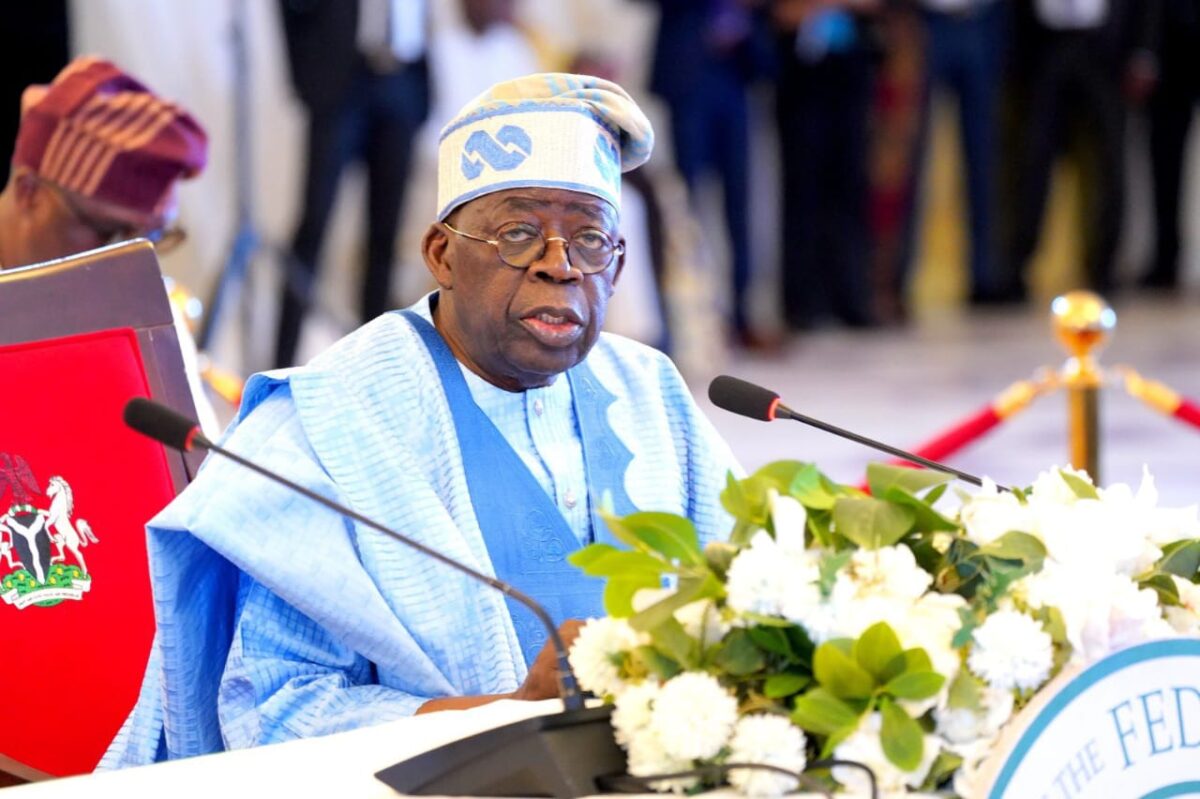
Nigeria’s 2026 budget arrives not merely as a fiscal document but as a stress test of policy credibility. The National Assembly’s approval of N68.3 trillion, a sharp upward revision from the executive proposal submitted by President Bola Ahmed Tinubu, places the country at a decisive intersection, where ambition in infrastructure and institutional funding must now confront the realities of execution discipline, revenue capacity, and debt sustainability. Enam Obiosio interprets the decision, among others.
For the Nigeria’s 2026 budget, the upward revision of over N9 trillion was justified by the need to accommodate legacy obligations, expand infrastructure spending, and strengthen key institutions.
A significant N32.287 trillion was allocated to capital expenditure, alongside targeted funding for healthcare, judiciary operations, and national infrastructure planning.
DECISION HIGHLIGHT
The federal government has prioritised capital-intensive spending and legacy debt clearance, signalling an expansionary fiscal stance anchored on infrastructure-led growth.
DECISION MEMO
The N68.3 trillion budget represents a deliberate escalation in fiscal ambition, but one that immediately raises questions about coherence between expenditure, revenue generation, and execution capacity.
The most defining feature of the budget is the allocation of over N32 trillion to capital projects. On paper, this suggests a structural pivot from recurrent consumption toward long-term economic assets. In practice, however, Nigeria’s historical challenge has not been allocation, but delivery. Capital budgets have consistently underperformed due to procurement delays, weak project management, and fragmented implementation across Ministries, Departments, and Agencies (MDAs).
The inclusion of N5.71 trillion for legacy obligations introduces a corrective dimension. By addressing unpaid commitments from 2025, the government is attempting to restore credibility with contractors and developers. This may improve project continuity, but it also highlights a recurring fiscal pattern, deferred liabilities accumulating into subsequent budgets.
The upward revision itself is analytically significant. An increase of over N9 trillion at the legislative stage suggests either underestimation in the original proposal or expansion driven by political and institutional pressures. In either case, it raises concerns about budget discipline and the predictability of fiscal planning.
Sectoral allocations to healthcare and judiciary funding indicate an attempt to balance infrastructure investment with institutional strengthening. However, the relative scale of these allocations compared to capital expenditure suggests that infrastructure remains the dominant policy lever, potentially at the expense of social sector depth.
The extension of the 2025 capital budget implementation window further reinforces the execution challenge. If prior-year capital projects require additional time for completion, the capacity to absorb an even larger capital allocation in 2026 becomes uncertain.
The budget’s framing as a “legacy” instrument reflects an effort to address structural deficits while signalling continuity in policy direction. Yet, the effectiveness of this approach depends on whether increased spending translates into measurable economic output, rather than remaining within the cycle of allocation without delivery.
DATA BOX
- Total budget (2026): N68.323 trillion
- Initial proposal: N58.47 trillion
- Upward revision: N9.09 trillion+
- Capital expenditure: N32.287 trillion
- Legacy obligations: N5.71 trillion
- Healthcare allocation: N482.758 billion
- Ministry of Finance Incorporated: N478.600 billion
- Judiciary funding: N268 billion
- Supreme Court allocation: N36 billion
WHO WINS / WHO LOSES
Winners:
- Infrastructure contractors benefiting from increased capital allocation
- Government institutions receiving enhanced funding support
- Developers awaiting settlement of outstanding obligations
Losers:
- Fiscal balance, pressured by expanded expenditure commitments
- Taxpayers, if revenue mobilisation does not match spending growth
- Future budgets, potentially burdened by deferred liabilities
POLICY SIGNALS
The budget signals a clear preference for expansionary fiscal policy anchored on infrastructure investment and legacy debt resolution.
It also reflects a willingness to adjust fiscal frameworks post-submission, indicating flexible but potentially inconsistent budget discipline.
INVESTOR SIGNAL
The scale of capital expenditure presents opportunities in infrastructure and public sector-linked projects.
However, investor confidence will depend on execution credibility, timely payments, and macroeconomic stability.
The inclusion of legacy debt settlement may improve contractor confidence but does not eliminate future accumulation risks.
RISK RADAR
- Execution Risk: Limited capacity to deliver large-scale capital projects
- Fiscal Risk: Expanded budget without corresponding revenue certainty
- Credibility Risk: Upward revision undermining budget predictability
- Debt Risk: Legacy obligations indicating recurring fiscal slippage
- Implementation Risk: Extension of prior-year capital projects
The N68.3 trillion budget reflects ambition in scale and intent. Its credibility, however, will not be determined by allocation size, but by the government’s ability to convert fiscal expansion into tangible infrastructure, institutional strength, and sustained economic growth.
Discover more from StakeBridge Media
Subscribe to get the latest posts sent to your email.