

By Kingsley Ani
Nigeria mini-grid investment is constrained by weak project bankability rather than capital availability, as stakeholders at the Climate Finance Forum in Abuja highlight structural gaps in project design, risk alignment, and revenue models within the off-grid energy sector.
The forum focused on improving project bankability as the primary constraint to scaling investments in off-grid energy systems.
DECISION HIGHLIGHT
The central conclusion is that limited investment in minigrids is driven less by capital scarcity and more by the absence of bankable project structures.
Researcher and Economist, Mr. John Nyawa noted that the persistent investor question, “Why aren’t more investments flowing into minigrids?” is resolved by one factor, “bankable projects.”
DECISION MEMO
The forum reframes the minigrid financing challenge as a structural issue of project design rather than capital availability. Investors are not constrained by liquidity but by the inability of projects to meet due diligence, risk, and return thresholds.
The emphasis on investor-led sessions, particularly through AMDA Capital Connect, reflects a shift in narrative control. Developers are increasingly required to align proposals with investor expectations on capital structuring, risk allocation, and governance standards.
Nyawa’s observation that “bankability is no longer theoretical; it is happening” suggests that pilot successes are emerging, particularly in projects integrating Productive Use of Energy into their models. This integration enhances revenue predictability by linking energy supply to economic activity.
Policy discussions involving the Rural Electrification Agency (REA), Nigerian Electricity Regulatory Commission (NERC), and Nigeria Off-Grid Market Acceleration Programme highlight the role of regulatory frameworks in shaping investment outcomes. An enabling environment remains critical to reducing entry barriers and improving project viability.
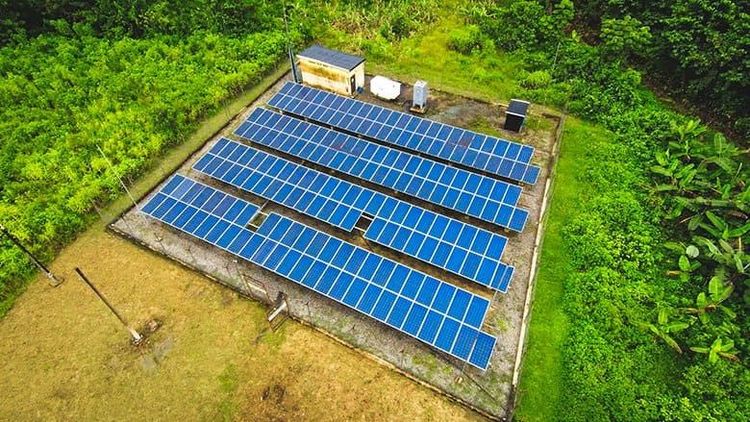
The ecosystem tours of operational minigrid projects provide empirical validation that bankable models can be developed within Nigeria’s context. However, scaling remains contingent on replicability and financing consistency.
The broader implication is that climate finance in the energy sector will be unlocked through structured project pipelines, cross-sector collaboration, and execution discipline rather than increased capital inflows alone.
DATA BOX
- Event: Climate Finance Forum, Abuja
- Focus: mini-grid financing and project bankability
- Key institutions: Rural Electrification Agency; Nigerian Electricity Regulatory Commission; Nigeria Off-Grid Market Acceleration Programme
- Model emphasis: Productive Use of Energy integration
WHO WINS / WHO LOSES
Developers with bankable project structures gain access to financing and scale opportunities.
Investors benefit from improved project quality and reduced risk exposure.
Communities gain from increased access to reliable off-grid electricity.
Projects lacking structured financial and operational models remain excluded from capital flows.
POLICY SIGNALS
The discussions signal a shift towards outcome-based project design and stronger alignment between policy frameworks and investor requirements.
They also reflect increasing emphasis on ecosystem collaboration to support energy access and climate objectives.
INVESTOR SIGNAL
The mini-grid sector presents viable opportunities where projects demonstrate clear revenue models, risk mitigation, and operational scalability.
Investment decisions will increasingly prioritise structured, data-driven project pipelines over early-stage concepts.
RISK RADAR
Execution risk remains high, particularly in scaling pilot projects into replicable models.
Regulatory risk persists, depending on consistency and clarity of policy frameworks.
Revenue risk is tied to the success of Productive Use of Energy integration and local economic activity.
Discover more from StakeBridge Media
Subscribe to get the latest posts sent to your email.