

By Kingsley Ani
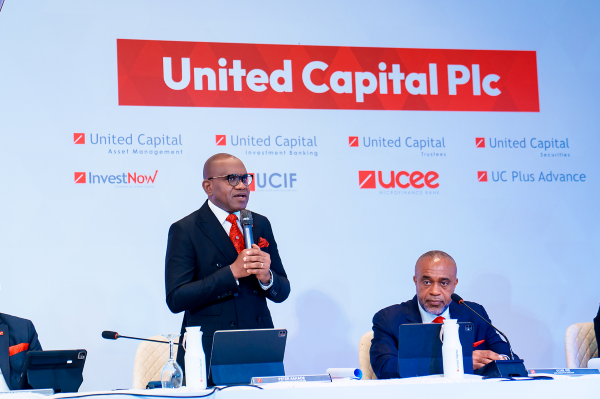
In Abuja on April 24, United Capital Plc announced at its Annual General Meeting that it had fully recapitalised its Securities and Exchange Commission-regulated subsidiaries, over 14 months ahead of the June 30, 2027 deadline under the Investments and Securities Act 2025. The subsidiaries, United Capital Investment Banking, United Capital Asset Management, United Capital Trustees, and United Capital Securities, met revised minimum capital thresholds without external capital raising. Uche Ike, Chairman of United Capital Plc, stated the move “reflects the strength of our governance… and positions United Capital strongly for the opportunities ahead.” Peter Ashade, Group Chief Executive Officer, noted: “We did not wait to be compelled. We acted with foresight.” The mechanism involved internal capital strengthening to comply with significantly increased regulatory thresholds and unlock expanded operating scope.
DECISION HIGHLIGHT
United Capital Plc executes early, internally funded recapitalisation to exceed Securities and Exchange Commission capital requirements and expand operating capacity.
DECISION MEMO
The early recapitalisation positions United Capital Plc ahead of peers in a regulatory cycle that materially raises entry and operating thresholds across Nigeria’s capital markets. By completing compliance without external capital, the Group signals strong internal liquidity and balance sheet resilience, reducing dilution risk and reinforcing governance credibility.
The revised capital requirements, in some cases increasing thresholds by over tenfold, are structurally reshaping the competitive landscape by raising barriers to entry and forcing consolidation among smaller operators. United Capital’s proactive compliance enables first-mover advantage in accessing larger mandates, particularly in investment banking, asset management, and trusteeship.
Ashade’s positioning of compliance as “a baseline” reflects a strategic shift from regulatory adherence to capacity expansion. The enhanced capital base is not only defensive but offensive, positioning the Group to scale assets under management and pursue higher-value transactions across Nigeria and regional markets.
However, the broader market implication is a tightening of competition, where only well-capitalised firms can operate at full scope. This could deepen market concentration while improving systemic stability.
DATA BOX
Compliance deadline: June 30, 2027
Completion timeline: over 14 months early
Minimum capital thresholds:
Fund/Portfolio managers: N5 billion (from N150 million)
Trustees: N2 billion (from N300 million)
Issuing houses: N7 billion (from N200 million)
Revenue (2025): N58.55 billion, up 35 percent
Profit after tax: N28.15 billion, up 17 percent
Dividend: N1 per share (N18 billion total), up 25 percent from N14.4 billion
Assets under management: over N2 trillion
Subsidiaries: 7, all profitable
WHO WINS / WHO LOSES
Winners: United Capital Plc through expanded mandate capacity; institutional investors accessing larger, structured deals; regulators through strengthened market resilience.
Losers: Under-capitalised operators facing compliance pressure; smaller firms at risk of market exit or consolidation.
POLICY SIGNALS
Indicates regulatory intent to strengthen capital adequacy and reduce systemic risk; signals shift towards fewer, stronger capital market operators; aligns Nigeria’s capital markets with higher global prudential standards.
INVESTOR SIGNAL
Positive signal of earnings strength, governance discipline, and growth capacity. Early compliance enhances credibility and positions the Group to capture larger deal flow and asset management mandates.
RISK RADAR
Market concentration risk; execution risk in deploying expanded capital base; potential overexposure to large mandates; regulatory tightening across other financial segments; macroeconomic factors affecting asset growth and capital market activity.
Discover more from StakeBridge Media
Subscribe to get the latest posts sent to your email.