

By Johnson Emmanuel
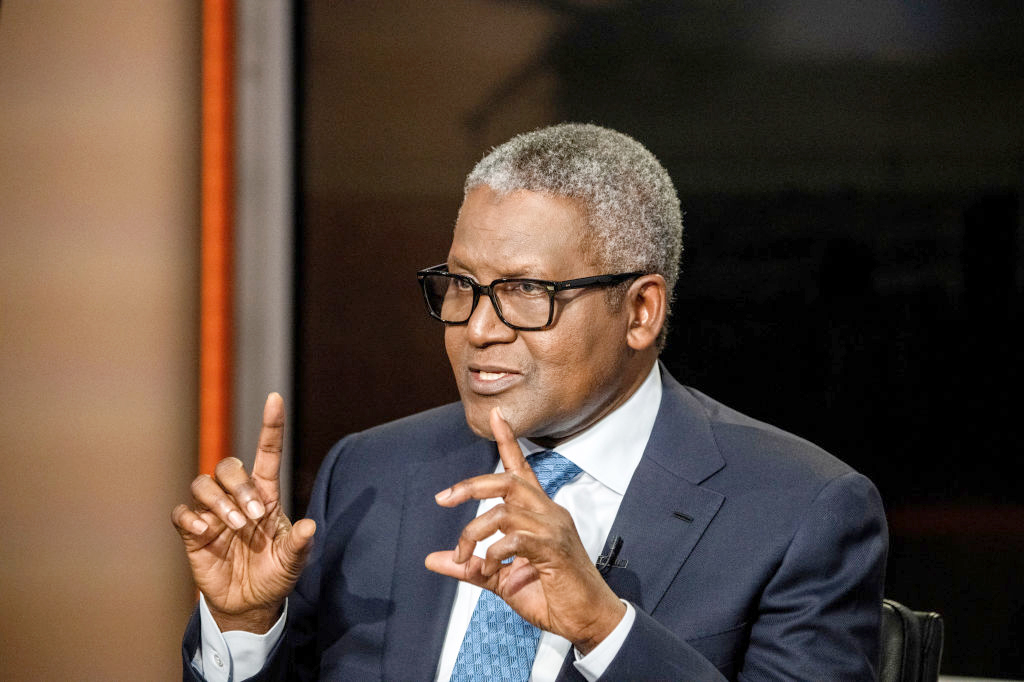
The President of Dangote Industries Limited, Alhaji Aliko Dangote, recently disclosed in an interview with the Financial Times that he is considering Kenya’s coastal city of Mombasa as the preferred site for a proposed 650,000 barrels-per-day refinery in East Africa, potentially costing between $15 billion and $17 billion. The project would process crude from Uganda and international suppliers to reduce East Africa’s dependence on imported petroleum products. Dangote cited Mombasa’s deeper port infrastructure and stronger market scale over Tanzania’s Tanga corridor. The proposal emerged barely a year after the operational ramp-up of Dangote’s 650,000 barrels-per-day Lagos refinery in the Lekki Free Zone.
DECISION HIGHLIGHT
The proposed refinery signals a strategic attempt to extend private African-controlled refining infrastructure beyond Nigeria into regional energy security and industrial influence markets.
DECISION MEMO
Dangote’s East African refinery proposal reflects a broader recalibration of Africa’s energy strategy amid growing geopolitical instability, shipping disruptions and persistent dependence on imported refined petroleum products.
The decision to prioritise Mombasa over Tanzania’s Tanga corridor demonstrates that logistics efficiency, domestic consumption scale and port competitiveness are becoming increasingly decisive variables in refinery economics, often outweighing proximity to crude pipelines alone.
Dangote stated: “I am leaning more towards Mombasa because Mombasa has a much larger, deeper port.”
“Kenyans consume more. It’s a bigger economy,” he added, arguing that crude could be transported by ship rather than relying solely on the planned Uganda-Tanzania export pipeline.
The refinery proposal also exposes intensifying regional competition for strategic industrial investments within East Africa. Diplomatic tensions reportedly emerged after Kenyan President William Ruto referenced refinery discussions involving Tanzania without prior coordination with Tanzanian President Samia Suluhu Hassan.
According to the report, Hassan questioned: “Why did you announce a refinery in Tanga, and I know nothing about it?”
Dangote appears to be leveraging this regional competition to negotiate stronger commercial and policy conditions. He stated: “The ball is in the hands of President Ruto. Whatever President Ruto says is what I’ll do.”
He nevertheless maintained Tanzania remained an option “if they are able to sort themselves out.”
The proposal gains additional significance amid Middle East tensions and disruptions linked to the Strait of Hormuz. Those developments have intensified African concerns over fuel security vulnerabilities and external supply dependence.
Dangote argued that refinery viability requires active state protection against subsidised import competition, stating: “There is no refinery in the world that can survive without that protection.”
Referring to cheaper imports from Russia and India, he warned governments must introduce safeguards to protect local refining economics.
“If we have an agreement, we can start this year,” Dangote said.
The Lagos refinery’s operational success has strengthened Dangote’s credibility as a continental-scale industrial investor after years of scepticism around the project’s feasibility. A senior executive within Dangote Group stated that “Dangote feels vindicated, not only by succeeding technically in getting the refinery to work, but also succeeding commercially.”
The report further noted that geopolitical tensions had materially strengthened earnings performance. According to another executive, “The Iran war, and the resulting closure of the Strait of Hormuz, has been ‘payday’ for Dangote’s business.”
Dangote himself acknowledged that energy sector profitability had surged during the crisis, stating: “You can see all the other oil companies; their profitability has doubled. So you don’t expect us to do less.”
President William Ruto also praised the Lagos refinery as evidence of African industrial execution capacity, stating: “Yet, when you went to Nigeria, there were queues of people looking for fuel in petrol stations until one African stepped forward and built a refinery.”
Dangote additionally disclosed plans to expand the Lagos refinery from 650,000 barrels per day to 1.4 million barrels per day within 30 months.
“We’ll be price movers in the market,” he said, adding: “If we don’t invest in our own continent, who else will?”
DATA BOX
- Proposed East African refinery capacity: 650,000 barrels per day
- Estimated project cost: $15 billion to $17 billion
- Preferred location under consideration: Mombasa, Kenya
- Alternative location: Tanga, Tanzania
- Existing Dangote Lagos refinery capacity: 650,000 barrels per day
- Planned Lagos refinery expansion target: 1.4 million barrels per day within 30 months
- Dangote fertiliser plant annual capacity: three million tonnes
- Proposed crude sources: Uganda and international suppliers
- Strategic sectors impacted: refining, aviation fuel, fertiliser exports, energy logistics
- Current East African dependence: virtually all refined petroleum products imported
- Global disruption referenced: Strait of Hormuz shipping instability
WHO WINS / WHO LOSES
Winners:
- East African economies seeking fuel security and industrial infrastructure
- Regional logistics and port ecosystems
- African airlines and industrial users dependent on refined products
- Governments prioritising import substitution and energy resilience
Losers:
- Foreign refined fuel exporters into East Africa
- Import-dependent downstream fuel markets
- Competitors unable to match large-scale refining economics
POLICY SIGNALS
The proposal signals growing momentum behind regional energy sovereignty, private-sector-led industrial infrastructure and state-supported refining protection frameworks across Africa. It also reflects increasing acceptance that large-scale strategic industries may require policy shielding against external pricing distortions.
INVESTOR SIGNAL
Dangote’s expansion ambitions reinforce perceptions that African industrial infrastructure can attract commercially viable long-term capital despite political and execution risks. The Lagos refinery’s operational performance may further strengthen investor confidence in large-scale African manufacturing and energy projects.
RISK RADAR
Key risks include political negotiations with host governments, refinery protection policy uncertainty, currency volatility, imported fuel competition, regional diplomatic tensions and long-term crude supply economics. The project also remains exposed to global oil demand shifts, geopolitical instability and infrastructure financing conditions.
Discover more from StakeBridge Media
Subscribe to get the latest posts sent to your email.