

By Jennete Ugo Anya
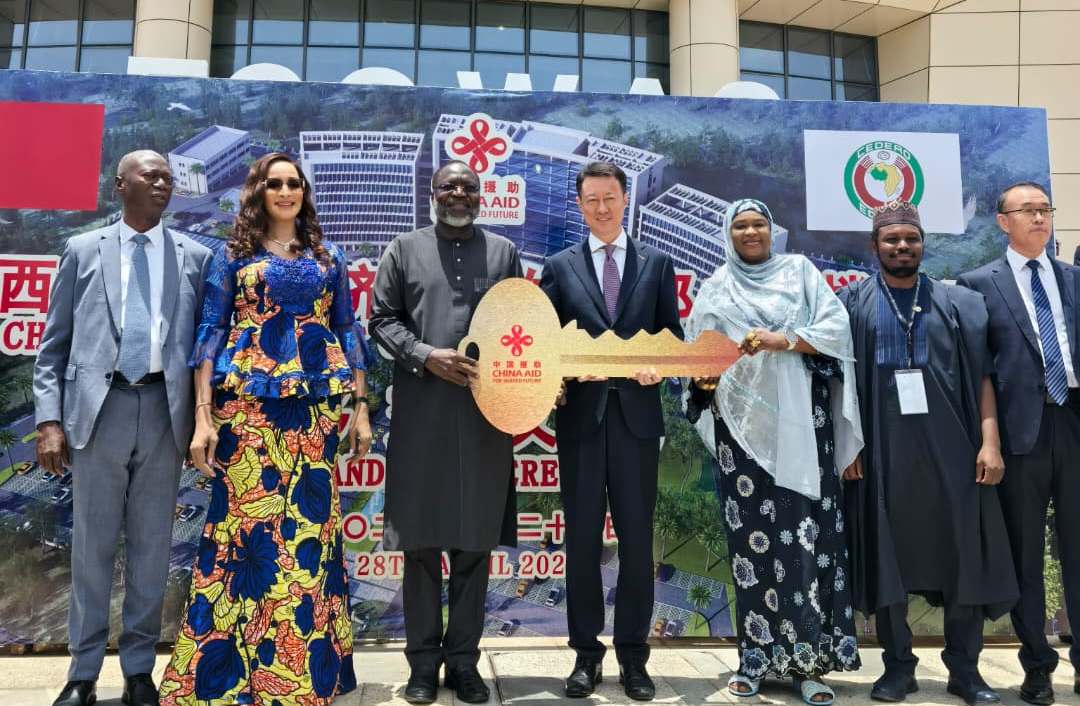
In Abuja recently, the People’s Republic of China formally handed over a $56.5 million headquarters complex to the Economic Community of West African States (ECOWAS), completed in under two years as a grant-funded institutional infrastructure project. Yu Dunhai, Ambassador of China to Nigeria, described the facility as a “flagship aid project” providing “a robust foundation” for regional development, emphasising cooperation based on “non-interference” and “no political strings attached”. Omar Alieu Touray, President of the ECOWAS Commission, confirmed joint execution with Chinese contractors, noting teams worked “day and night” to meet delivery timelines. Bianca Odumegwu-Ojukwu, Honourable Minister of Foreign Affairs of Nigeria, framed the project as evidence of “fruitful and progressive relations”. The mechanism reflects state-backed infrastructure diplomacy, combining grant financing with institutional capacity building.
DECISION HIGHLIGHT
China deploys grant-funded institutional infrastructure to strengthen regional influence and embed long-term diplomatic capital within ECOWAS.
DECISION MEMO
The project reinforces China’s established model of infrastructure-led engagement, extending from transport and energy into governance architecture. By financing and delivering a central administrative hub for ECOWAS, Beijing embeds itself within the operational core of West Africa’s primary regional institution.
Yu’s framing of “non-interference” and unconditional cooperation contrasts with Western development frameworks tied to governance conditions, positioning China as an alternative partner for state and regional capacity building. However, the absence of explicit conditions does not preclude strategic alignment benefits, particularly in diplomatic support and economic access.
For ECOWAS, the facility enhances administrative consolidation and coordination at a time of institutional strain, including political fragmentation and integration challenges. Yet, reliance on external financing for core infrastructure underscores structural limitations in regional fiscal capacity.
The rapid delivery timeline highlights execution efficiency, but also reflects asymmetry in technical and financing capabilities between partners. The broader implication is a gradual shift in influence architecture, where infrastructure provision becomes a proxy for geopolitical positioning.
DATA BOX
Project value: $56.5m
Location: Abuja, Nigeria
Delivery timeline: under two years
Funding model: Grant from People’s Republic of China
Beneficiary: Economic Community of West African States (15 member states)
Project type: Institutional headquarters complex
Execution: Joint coordination between ECOWAS officials and Chinese contractors
Inauguration: Scheduled with regional heads of state
WHO WINS / WHO LOSES
Winners: ECOWAS through enhanced operational capacity; China through strengthened diplomatic and institutional influence; regional stakeholders benefiting from improved coordination.
Losers: Competing external partners with conditional financing models; local contractors with limited participation in large-scale delivery.
POLICY SIGNALS
Signals deepening China–West Africa institutional engagement; reinforces infrastructure diplomacy as a tool of foreign policy; indicates continued reliance on external partners for regional capacity development.
INVESTOR SIGNAL
Highlights China’s expanding footprint in African institutional and infrastructure assets, signalling potential alignment opportunities for firms within Chinese-led ecosystems. Limited direct commercial upside for private investors due to grant-based structure.
RISK RADAR
Geopolitical dependency risk; limited local capacity transfer; potential crowding out of alternative financing models; sustainability concerns if institutional funding remains externally driven; evolving influence dynamics affecting policy autonomy.
Discover more from StakeBridge Media
Subscribe to get the latest posts sent to your email.