

By Johnson Emmanuel
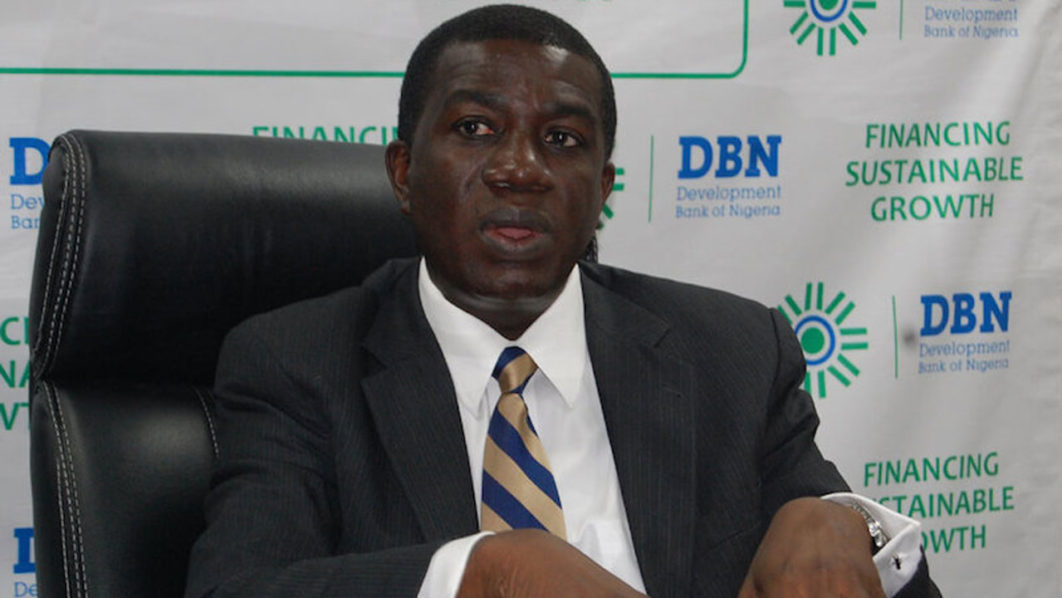
The Development Bank of Nigeria Plc (DBN) recently announced in Lagos that it has disbursed over N1 trillion to more than one million Micro, Small and Medium Enterprises (MSMEs) since commencing operations in 2017, supporting the creation of over 1.6 million jobs. Managing Director, Dr. Tony Okpanachi, disclosed that the development finance institution, established to address MSME financing gaps through participating financial institutions, is now pursuing a new five-year expansion strategy. The strategy targets an outstanding loan portfolio of N1 trillion, issuance of N500 billion in guarantees, mobilisation of N1.3 trillion in debt and equity capital, support for over two million MSMEs and facilitation of two million jobs. According to Okpanachi, “Our strategic intent over this period is to achieve scale by expanding support for MSMEs and strengthening inclusive economic growth.”
DECISION HIGHLIGHT
DBN is transitioning from a capital-access intervention institution into a scale-focused development finance platform, combining wholesale lending, guarantees, financial inclusion targets and capital mobilisation to deepen its economic footprint.
DECISION MEMO
The significance of DBN’s announcement lies less in the N1 trillion disbursement milestone than in the institution’s attempt to institutionalise large-scale MSME financing within Nigeria’s financial architecture.
The bank’s model relies on leveraging 84 Participating Financial Institutions rather than direct lending. This approach reduces operational complexity while extending market reach through commercial banks, microfinance banks, merchant banks and other development finance institutions.
The next phase suggests a strategic shift from access-to-finance objectives towards measurable economic impact. The planned N500 billion guarantee expansion indicates recognition that credit risk, rather than liquidity alone, remains a major barrier to MSME financing.
The emphasis on women-owned businesses, youth-led enterprises and underserved regions also reflects alignment with broader financial inclusion and economic development priorities. By directing capital through existing financial institutions, DBN is positioning itself as a catalytic lender rather than a competing retail bank.
The institution’s ability to mobilise N1.3 trillion in fresh debt and equity capital will determine whether the next phase becomes a development finance success story or encounters balance-sheet constraints common to emerging-market intervention funds.
DATA BOX
- Total MSME disbursement since inception: Over N1 trillion
- MSMEs supported: More than 1 million
- Jobs supported: More than 1.6 million
- Operational launch: 2017
- Participating Financial Institutions: 84
- 2025 disbursement: Over N358 billion
- 2025 MSMEs reached: More than 289,000
- New Participating Financial Institutions added in 2025: 5
- Women-owned business beneficiaries: 77%
- Youth-led enterprise beneficiaries: 28%
- Disbursement to conflict-affected and vulnerable states: N108 billion
- MSMEs supported in vulnerable states: Over 132,000
- Planned guarantee issuance: N500 billion
- Planned capital mobilisation: N1.3 trillion
- Target MSMEs over next five years: More than 2 million
- Target jobs over next five years: 2 million
- Infrastructure Credit Guarantee Limited guaranteed loans since inception: Over N500 billion
- Businesses supported through guarantees: Over 93,000
- Credit guarantees issued: More than 130,000
- Jobs sustained through guarantees: More than 203,000
WHO WINS / WHO LOSES
Winners
- MSMEs seeking long-term financing.
- Women-owned businesses, given existing dominance among beneficiaries and future allocation targets.
- Youth-led enterprises targeted for increased funding.
- Financial institutions participating in DBN’s wholesale lending structure.
- Businesses operating in underserved and conflict-affected regions.
Potential Losers
- MSMEs unable to meet formal financial institution credit requirements.
- Regions and sectors outside DBN’s priority allocation framework, which may experience relatively lower capital flows.
POLICY SIGNALS
- Continued government-backed emphasis on MSMEs as employment and growth drivers.
- Stronger policy alignment between development finance and financial inclusion objectives.
- Increasing use of credit guarantees as a risk-sharing mechanism.
- Greater prioritisation of gender financing, youth entrepreneurship and regional economic inclusion.
- Preference for market-based intermediation through financial institutions rather than direct state lending.
INVESTOR SIGNAL
DBN’s expansion strategy indicates sustained institutional support for Nigeria’s MSME ecosystem despite broader macroeconomic constraints. The planned N1.3 trillion capital raise, combined with partnerships involving the African Development Bank and the European Investment Bank, signals continued confidence among development finance stakeholders. The strategy also suggests growing opportunities for banks, microfinance institutions, fintech lenders and impact investors operating within SME financing value chains.
RISK RADAR
- Capital mobilisation risk if debt and equity funding targets are not achieved.
- Credit quality deterioration amid challenging economic conditions.
- Inflation and interest-rate pressures affecting MSME repayment capacity.
- Concentration risks arising from rapid portfolio expansion.
- Execution risk in meeting ambitious lending, guarantee and employment targets.
- Dependence on participating financial institutions for efficient credit transmission and monitoring.
- Potential regional security challenges affecting lending outcomes in vulnerable states.
Discover more from StakeBridge Media
Subscribe to get the latest posts sent to your email.