

By Ayo Susan
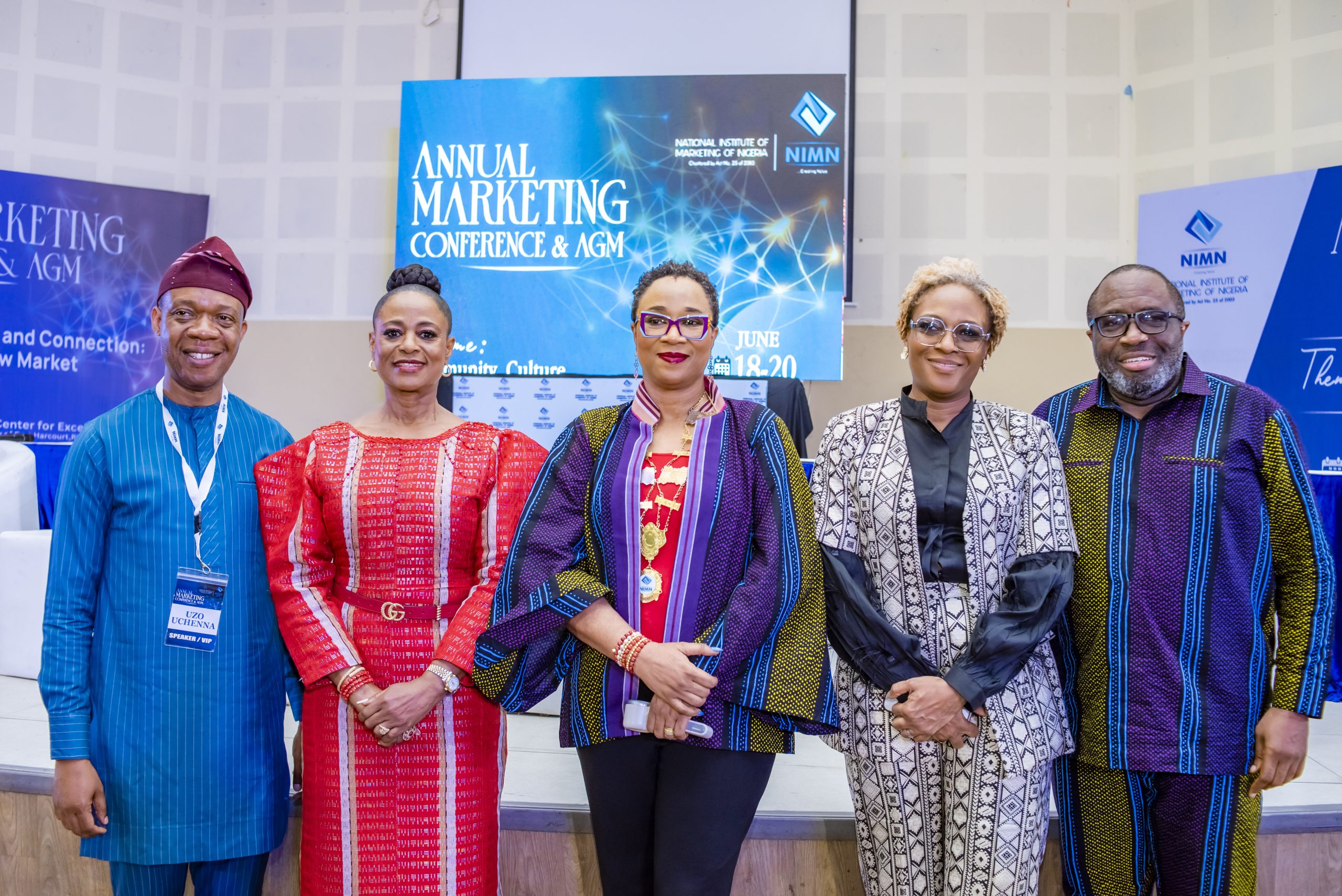
The Nigerian Institute of Marketing of Nigeria (NIMN), at its 2026 Annual Marketing Conference (AMC) and Annual General Meeting (AGM) in Port Harcourt, unveiled a strategic repositioning of Nigeria’s marketing profession around community, culture, trust and authentic consumer engagement. Under the theme, ‘Community, Culture and Connection: Reimagining the New Market,’ the conference brought together marketers, academics, policymakers and business executives to examine changing consumer behaviour in a digital economy. Deputy Vice-Chancellor (Academic), Pan-Atlantic University, Professor Uchenna Uzo, urged brands to prioritise consistency, transparency and consumer education, stating: ‘Consistency is key, especially when you operate in a fragmented market. It must reflect in your investments, engagements and the offerings you provide to your target customers.’ The event also featured the unveiling of a joint consumer insight report by Lagos Business School and NIMN, Council elections, a student marketing competition sponsored by Tolaram Group, and renewed commitments to professional regulation, industry-academia collaboration and ethical marketing practice.
DECISION HIGHLIGHT
NIMN is repositioning marketing from product promotion to relationship capital, using consumer trust, professional regulation, research-led decision-making and talent development as the pillars of future competitiveness.
DECISION MEMO
The conference reflects a structural reassessment of how brands compete in Nigeria’s increasingly fragmented marketplace. Rather than treating marketing primarily as a communications discipline, discussions consistently positioned trust, community participation and cultural relevance as strategic assets capable of sustaining long-term business performance.
Professor Uzo’s keynote established this direction by arguing that trust has become the marketplace’s most valuable currency as consumers increasingly rely on peer recommendations instead of conventional advertising. The jointly published consumer insight report reinforces this transition, showing that peer networks, community influencers and faith-based leaders increasingly shape purchasing behaviour while consumers maintain an aspiration score of 7.5 out of 10 despite persistent economic pressures.
Commercial Director of UAC Foods Limited, Dr Ayo Awosika, extended the argument by urging organisations to demonstrate genuine interest in consumers’ lives rather than merely promoting products. He also advocated stronger collaboration between academia and industry to deepen consumer intelligence.
Professor Chinyere Stella Nwulu of Rivers State University shifted the discussion towards governance, arguing that effective community relationships require stronger policy implementation and accountability, while Director-General of the Delta State Capital Territory Development Agency, Chief Patrick Ukah, concluded that many development initiatives fail because institutions neglect meaningful engagement with stakeholders. According to him, “The missing link is not knowledge but connection.”
President and Chairman of Council of the Nigerian Institute of Public Relations (NIPR), Dr Ike Neliaku, broadened the discussion beyond marketing by arguing that consumers increasingly identify with brand values and purpose rather than products alone. He maintained that sustainable growth would be driven by trust, credibility and meaningful relationships.
From an institutional perspective, President and Chairman of Council of NIMN, Dr Bolajoko Bayo-Ajayi, announced stricter enforcement of the Institute’s statutory requirement for all marketing practitioners to register with NIMN, signalling stronger regulatory oversight designed to improve professionalism, ethical conduct and industry credibility.
Managing Director and Chief Executive Officer of the Financial Institutions Training Centre, Dr Chizor Malize, linked these themes to digital transformation, urging organisations to integrate culture, community and connection into business strategy to strengthen customer loyalty and long-term competitiveness.
Beyond policy discussions, the Institute concluded its Council elections, producing new officers expected to drive governance reforms, while the Tolaram-sponsored Student Marketing Conference demonstrated a parallel strategy of developing future industry talent through practical engagement with market realities.
Collectively, the conference suggests that Nigeria’s marketing profession is moving towards a governance framework where consumer trust, institutional credibility, professional regulation and evidence-based market intelligence increasingly determine competitive advantage.
DATA BOX
- Event: 2026 Annual Marketing Conference and Annual General Meeting
- Venue: Port Harcourt
- Theme: Community, Culture and Connection: Reimagining the New Market
- Consumer aspiration score: 7.5 out of 10
- Research partners: Nigerian Institute of Marketing of Nigeria and Lagos Business School
- Consumer insight: Peer networks, community influencers and faith-based leaders increasingly influence purchasing decisions
- Regulatory commitment: Stronger enforcement of mandatory registration for marketing practitioners
- Governance outcome:
- First Vice President: Dr Yakasai Ibrahim Yusuf, 332 votes (78.49 percent)
- Second Vice President: Dr Chidi Nwankpa Sylvanus, 229 votes (54.14 percent)
- Seven new Council members elected
- Student Conference sponsor: Tolaram Group
- Student competition winner: Adajine Josiah Omeiza, University of Port Harcourt, awarded N150,000 and fast-track employment consideration
- First Runner-up: Newman Nwachinemere Isaac, N100,000
- Second Runner-up: Nzuruike Uchechi Jennifer, N50,000
- All 13 finalists admitted into the NIMN Emerging Marketing Talent Pool
WHO WINS / WHO LOSES
Winners: Professionally regulated marketers, research-driven organisations, brands investing in trust and community engagement, higher institutions, emerging marketing professionals and consumers benefiting from stronger ethical standards.
Losers: Transactional marketing models, organisations dependent solely on mass advertising, practitioners operating outside professional regulation and businesses that fail to adapt to evolving consumer influence networks.
POLICY SIGNALS
The conference reinforces three policy directions: stronger professional regulation through mandatory practitioner registration; greater integration between academic research and industry practice; and a strategic shift towards consumer-centred, trust-based marketing supported by ethical governance and evidence-based decision-making.
INVESTOR SIGNAL
The discussions suggest that corporate value creation is becoming increasingly linked to reputation, stakeholder trust and community engagement rather than promotional expenditure alone. Organisations capable of combining strong governance with authentic consumer relationships are likely to achieve more resilient brand equity and long-term commercial performance.
RISK RADAR
Professional reforms will depend on consistent enforcement of statutory registration requirements and sustained industry compliance. Organisations that fail to adapt to changing consumer influence patterns, digital engagement models and trust-based branding risk declining relevance, weaker customer loyalty and reduced competitiveness despite increased marketing expenditure.
Discover more from StakeBridge Media
Subscribe to get the latest posts sent to your email.