

By Johnson Emmanuel
The Honourable Minister of Solid Minerals Development, Dr. Dele Alake, has announced the discovery of a world-class polymetallic mineral province in Kaduna State containing platinum group metals, gold, nickel, copper, lithium and rare earth elements, describing it as one of Nigeria’s most significant mining discoveries in recent years. Announced in Abuja at the African Natural Resources and Energy Investment Summit 2026, the discovery was verified by the Nigerian Geological Survey Agency (NGSA) following exploration by a private company. The announcement coincided with Steron Mining and Company Limited’s unveiling of an estimated 3.3 million metric tonnes of lithium reserves at its Abuja mining site, reinforcing the Federal Government’s strategy of expanding mineral value addition and attracting downstream investment.
DECISION HIGHLIGHT
The Kaduna discovery strengthens Nigeria’s strategy of repositioning its solid minerals sector from raw mineral exports towards exploration-led investment, domestic processing and participation in global critical mineral supply chains.
DECISION MEMO
The announcement represents more than a geological discovery. It strengthens Nigeria’s effort to reposition mining as a strategic pillar of economic diversification by improving geological confidence, attracting investment and expanding domestic mineral processing.
Unlike previous narratives centred on untapped mineral potential, the Kaduna discovery is supported by geological verification from the Nigerian Geological Survey Agency, reducing exploration uncertainty for prospective investors.
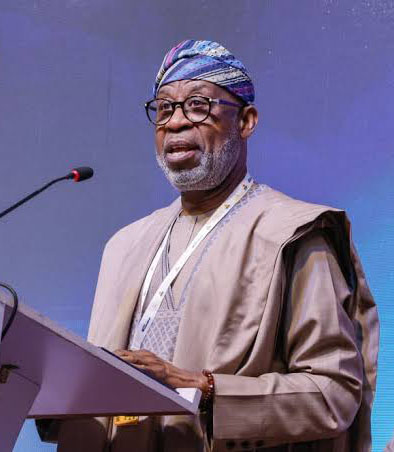
Announcing the discovery, Dr. Alake said, “This is important for newsmen and stakeholders to take note, this is the first time I am announcing this publicly. Recent exploration breakthroughs verified by our Nigerian Geological Survey Agency have unveiled a world-class polymetallic mineral province in Kaduna state, consisting of world-class platinum group metals, precious, and critical mineral deposits.”
He stated, “The province is notable for significant deposits of gold, nickel, copper, lithium, and rare earth elements of exceptionally high grades, positioning Nigeria among the emerging destinations for strategic mineral resources and sustainable mining investment.”
According to him, “This is a new discovery by a private company assisted by our agency, the Nigerian Geological Survey Agency.”
The discovery also supports the federal government’s broader industrial policy of retaining more value within Nigeria’s mining sector.
“For too long, Nigeria’s mineral endowment did not translate into sufficient national value,” Alake said.
He continued, “The paradox was very clear: vast mineral potential but limited beneficiation, rising global demand but inadequate geological confidence, legal authority but weak enforcement, and abundant activity but too much informality.”
Rather than exporting raw minerals, the minister said investors have already committed billions of dollars to mineral processing projects expected to reshape the structure of the economy, indicating a gradual shift towards domestic beneficiation and industrialisation.
Supporting that narrative, Abu Omar, Chief Executive Officer of Steron Mining and Company Limited, disclosed that the company’s Abuja site contains an estimated 3.3 million metric tonnes of lithium reserves.
“We have granite in abundance because it is the host rock here. That was our original focus. We later discovered lithium and have now identified occurrences of tantalite,” Omar said.
He added that exploration remains ongoing and that “the prospects remain encouraging.”
Taken together, the Kaduna discovery and Steron’s lithium announcement strengthen Nigeria’s credibility within the rapidly expanding global market for critical minerals. However, the economic value will ultimately depend less on geological discoveries than on the country’s ability to sustain exploration, attract processing investment, strengthen regulatory certainty and integrate mining into broader industrial value chains.
DATA BOX
- New discovery: World-class polymetallic mineral province in Kaduna State.
- Verifying institution: Nigerian Geological Survey Agency.
- Minerals identified:
- Platinum group metals.
- Gold.
- Nickel.
- Copper.
- Lithium.
- Rare earth elements.
- Additional announcement:
- 3.3 million metric tonnes of lithium reserves unveiled by Steron Mining and Company Limited.
- Strategic policy direction:
- Domestic beneficiation.
- Reduced raw mineral exports.
- Increased processing investment.
- Greater participation in global critical minerals supply chains.
WHO WINS / WHO LOSES
Winners
- Mining investors seeking verified exploration opportunities.
- Mineral processing companies pursuing downstream investment.
- Manufacturers dependent on critical minerals for clean energy technologies.
- Kaduna State through potential mining and industrial development.
- Nigeria through stronger economic diversification prospects.
Losers
- Business models dependent on exporting unprocessed minerals.
- Jurisdictions competing for investment without comparable geological certainty.
POLICY SIGNALS
The federal government is shifting mining policy beyond resource extraction towards exploration credibility, domestic processing and industrial value addition. Geological verification is increasingly being positioned as the foundation for attracting long-term investment into strategic minerals.
INVESTOR SIGNAL
The Kaduna discovery strengthens Nigeria’s investment proposition within the global critical minerals market by reducing exploration uncertainty and expanding the country’s strategic mineral portfolio. Combined with evidence of private-sector discoveries and planned downstream processing investments, the announcement suggests a gradual transition from speculative mineral potential towards commercially investable resource development. The long-term investment case, however, will depend on consistent regulatory implementation, infrastructure development and successful execution of value addition projects.
RISK RADAR
Commercial viability remains subject to detailed resource definition, feasibility studies, financing and regulatory approvals. Global critical mineral price volatility, infrastructure constraints, licensing delays, environmental compliance requirements and execution risks around downstream processing could affect the pace at which geological discoveries translate into sustained economic value.
Discover more from StakeBridge Media
Subscribe to get the latest posts sent to your email.