

By Jennete Ugo Anya
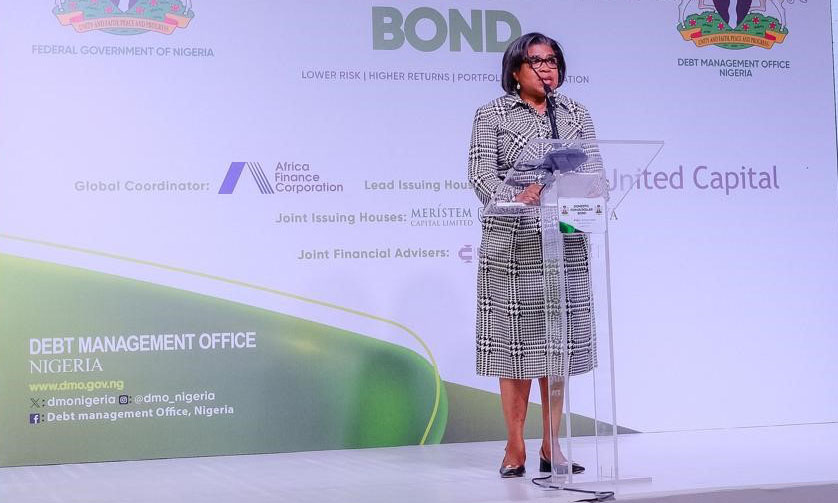
The Debt Management Office (DMO), on behalf of the federal government, listed its 18.95 percent N47.335 billion Series III Sovereign Green Bond due June 2030 on the Nigerian Exchange Limited (NGX) and FMDQ Securities Exchange Limited on May 13, 2026. According to the DMO, the issuance is intended to finance environmentally sustainable projects supporting Nigeria’s transition towards a “low-carbon and climate-resilient society”.
The DMO stated that the listing would improve liquidity and price transparency for climate-focused securities while broadening ethical investment opportunities within the domestic capital market. The agency also acknowledged the participation of Chapel Hill Denham and Stanbic IBTC Capital Limited as issuing houses and bookrunners, alongside legal adviser S.P.A. Ajibade and Co.
DECISION HIGHLIGHT
Nigeria is expanding the use of sovereign debt instruments to finance climate-linked infrastructure while simultaneously attempting to deepen domestic capital market sophistication and attract sustainability-focused investors.
DECISION MEMO
The listing of the Series III Sovereign Green Bond reflects Nigeria’s gradual attempt to institutionalise climate financing within its domestic debt architecture rather than relying solely on multilateral or concessional funding channels.
Beyond the environmental narrative, the transaction is fundamentally a capital market signal. By listing the instrument simultaneously on the Nigerian Exchange Limited and FMDQ Securities Exchange Limited, the DMO is attempting to strengthen secondary market liquidity, broaden investor participation and improve transparency around green asset pricing.
The issuance also demonstrates how sovereign debt management in Nigeria is becoming increasingly thematic. Traditional borrowing is now being layered with sustainability classifications intended to attract specialised pools of capital, including ethical funds, climate-focused institutional investors and environmental, social and governance-linked portfolios.
However, the structure also highlights a broader fiscal reality. Nigeria continues to depend on debt financing to support strategic development objectives, including climate adaptation and infrastructure resilience. The long-term credibility of the green bond market will therefore depend less on issuance frequency and more on measurable project execution, reporting transparency and environmental impact verification.
The 18.95 percent coupon further underscores the tension between sustainability ambitions and Nigeria’s high domestic interest rate environment. While the green label broadens investor appeal, pricing conditions still reflect underlying sovereign risk perceptions and macroeconomic pressures within the local debt market.
Overall, the issuance signals market maturation, but also exposes the challenge of financing climate transition objectives within a high-yield emerging market economy.
DATA BOX
- Instrument: Series III Sovereign Green Bond
• Issuer: Federal Government of Nigeria through the Debt Management Office
• Size: N47.335 billion
• Coupon: 18.95 percent
• Maturity: June 2030
• Listing date: May 13, 2026
• Exchanges: Nigerian Exchange Limited and FMDQ Securities Exchange Limited
• Objective: Financing green and climate-resilient projects
• Issuing houses/bookrunners: Chapel Hill Denham and Stanbic IBTC Capital Limited
• Legal adviser: S.P.A. Ajibade and Co.
WHO WINS / WHO LOSES
Winners:
• Sustainability-focused institutional investors
• Domestic capital market operators and fixed-income traders
• Climate-linked infrastructure and environmental projects
• Federal Government debt market visibility objectives
• Ethical investment portfolios seeking local currency green assets
Losers:
• Conventional financing structures competing for specialised capital
• Borrowers exposed to elevated domestic interest rate conditions
• Sectors vulnerable to tighter sustainability-linked funding standards
POLICY SIGNALS
- Increasing integration of climate finance into sovereign borrowing strategy
• Continued deepening of Nigeria’s domestic debt market
• Government preference for market-based infrastructure financing mechanisms
• Stronger alignment with global environmental, social and governance financing trends
• Expansion of thematic sovereign securities within Nigeria’s capital market
INVESTOR SIGNAL
The listing provides a positive signal regarding the evolution of Nigeria’s sustainable finance ecosystem and the government’s willingness to diversify funding instruments beyond conventional bonds.
However, investor confidence will depend heavily on post-issuance transparency, measurable deployment of proceeds and reporting credibility. The relatively high coupon rate also indicates that sustainability branding has not materially insulated Nigeria from prevailing sovereign risk pricing conditions.
RISK RADAR
- Execution and monitoring risks around funded green projects
• High domestic interest rate environment affecting debt sustainability
• Greenwashing concerns if project reporting lacks transparency
• Secondary market liquidity limitations despite dual listing
• Currency and inflation pressures affecting long-term investor returns
• Fiscal dependence on continued debt issuance for development financing
• Environmental project delays weakening investor confidence in sovereign green instruments
Discover more from StakeBridge Media
Subscribe to get the latest posts sent to your email.