

By Johnson Emmanuel
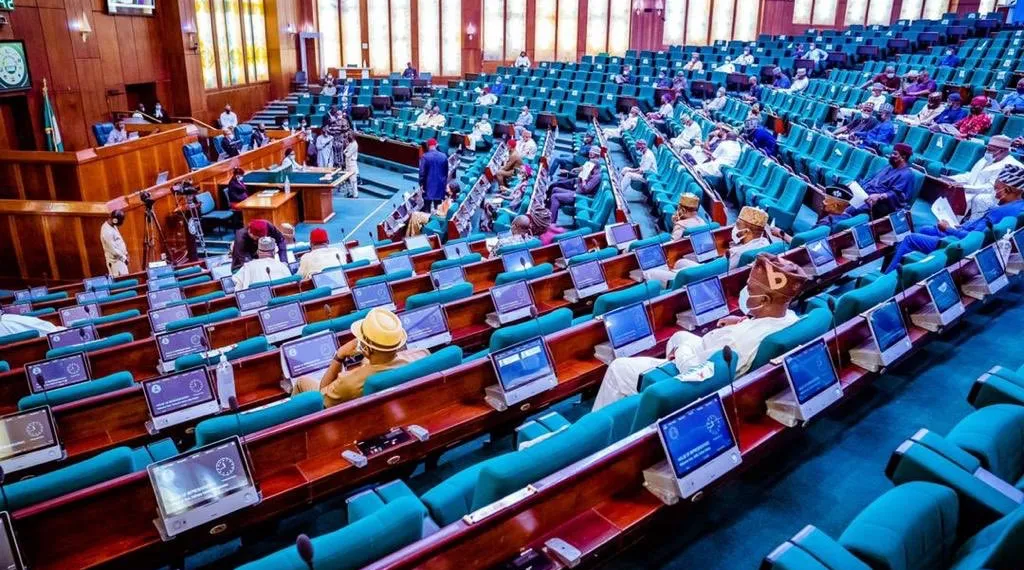
The House of Representatives, following a motion sponsored by Bamidele Salam, Member representing Ede North/Ede South/Egbedore/Ejigbo Federal Constituency, recently in Abuja, resolved to investigate the persistent decline in farm produce prices across Nigeria and mandated the Federal Ministry of Agriculture and Food Security to collaborate with relevant agencies to design price support mechanisms, structured off-taking systems, and expanded storage and processing infrastructure; Salam stated that the price drop has caused “monumental financial losses to farmers,” driven by weak market linkages, inadequate storage, and absence of coordinated off-take frameworks.
DECISION HIGHLIGHT
The legislature has initiated an inquiry while directing immediate policy design for price stabilisation, combining investigation with intervention.
DECISION MEMO
The House of Representatives’ action reflects a reactive policy posture to a market imbalance that has already materialised. The decline in farm produce prices, while superficially beneficial to consumers, signals a deeper structural inefficiency within Nigeria’s agricultural value chain.
Salam’s identification of absent off-taking mechanisms and weak storage capacity points to a supply chain failure rather than a production problem. Excess supply without corresponding aggregation, processing, or storage capacity leads to price collapse, particularly for perishable commodities. This dynamic transfers value away from producers, compressing farm incomes despite sustained input costs.
The directive to the Federal Ministry of Agriculture and Food Security introduces a dual-track response, short-term cushioning through price support and off-taking, and medium-term correction via infrastructure expansion. However, price stabilisation mechanisms require careful calibration. Artificial price floors, if not supported by efficient procurement and distribution systems, risk fiscal strain or market distortion.
The emphasis on strategic grain reserves and agro-processing zones suggests an attempt to absorb surplus supply and extend product shelf life. These interventions, if executed effectively, can moderate price volatility and reduce post-harvest losses.
Salam’s warning that continued price decline could “drive farmers out of business” underscores the risk of supply contraction in subsequent cycles. This introduces a lagged inflationary risk, where current price suppression leads to future shortages.
The broader implication is that Nigeria’s agricultural market remains weakly structured, with insufficient integration between production, storage, and distribution. The House of Representatives’ intervention highlights recognition of the issue, but effectiveness will depend on execution capacity and policy coherence across agencies.
DATA BOX
- Issue: Persistent decline in farm produce prices
- Affected commodities: Cassava, rice, yam, and other staples
- Key drivers:
- Absence of structured off-taking
- Inadequate storage facilities
- Weak agro-processing capacity
- Poor market linkages
- Policy directives:
- Investigation by House of Representatives
- Price support mechanisms
- Expansion of strategic grain reserves
- Development of agro-processing zones
- Economic risk: Farmer income loss, reduced investment, potential future supply shocks
WHO WINS / WHO LOSES
Short-term winners are consumers benefiting from lower food prices; losers are farmers facing income compression and potential debt distress. Over the medium term, both groups risk adverse outcomes if production declines.
POLICY SIGNALS
The legislature is signalling increased willingness to intervene in agricultural markets, with emphasis on price stabilisation and supply chain restructuring.
INVESTOR SIGNAL
The situation highlights opportunities in storage infrastructure, agro-processing, and commodity aggregation systems, where structural gaps remain pronounced.
RISK RADAR
Key risks include ineffective implementation of price supports, fiscal burden from intervention programmes, continued post-harvest losses, and long-term production decline leading to food insecurity and inflation.
Discover more from StakeBridge Media
Subscribe to get the latest posts sent to your email.