

By Hannah Yemisi
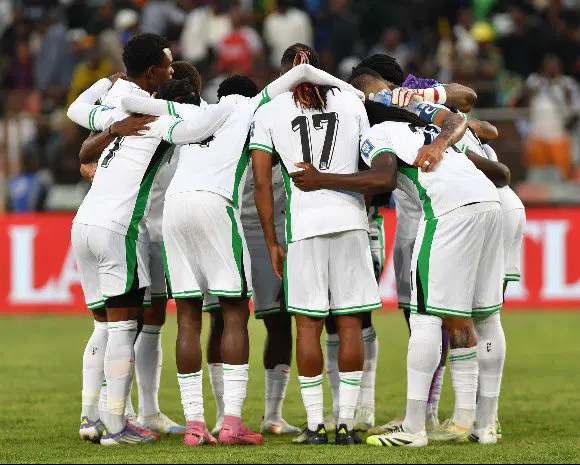
President Bola Ahmed Tinubu has directed a comprehensive reform of Nigerian football following repeated failures by national teams to qualify for major regional, continental and global tournaments. The recent directive assigns the Chairman of the National Sports Commission to work with the Nigeria Football Federation (NFF) Secretariat and football stakeholders on continuity in essential administration while developing a broad reform process involving governance, stakeholder representation, accountability, player-development pathways and domestic competitions. The process will also engage the Fédération Internationale de Football Association (FIFA) and Confederation of African Football (CAF), while maintaining Nigeria’s international obligations.
DECISION HIGHLIGHT
The intervention treats Nigeria’s football decline as an institutional and economic problem rather than simply a sporting one. The emphasis on governance, development pathways and domestic competitions points towards rebuilding the production system that converts Nigeria’s large talent base into sustainable sporting and commercial performance.
DECISION MEMO
Nigeria’s football economy has historically benefited from an unusually large combination of talent, public attention, sponsorship, broadcasting interest and national identity. Yet weak competitive outcomes have increasingly exposed a disconnect between those assets and the institutions managing them.
President Tinubu’s diagnosis highlights: “The problems are structural, and our response must address them.” That distinction is economically important. Persistent qualification failures reduce the visibility and commercial value of Nigeria’s football properties, while weak domestic competitions constrain the development of players, clubs, technical personnel and investable football assets.
The proposed governance reforms therefore carry implications beyond national-team performance. Stronger administration and accountability can improve the credibility of football institutions, while better stakeholder representation can reduce the governance frictions that often weaken decision-making and commercial partnerships.
Domestic competitions are particularly important. A stronger domestic football ecosystem provides a more reliable pathway for talent development, club revenues, sponsorship, broadcasting and player transfers. In economic terms, Nigeria’s objective should be to build a football value chain rather than depend disproportionately on individual talents competing abroad.
Tinubu links the intervention to the broader reset of the sports sector under the re-established National Sports Commission and the RHINSE philosophy, arguing that other sports have already recorded progress. Football’s scale makes its reform potentially more consequential for national sporting economics.
The reference to FIFA and CAF also signals that reform cannot be pursued solely through domestic authority. Nigeria must improve its institutions while remaining within the governance architecture governing international football.
The President said that football is “our most popular sport and the greatest beneficiary of public support, investment and national attention”. That creates a higher performance expectation, but also a substantial economic opportunity if reform restores institutional credibility and commercial confidence.
The ultimate test is whether reform produces a football system capable of repeatedly generating sporting success, sustainable domestic competitions and stronger economic returns from Nigeria’s football assets.
DATA BOX
- Reform target: Nigerian football governance and administration
- Core areas: Accountability, representation, development pathways and domestic competitions
- Principal coordinating institution: National Sports Commission
- Football governing body: Nigeria Football Federation
- International stakeholders: FIFA and CAF
- Economic assets: Talent, sponsorship, broadcasting, investment and player transfers
- Immediate trigger: Repeated qualification failures
WHO WINS / WHO LOSES
Potential winners: Nigerian football clubs, players, academies, sponsors, broadcasters and investors if institutional reforms improve competition quality and commercial predictability.
Potential losers: Entrenched interests benefiting from opaque or inefficient administrative structures could face greater scrutiny under stronger accountability mechanisms.
POLICY SIGNALS
The directive signals a shift from episodic responses to sporting failures towards institutional reform. It also places domestic football development alongside national-team performance as a policy priority.
INVESTOR SIGNAL
A more accountable football administration could improve the investability of Nigerian football by reducing governance uncertainty and strengthening the commercial value of clubs, competitions, sponsorship and media rights. However, investor confidence will depend on reforms translating into transparent structures and measurable performance.
RISK RADAR
The principal risk is implementation. Broad consultation can create legitimacy, but prolonged institutional negotiations could dilute reform. Engagement with FIFA and CAF must also avoid regulatory conflict, while continuity in essential administration must be balanced against the need for meaningful structural change.
Discover more from StakeBridge Media
Subscribe to get the latest posts sent to your email.