

By Jennete Ugo Anya
Minister of Finance and Coordinating Minister of the Economy, Dr. Taiwo Oyedele, has called for a coordinated financing framework to bring down the cost of capital for manufacturers, warning that current lending conditions are increasingly incompatible with long-term industrial investment.
DEVELOPMENT:
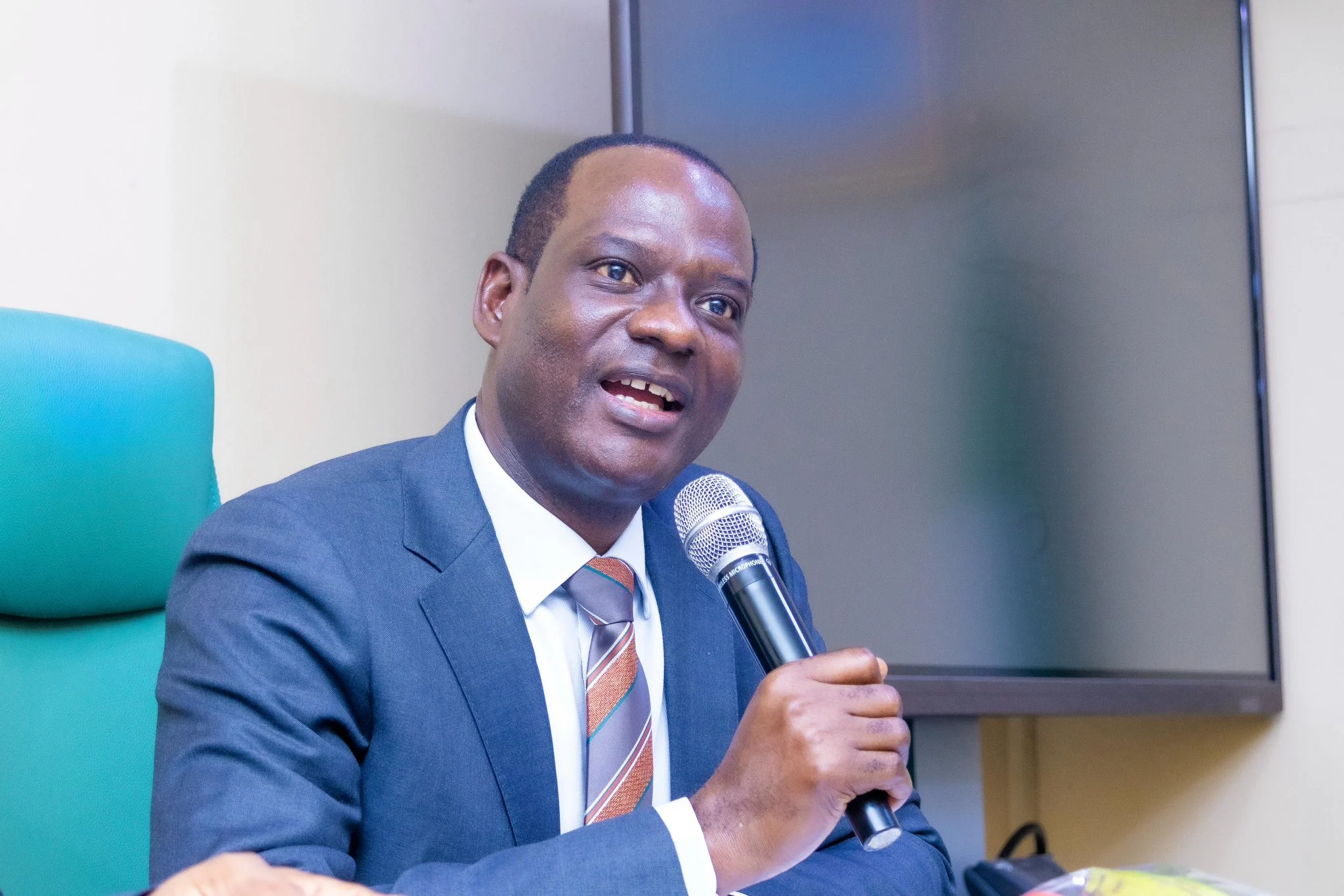
Speaking at the Ministerial Roundtable 2 of the Industrial Revolution Work Group (IRWG), organised by the Federal Ministry of Industry, Trade and Investment (FMITI) in Lagos, Oyedele, represented by his Special Adviser on Finance and Investment, Marie Opere, said manufacturers were borrowing at prime rates averaging about 27 percent, with maximum rates reaching the mid-30 percent range.
Oyedele said commercial bank credit to manufacturing contracted by about N1.9 trillion last year, falling by more than 22 percent from N8.5 trillion to N6.61 trillion.
He described the current financing structure as unsuitable for investments requiring seven, 10 or 15 years to generate returns.
DATA:
The contraction in manufacturing credit coincides with borrowing costs that can make productive investment commercially unattractive. Oyedele argued that the financing gap cannot be solved through commercial bank lending alone.
He called for greater use of public balance sheets, blended finance, institutional capital, pension funds, insurance assets and the capital market to finance productive investment.
The proposed National Industrial Finance Compact would bring government, regulators, development finance institutions and commercial capital providers into a more coordinated framework.
SIGNIFICANCE:
The issue is fundamentally one of capital structure and tenor, not merely capital availability.
Minister of State for Industry, Trade and Investment, Sen. John Enoh, said that Nigeria’s financing architecture is effectively wired against long-term manufacturing investment.
“Our manufacturers do not lack ambition, they don’t lack orders, they don’t lack markets. What they continuously lack is money, the right kind of money.”
Enoh stated: “The issue is not that there is no money. It is the price of the money, the term of the money and the capital architecture into the factories.”
NEXT MOVE:
The critical test is whether the proposed financing compact produces actual reductions in borrowing costs and extends loan tenors for manufacturers.
Oyedele said that the framework should ultimately be judged by whether manufacturers can access financing, expand installed capacity, create jobs and increase export earnings.
OUR LENS:
Nigeria’s industrial policy is confronting a structural contradiction: the country wants long-term productive investment but continues to finance much of it with short-term, expensive capital.
Enoh warned that businesses investing in ventures requiring 10 to 15 years to mature cannot reasonably be expected to repay loans within three or six months. That mismatch can make trading more attractive than production.
Oyedele’s proposal therefore points to a broader capital-market reform challenge. Nigeria must redirect more patient capital towards factories, machinery and productive capacity, or its industrialisation ambition will remain constrained by the price and architecture of finance.
Jennete Ugo Anya is a journalist and researcher with interests across Nigeria’s economy, public policy, business, development and strategic communications.
Discover more from StakeBridge Media
Subscribe to get the latest posts sent to your email.